Repairs · Silver Hills
Garage Door Bottom Seal Replacement in Silver Hills
After a spring rain there is a puddle inside the door that reaches the tires.
In plain words
The material matters as much as the shape when the garage sees real winters. Vinyl is the common choice: it resists moisture and sun well but grows stiff in deep cold and stops moulding itself to the concrete. Rubber stays supple at low temperatures and follows an uneven floor, though it can harden after many years of sun. Silicone keeps its flexibility through hot and cold alike and resists cracking, at a higher cost per metre. Choosing the right compound for a door that faces the weather is part of the service, and it is one reason a replacement seal often outlasts the one it replaces.
How the visit goesThe garage doubles as a workshop, and with the heater running the floor near the door stays cold and the draft finds your ankles at the bench. When the wind is up you can feel the air moving under the door.
Garage Door Bottom Seal Replacement
How the visit goes
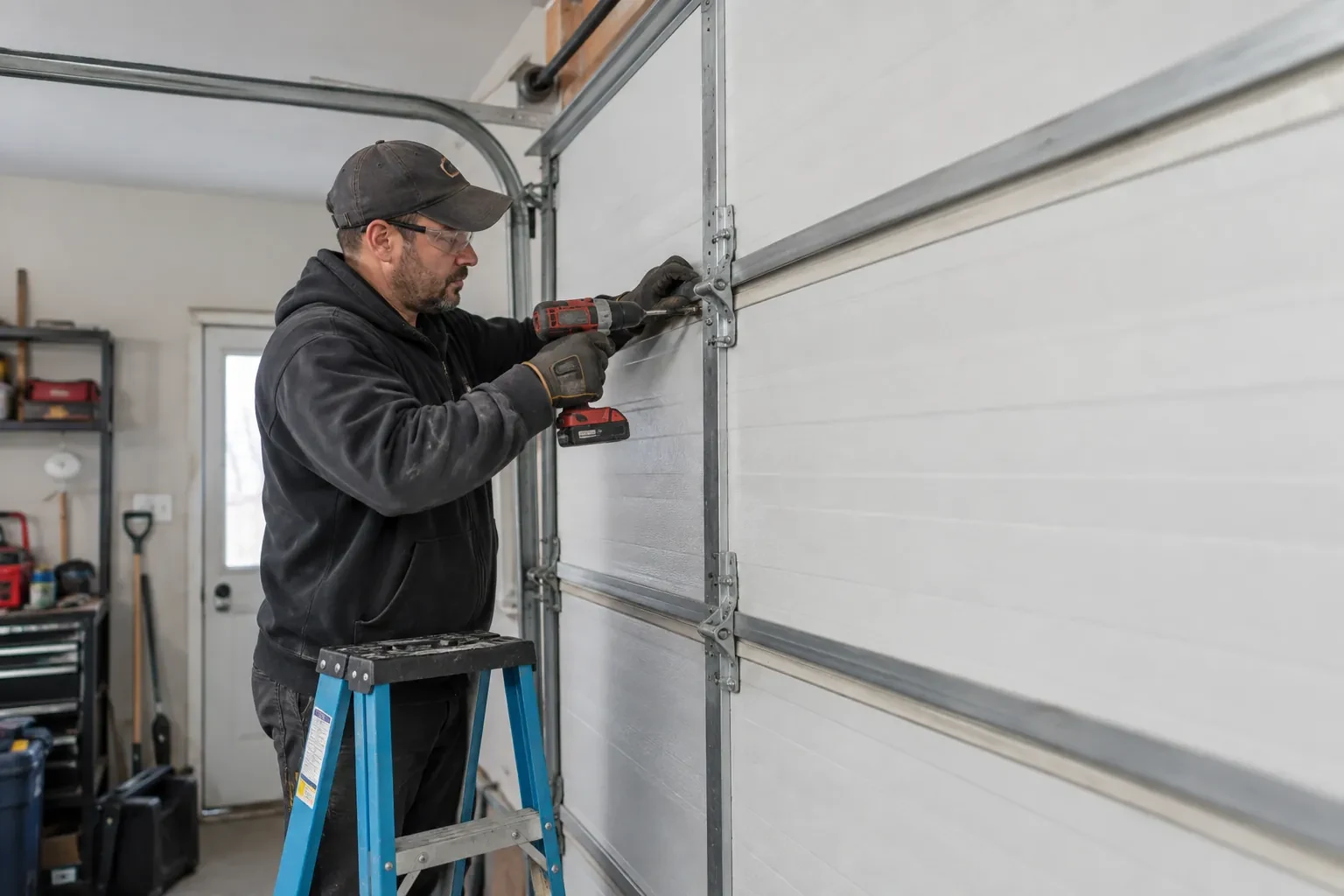
The floor and the threshold
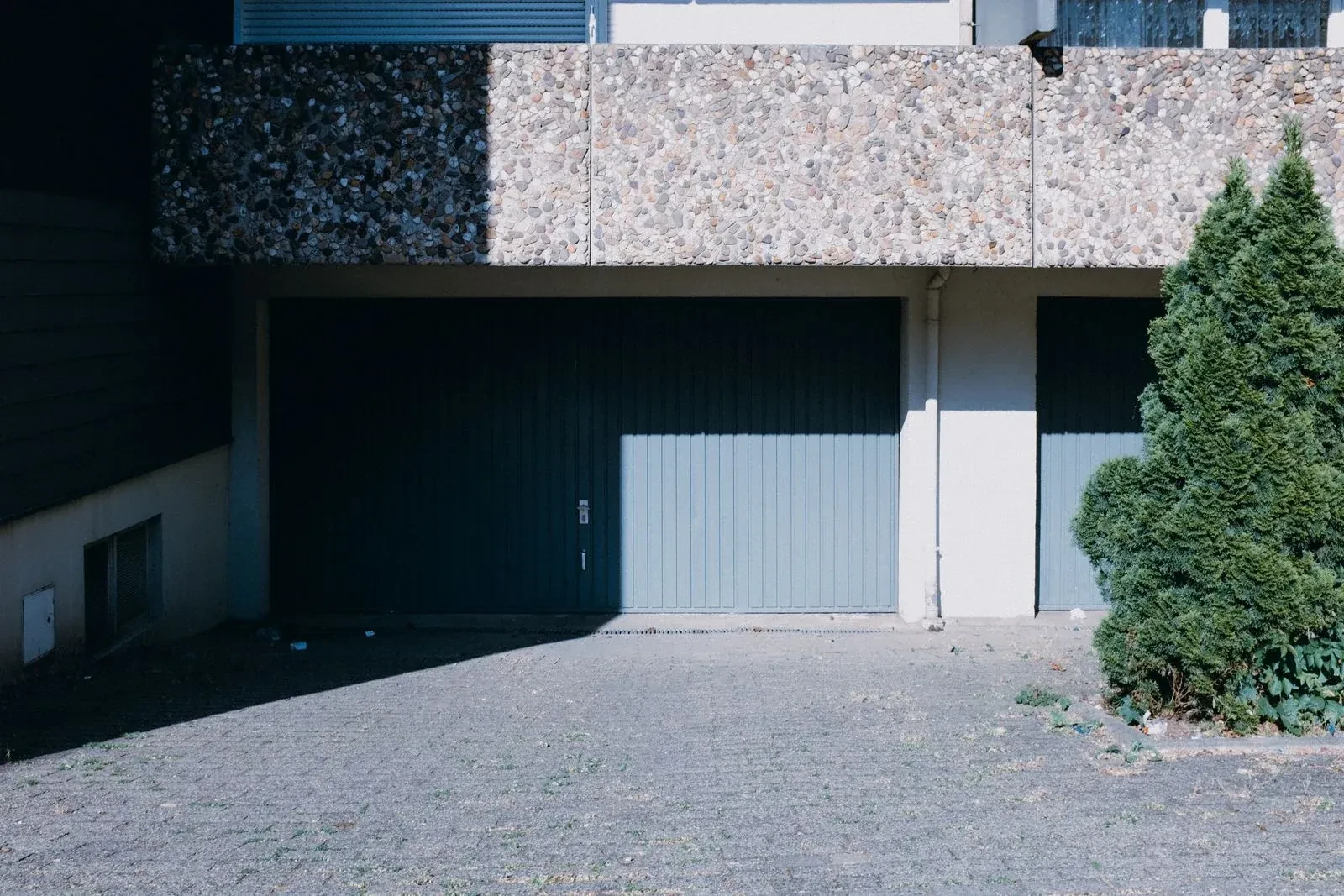
The concrete under the door is half of the seal. The technician looks at the slope of the driveway toward the opening, the condition of the slab edge where the seal lands, cracks, spalled patches and any step between the slab and the apron. A garage floor that has heaved or settled over the decades is common, and the shape it has taken decides whether a standard seal, a taller bulb profile or a threshold seal glued to the floor gives the most even contact. Where water arrives from outside, the path it takes is noted so the seal and any threshold are placed to meet it.
Taking the old seal out
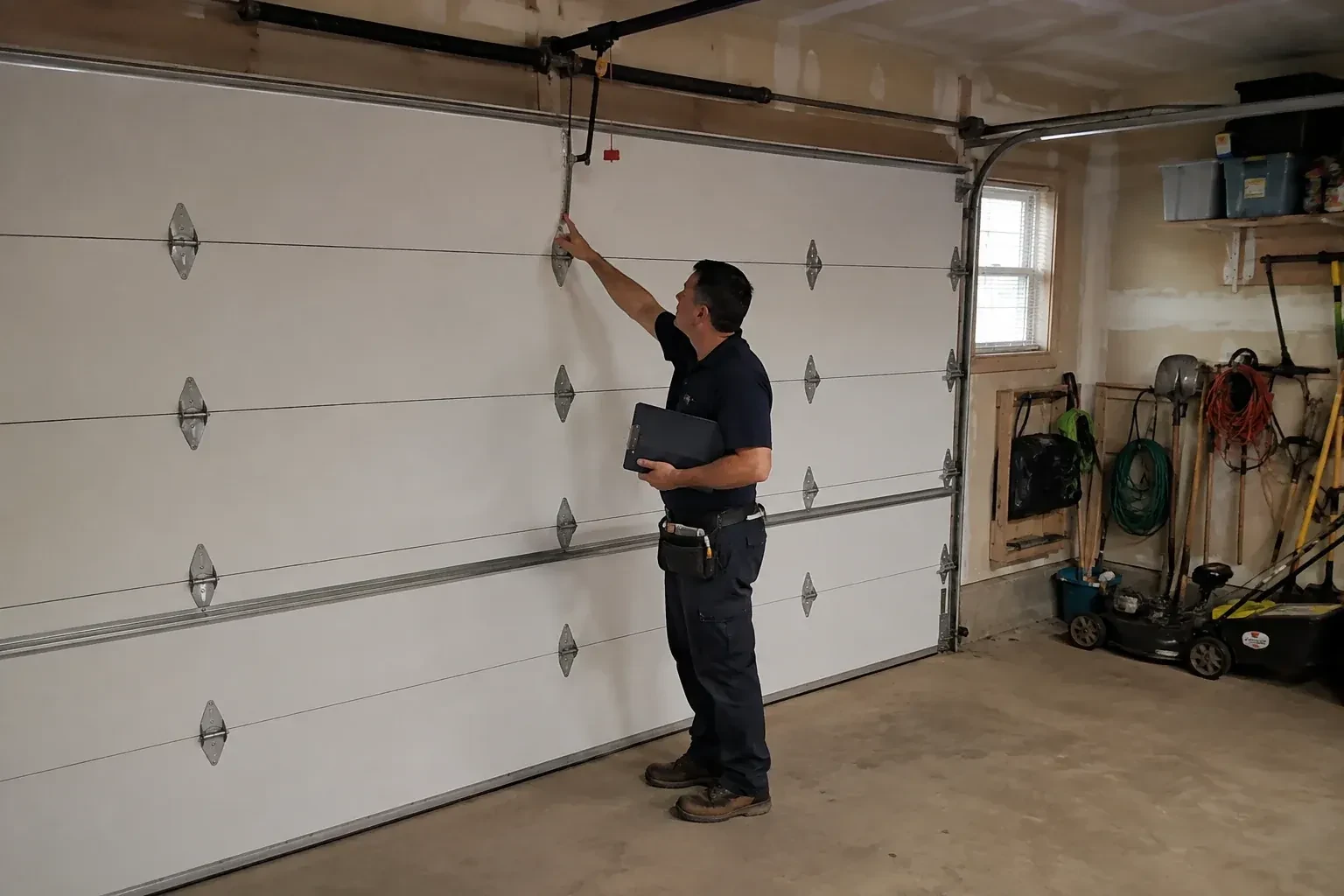
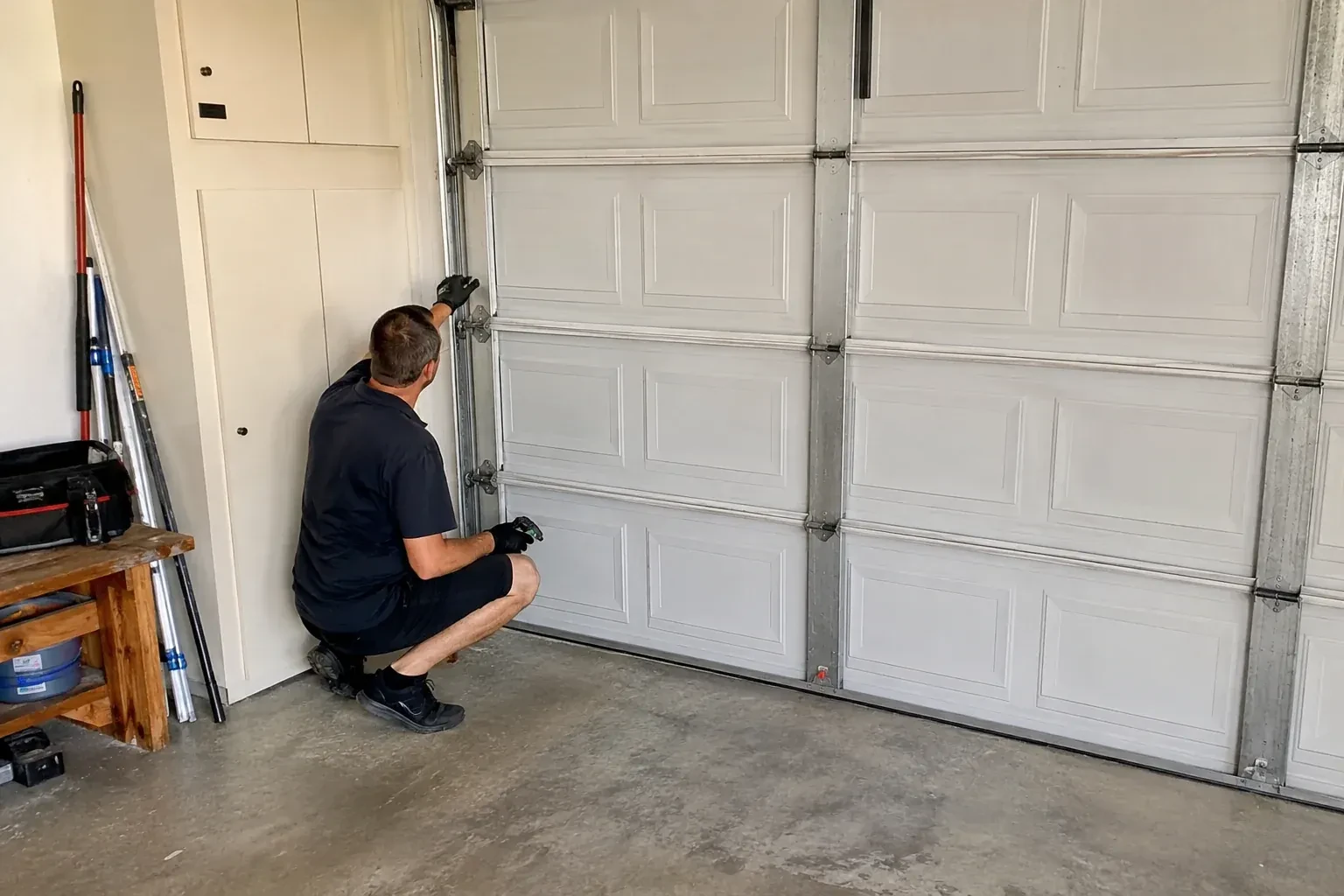
With the door secured, the ends of the old strip are freed from any caps or folds and the seal is drawn out of its channels from one end. A supple seal slides; a hardened one is coaxed with a flat blade and a little silicone, or cut into short lengths and removed a piece at a time. Old nails come out of a wood rail with a claw. The channels are then cleaned of grit, rust flakes, salt crust and any remnants of the previous strip with a wire brush and a scraper, because a clean channel is what lets the new seal feed through without tearing.
The rest of the weather line
With the bottom sealed, any remaining draft points to the perimeter: the vinyl fin on the stop moulding at the jambs and header, and the joints between sections. These were looked over during the visit and anything torn, shrunk or missing was pointed out. Replacing perimeter stripping is straightforward work that can be planned for a mild day. Together with a sound bottom seal and, where the floor calls for it, a threshold, the garage gains a stronger barrier against wind, water and cold on all four edges, and an attached garage can stay closer to the temperature of the house.
Garage Door Bottom Seal Replacement
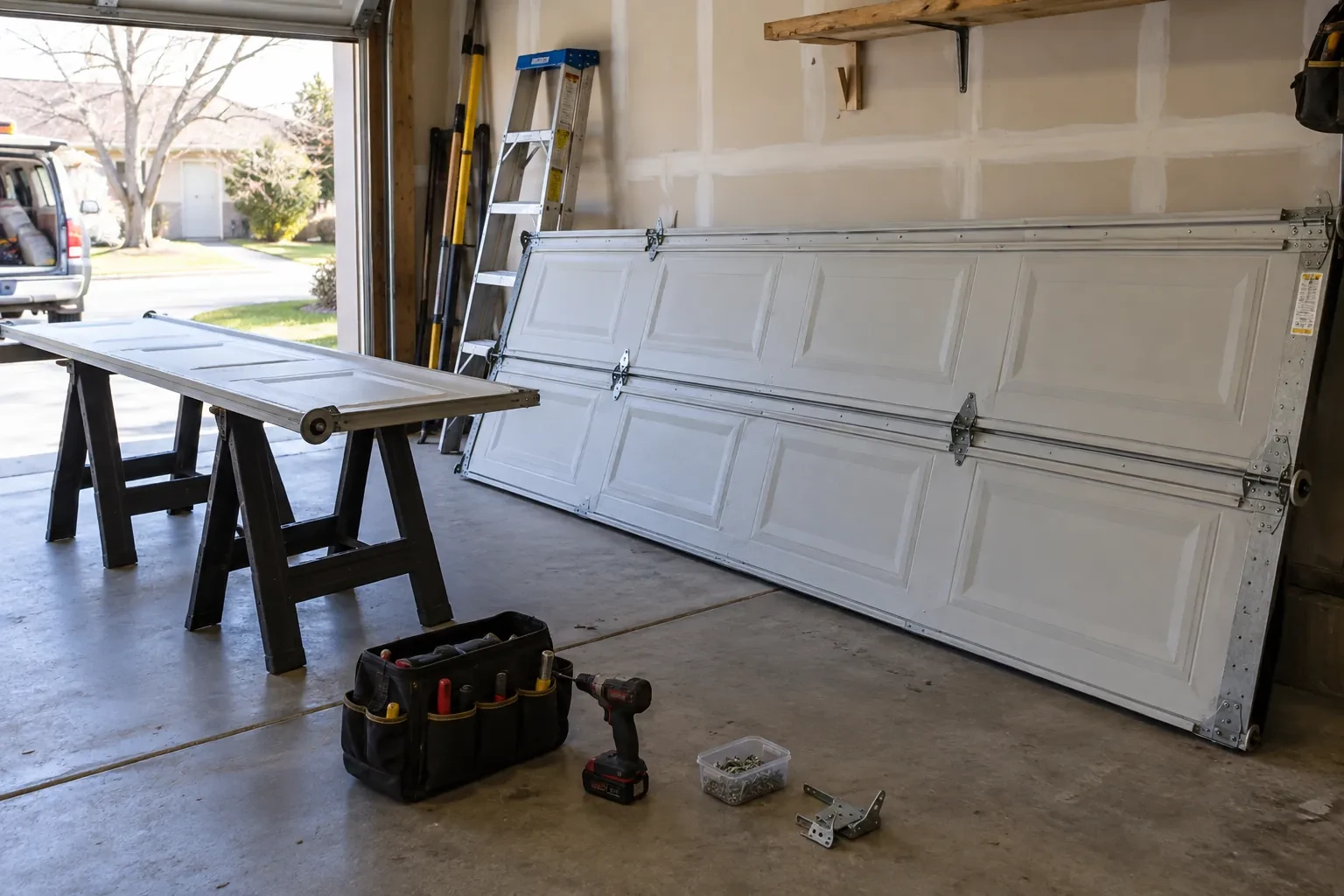
In the van
Aluminum bottom seal retainer
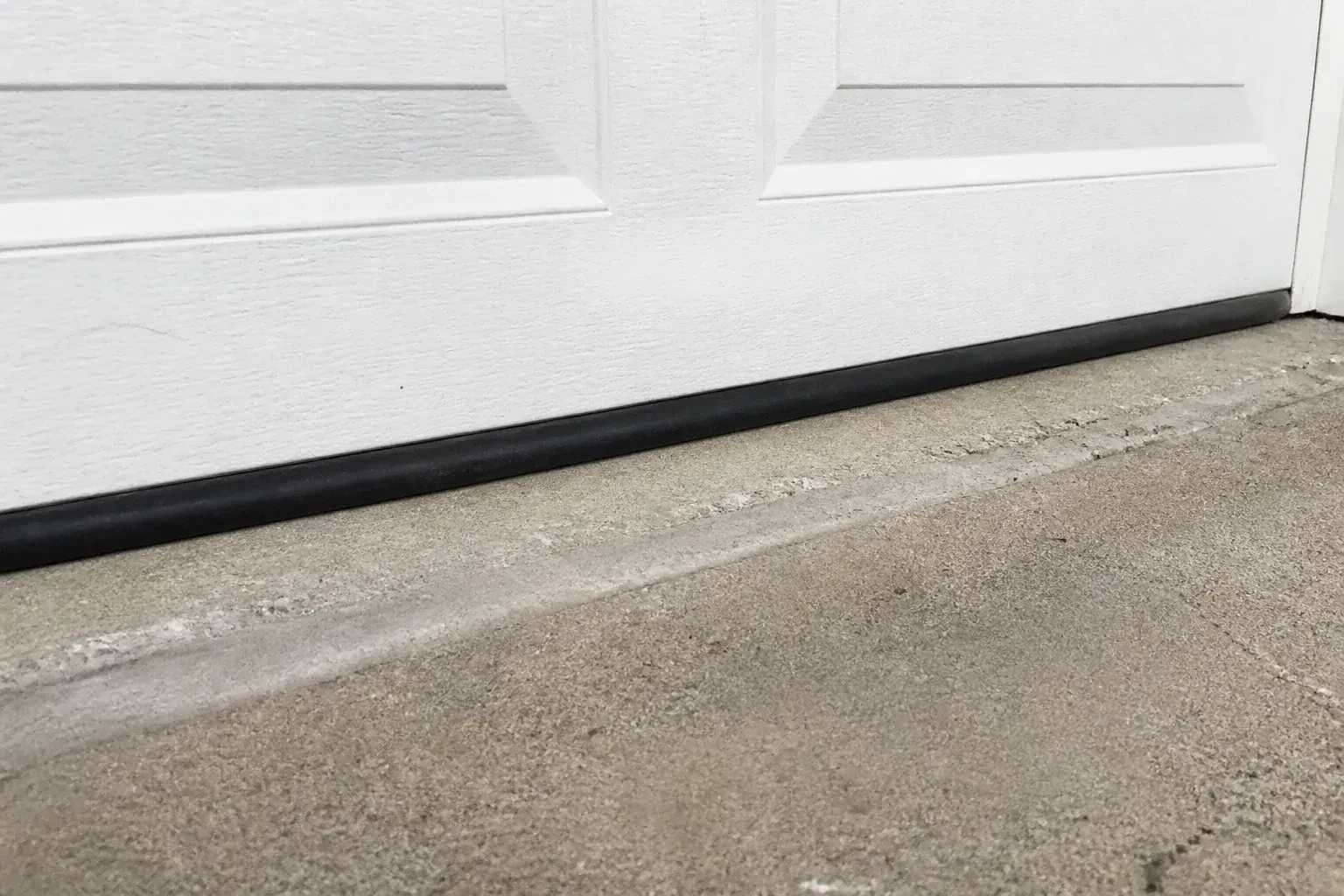
Bulb or U-style bottom seal
Track clamps
Threshold seal and adhesive
T-style bottom seal
Garage Door Bottom Seal Replacement
What affects the quote
Door width
A single door takes a shorter length of seal than a double, and the widest doors need more time to feed the strip evenly across. The quote starts from the width measured on the day.
Number of doors
Two single doors are two seals, two inspections and two opener resets. The travel is shared, so doing both in one visit costs less than two separate calls.
Opener adjustment
Resetting the down limit and force and repeating the reversing test after a taller seal is fitted is a short step that the quote names whenever the door has an opener.
What to have ready
- Does the driveway slope toward the garage, or does water pool at the door?
- Does the door stop short of the floor or reverse before it closes?
- Are the side and top weather strips also worn or torn?
Garage Door Bottom Seal Replacement: questions
QuestionsThe seal looks fine, so why is there still daylight under the door?
A seal can look intact and still have taken a permanent set, so the bulb no longer springs up to fill the gap. Otherwise the gap belongs to something else: a door hanging out of level, a bowed bottom section, a floor that has settled at one end, or an opener down limit set so the door stops short. The first look during the visit sorts these apart so the fix goes to the right place.
How do I know which size and type my door takes?
Look at the end of the bottom section for the metal or plastic strip that holds the seal. Count the channels, note whether they are slotted or rounded, and measure the distance between them and the width of the door. A photo of the end of the retainer and one of the seal's cross-section is usually enough for the technician to identify the profile before the visit and bring the right roll.
What does a new bottom seal do about water coming in?
It closes the gap between the door and the slab so rain and meltwater meet a continuous barrier. Where the driveway slopes toward the garage, or the slab edge has dipped, the seal alone is working against gravity, and a threshold seal glued to the floor adds a lip that turns water back toward the drive. The technician looks at where the water comes from and recommends the combination that suits your threshold.