New Doors · Toronto
New-Construction Garage Door Installation
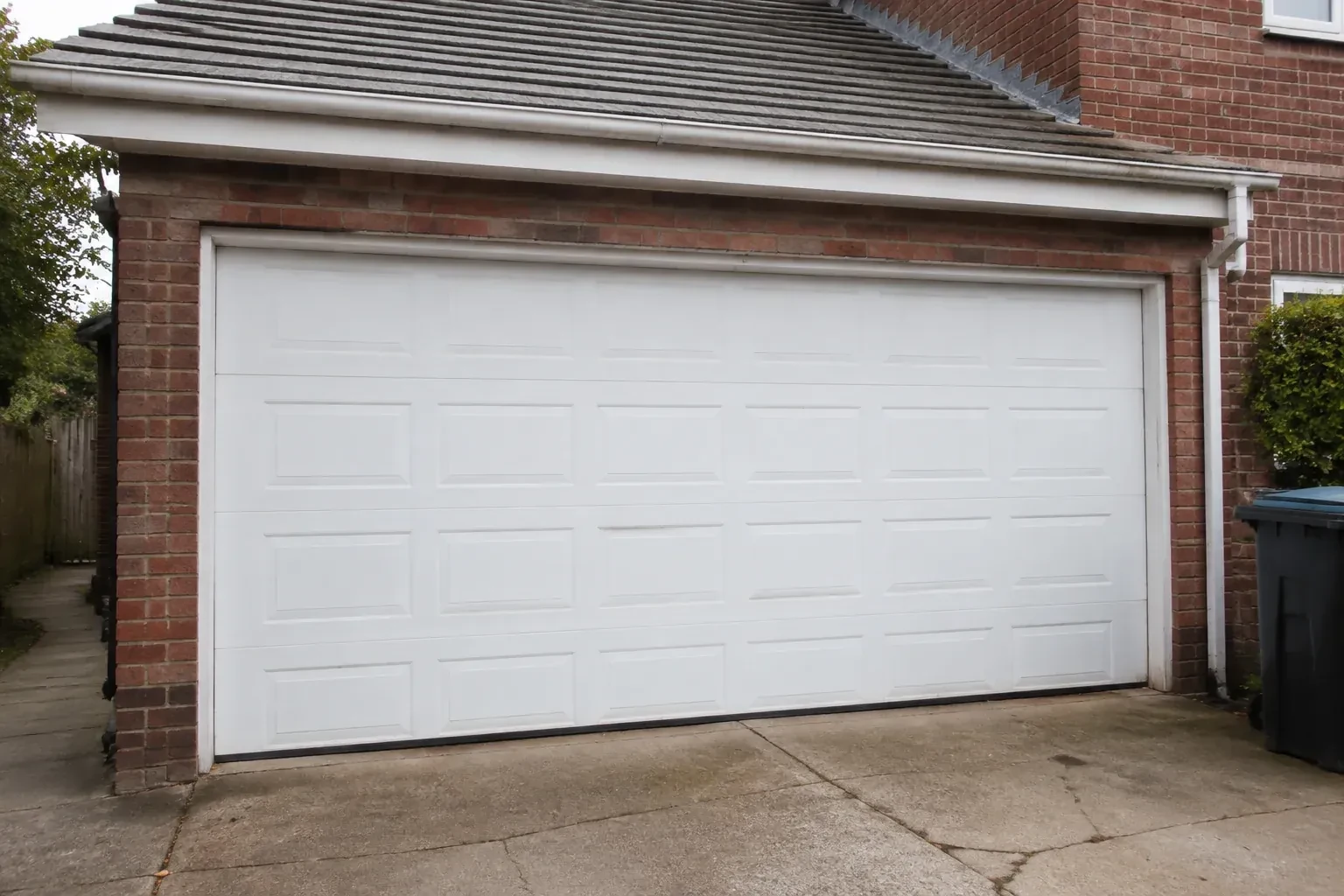
Two new garage openings sit side by side on the same elevation.
In plain words
A successful installation begins before the door arrives. Drawings and selections are compared with field measurements, including finished floor elevation, cladding thickness, ceiling obstructions and the support available at the jambs and header. This check keeps the chosen section design, track layout and spring system connected to the building that will carry them. Once the site is ready, the complete assembly is fitted, aligned and balanced, then documented for the owner and other project trades.
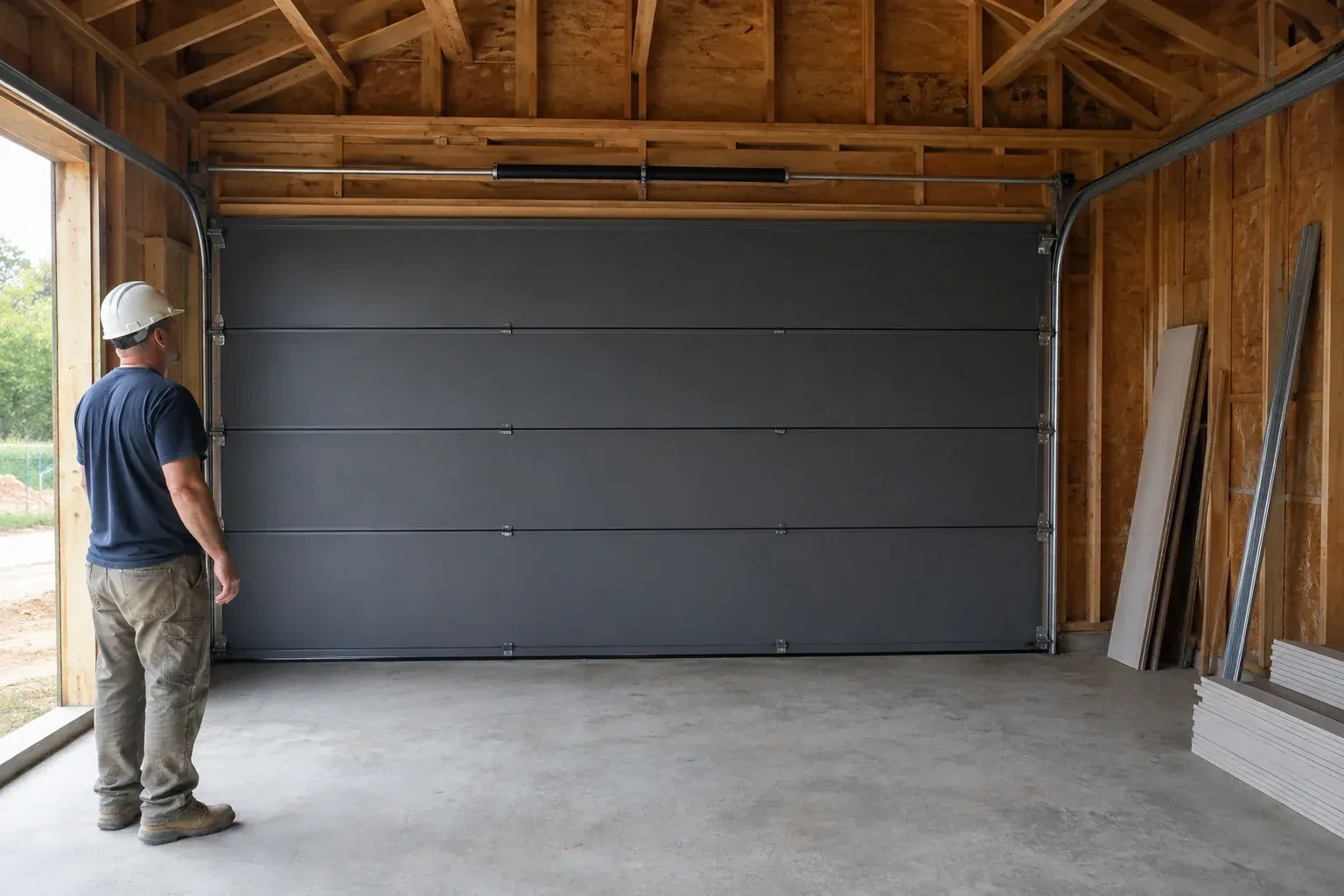
How the visit goesA beam, sloped ceiling or duct crosses the space above the new opening. The door still needs a clear path, which makes headroom, backroom and the right track arrangement central to the plan.
New-Construction Garage Door Installation
How the visit goes

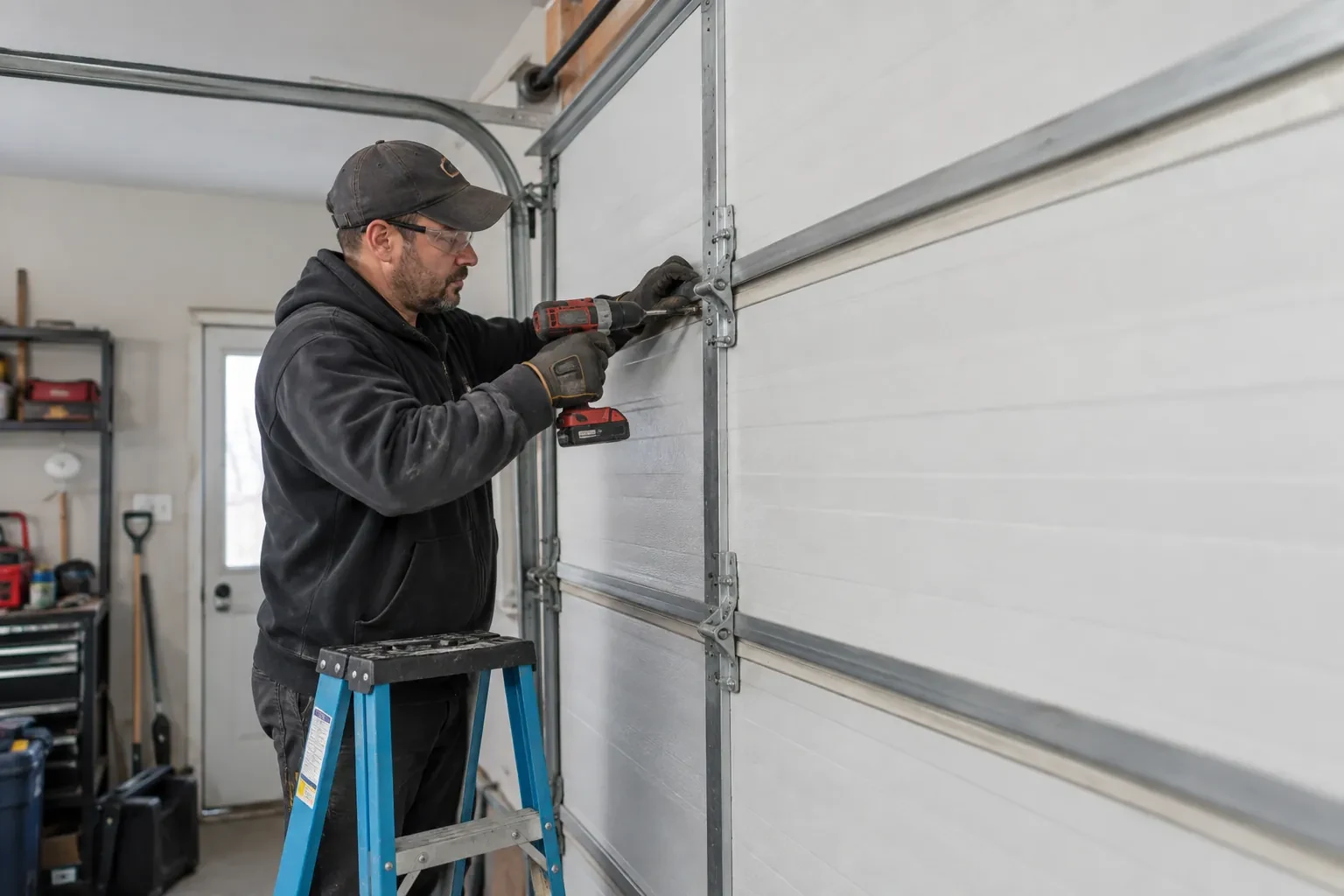
Mapping room for door travel
The space inside the garage receives the same attention as the opening. Headroom is measured above the header, sideroom is checked beyond both jambs and backroom extends from the mounting plane to the nearest obstruction. Beams, trusses, ducts, lights, storage plans and ceiling slopes are placed on that map. The installer also traces the sweep of the top section and the proposed operator rail. With those facts visible, a suitable track arrangement can be confirmed and conflicts can be coordinated while the building is still accessible.
Adding powered operation
An operator is introduced only after manual movement has been assessed. Its rail or shaft connection is mounted to suitable supports, aligned with the door and joined to the reinforced attachment point specified for the top section. The wall control and photoelectric sensors are installed in their planned positions, with wiring kept clear of moving hardware. Travel limits and operating force are set from the product instructions. Several complete cycles confirm that the powered system follows the door's path smoothly before reversal and entrapment-protection functions are tested.
A clear route to manual operation
Power outages and maintenance visits are easier when the manual release is familiar before it is needed. Handover shows how the operator disconnects, where to stand and which handle provides a proper grip. The door is moved manually so the owner can feel its normal balance and understand the space it occupies overhead. Reconnection is demonstrated according to the operator instructions. The release remains unobstructed by storage, and vehicles or shelving stay outside the section trajectory, leaving a practical path for both powered and hand operation.
New-Construction Garage Door Installation
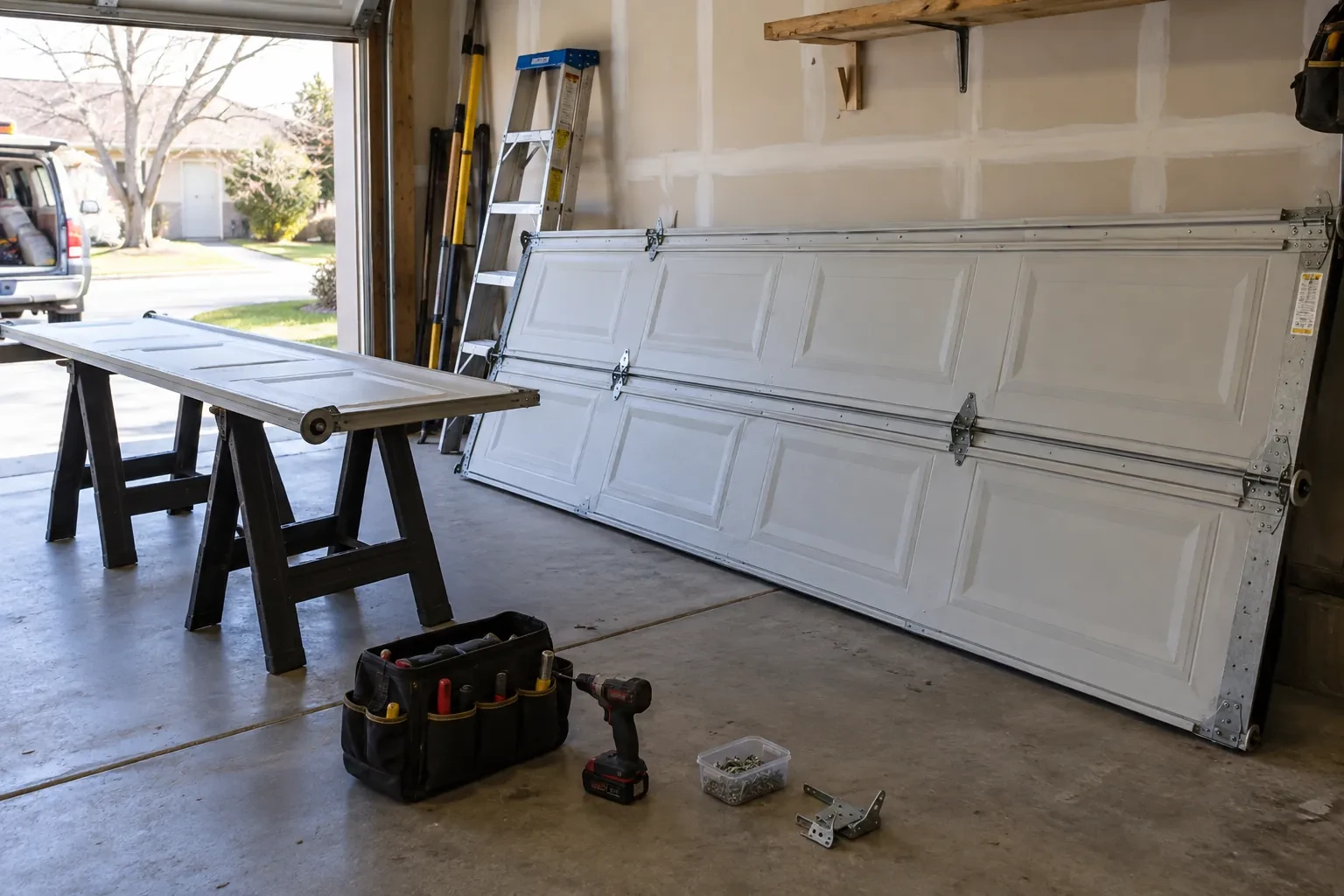
In the van
Sectional door panels
Graduated hinges
Track rollers
Track hangers and bracing
Door reinforcement struts
New-Construction Garage Door Installation
What affects the quote
Electrical preparation
The location and readiness of power, control wiring and sensor routes affect coordination. Electrical work outside the door install remains a clearly identified project responsibility.
Controls and access features
Wall stations, remote controls, exterior keypads and optional connected access each add components and setup. The quote can distinguish included controls from features selected later by the owner.
Operator and drive type
Manual operation and powered operation are different scopes. A selected ceiling-mounted or shaft-mounted operator adds equipment, supports, connection hardware, setup and commissioning to the project.
What to have ready
- Are any beams, ducts, lights or storage systems in the door path?
- When will the opening be accessible for delivery, installation and testing?
- Which trade is completing exterior trim, caulking and final electrical work?
New-Construction Garage Door Installation: questions
QuestionsCan the finished door still be operated manually?
Yes. A properly counterbalanced sectional door is checked by hand, whether or not an electric operator is added. With powered equipment, a manual release disconnects the operator so the designated handle can be used; the door is closed first, since an open or unbalanced door can move unexpectedly once released. Handover includes a demonstration of disconnection, movement and reconnection under the product instructions. The release path and lifting area should remain accessible rather than being blocked by storage.
When would a high-lift track arrangement be considered?
High-lift hardware extends the vertical track farther up the wall before the horizontal run begins, which preserves overhead clearance and can follow a taller ceiling. It may suit garages planned for vehicle lifts or other overhead uses. The decision depends on available height, roof structure, door weight, spring arrangement and operator selection. Measuring all obstructions and future equipment is essential before the track geometry is specified.
What regular care does a newly installed door need?
Follow the door and operator manuals for inspection and product-specific lubrication. Owners can keep the opening and sensor path clear, clean the section finish gently and watch visible cables, rollers, hinges and seals for change. Tracks are guides, so adding heavy grease can collect dirt. Any shift in balance, smooth movement or cable condition is useful reason to arrange a professional system assessment.
Related services
- Insulated Steel Garage Door InstallationThe opener strains as the heavy older door starts upward, and manual movement feels uneven.
- Wind-Rated Garage Door ReplacementYou are combining two narrow garage bays into one broad opening.
- Carriage-House Garage Door InstallationTraditional swing-out coach doors have the look you like, but the driveway needs to remain clear as the door opens.