Repairs · Silver Hills
Garage Door Tune-Up in Silver Hills
You moved in a few months ago and have no idea when the garage door was last looked at.
In plain words
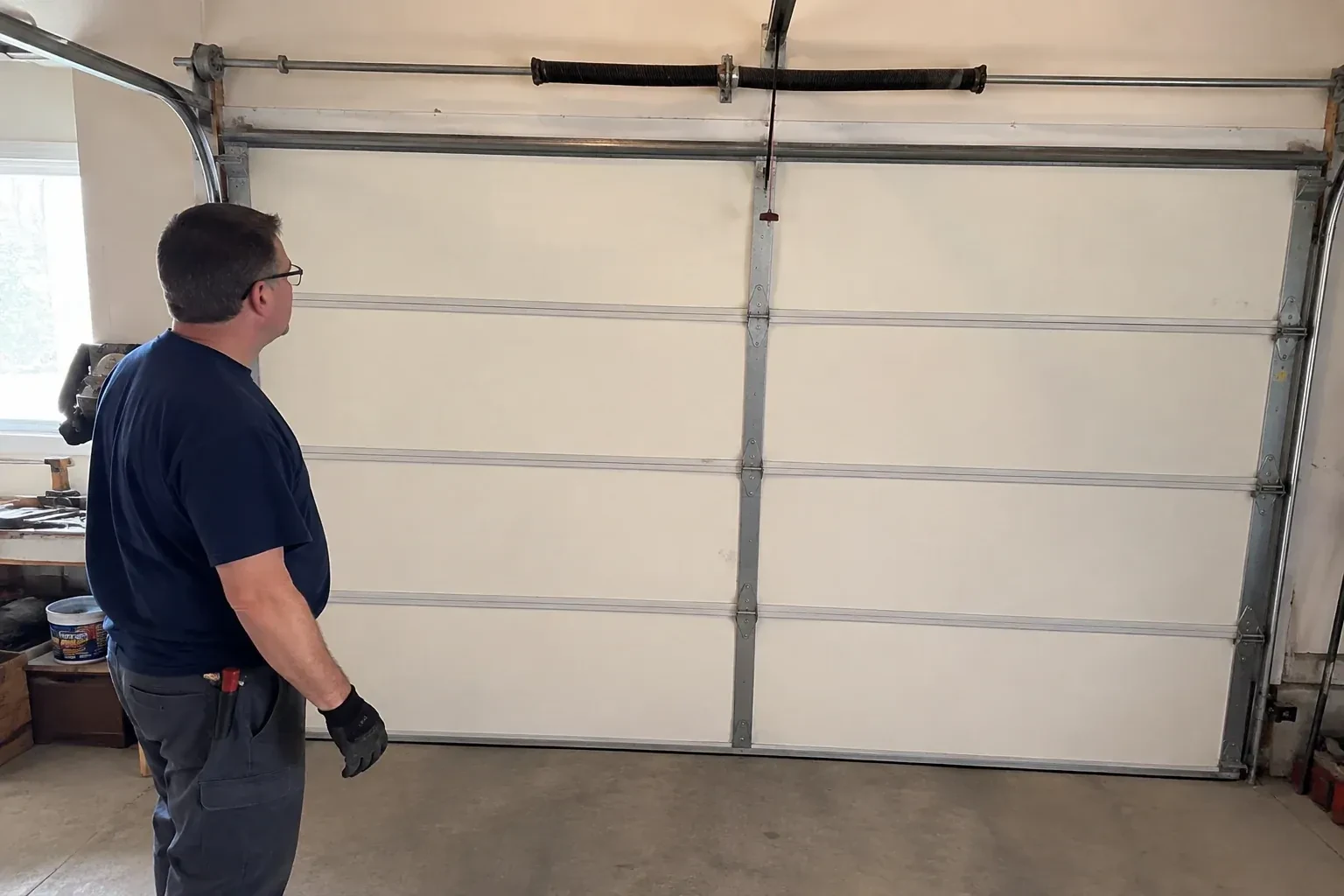
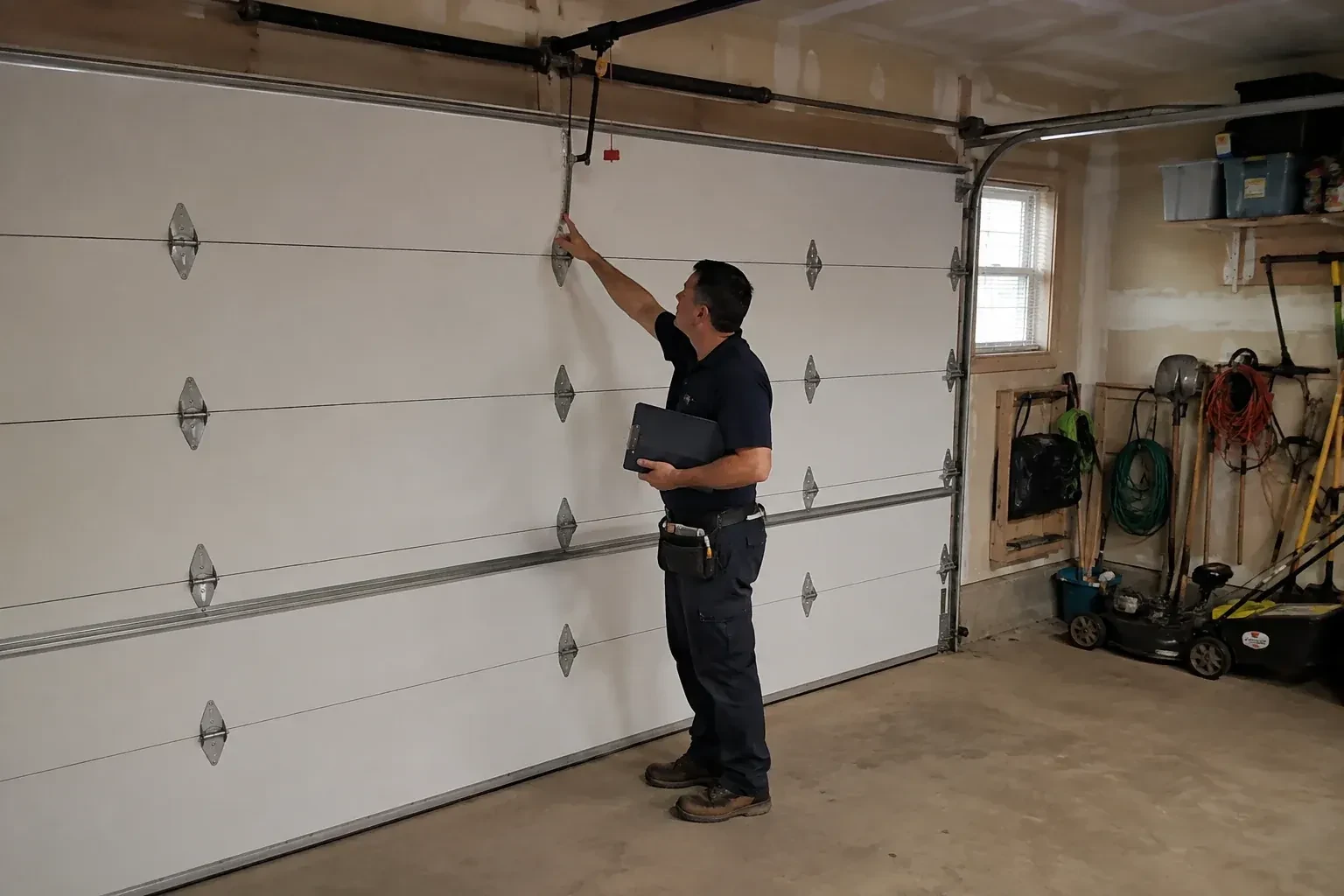
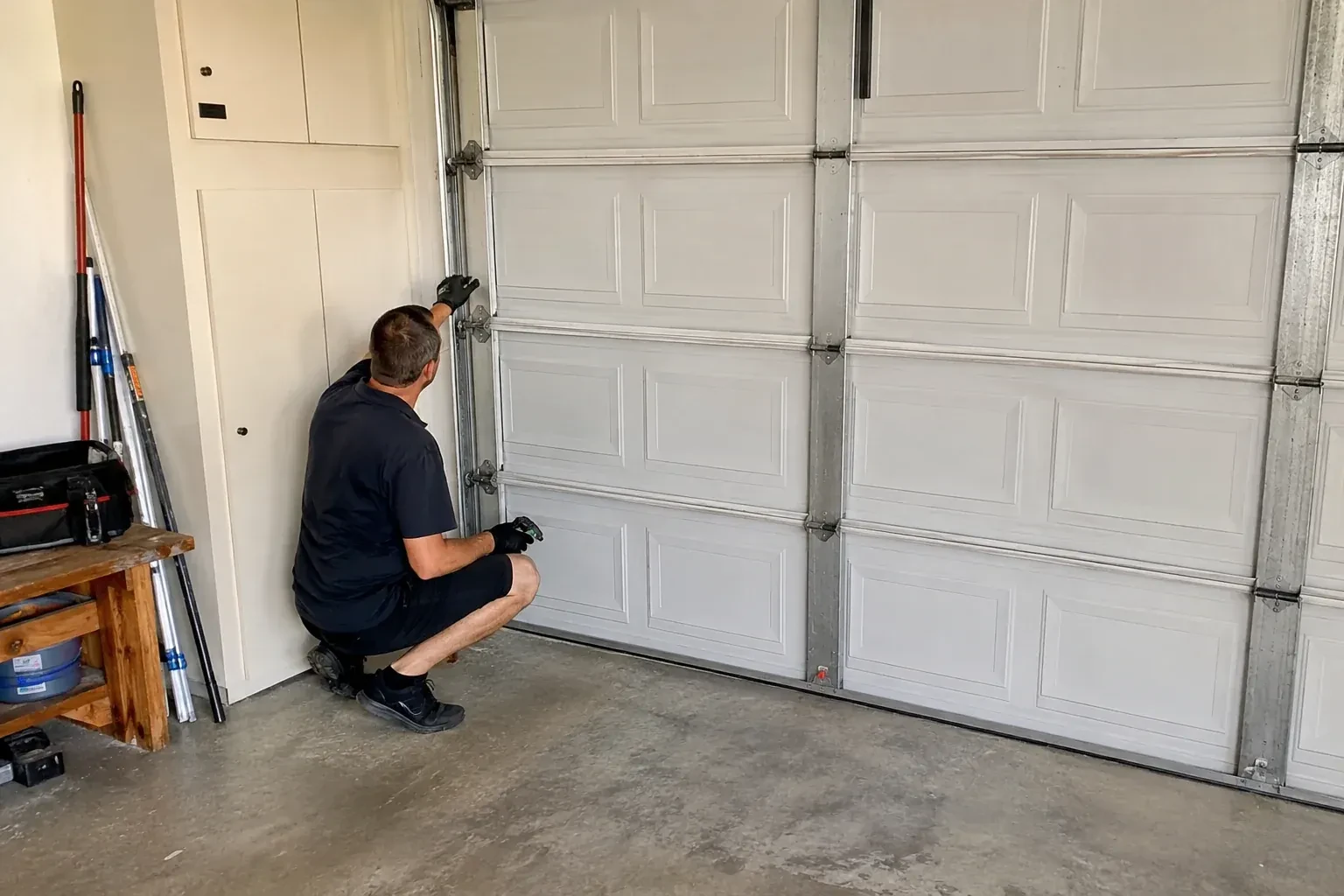
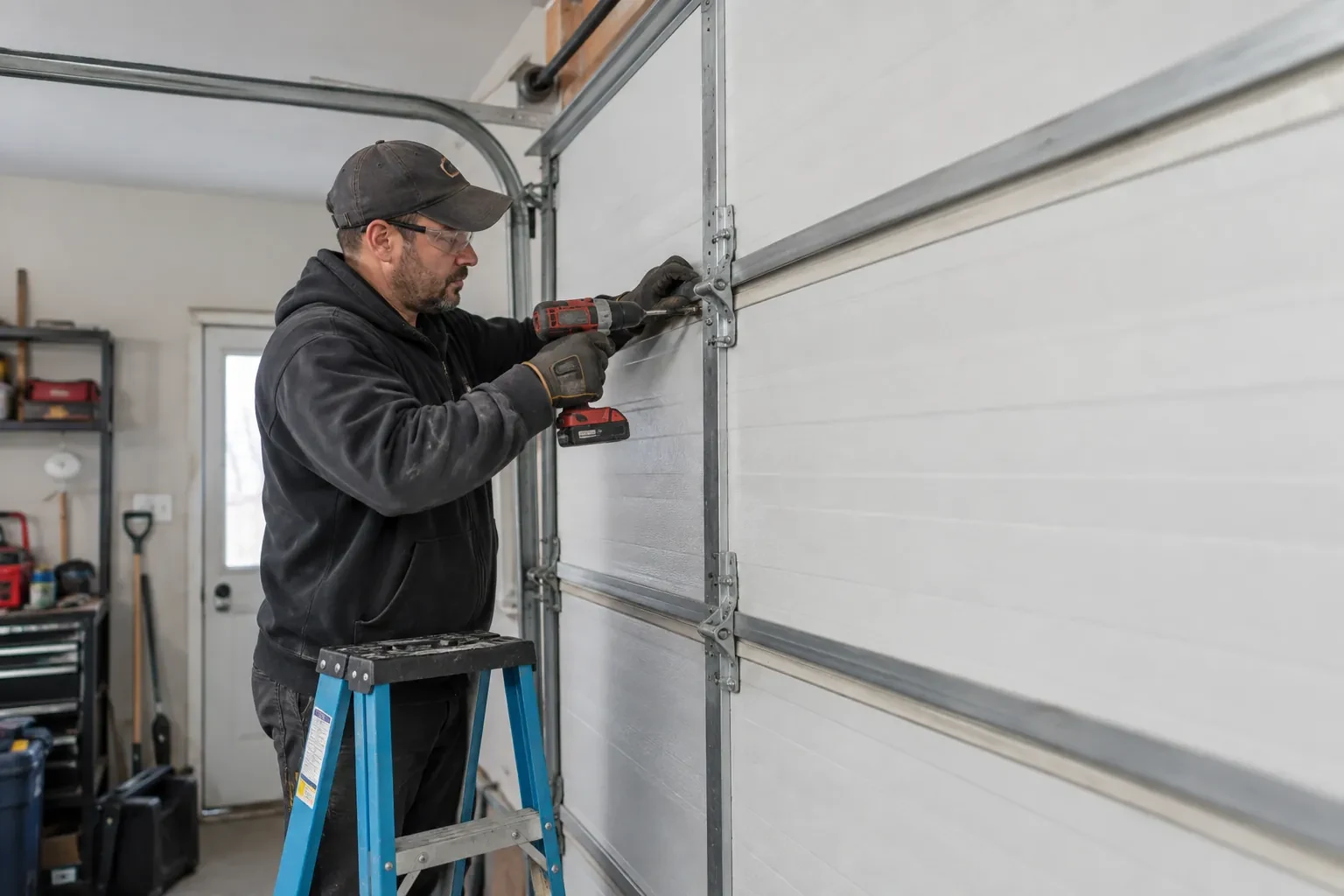
The visit follows a set order. First the technician watches a full cycle, up and down, from a safe distance, noting where the noise, shaking or hesitation lives. Then the door is closed and inspected hardware by hardware, from the bottom brackets to the torsion shaft. The manual release is pulled and the door is lifted by hand to feel the balance. Only then does the work start: fasteners, lubrication, opener adjustments and sensor alignment. A second cycle and the reversal tests close the visit, and the difference between the first run and the last is the measure of the tune-up.
How the visit goesEvery morning the door announces itself to the whole street: a long metallic squeal as it climbs, a rattle at the top, and a groan on the way back down. It still opens and closes, but it never used to sound like this.
Garage Door Tune-Up
How the visit goes
Sorting the sounds by where they live
Noise is the most common reason a tune-up is booked, and every sound has an address. A high squeak that repeats with each section movement points to dry hinge pins. A rumbling that follows the door up and down usually comes from roller bearings. A sharp rattle at the top of travel is often a loose track bracket or hinge screw. A rhythmic slap along the ceiling is a slack chain on the opener rail. A pop or crack as the door starts is worth a closer look at the springs and drums. The technician places each sound, then checks that spot directly rather than lubricating everything and hoping.
Seals and the threshold
Rubber and vinyl get a silicone spray, never a petroleum product, which attacks the material. A bottom seal that is torn or has flattened can be replaced in the same visit if stock is on hand: the old length is drawn out of the retainer, the retainer is cleaned, and the new astragal is fed in and trimmed to width. Jamb and header weatherstrip that has gone hard or split is renewed so the door closes against a flexible edge and stops rattling in wind. Where the threshold holds water, the technician points out the low spot and suggests keeping it clear of ice, since a seal frozen to the slab is the usual winter casualty.
Knowing what to listen for next
Part of the handover is a short lesson in the door's language, so the next change registers. A squeak returning means the hinge pins want lubricant. A new rattle at the top of travel means a screw is loosening and is worth a look. A door that starts to sink when lifted by hand is springs losing tension. A loud bang from the garage with the door then feeling very heavy is a broken spring, and the door stays closed until it is replaced. A door that reverses on its own with no obstruction is a sensor or force issue. With these signs in mind you can describe a problem precisely and decide whether it needs a call.
Garage Door Tune-Up
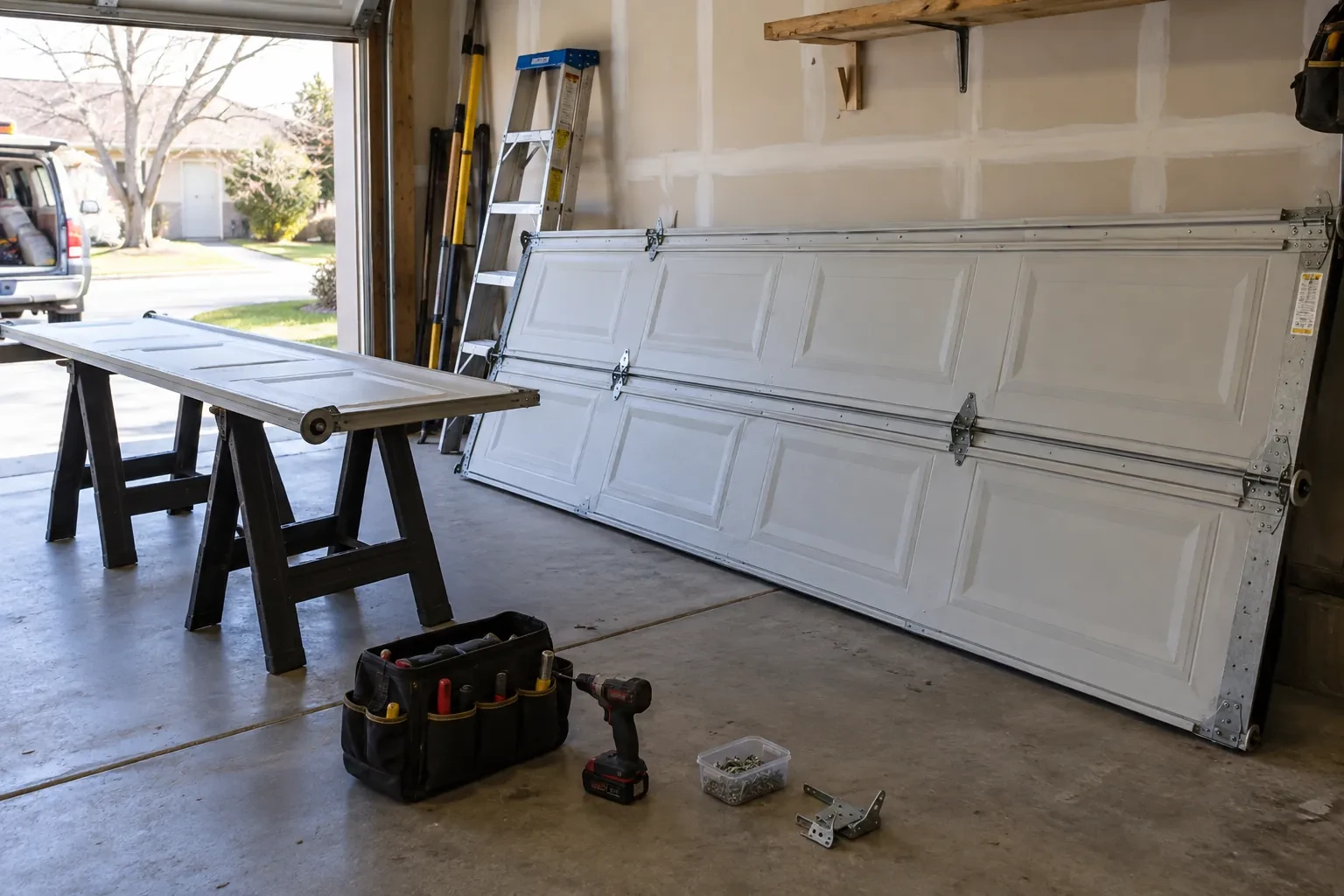
In the van
Lag screws for brackets and header
Silicone spray for seals
Hinge screws and track bolts
Locking pliers or C-clamps
Jamb and header weatherstrip
Garage Door Tune-Up
What affects the quote
Balance findings
If the balance test shows the springs have lost tension, spring adjustment or replacement is a separate job with its own quote rather than part of the maintenance visit.
Age of the door and opener
Older hardware may need fasteners in sizes no longer standard, and an opener without photo-eyes prompts a conversation about entrapment protection that is quoted separately from the tune-up.
Single or double door
A double-width door has more hinges, rollers and track to inspect and lubricate, a heavier counterbalance and usually a strut or two on the top section, so it takes longer than a single door.
What to have ready
- Are the springs mounted above the door or along the sides beside the tracks?
- What have you noticed: noise, shaking, hesitation, slamming, or reversing on its own?
- Can vehicles and stored items be moved clear of the door and tracks before the visit?
Garage Door Tune-Up: questions
QuestionsWhy does my door struggle in cold weather?
Cold affects several things at once. Old lubricant thickens into a drag on every hinge and bearing. Steel contracts slightly, so a track that was snug becomes tight. Rubber seals stiffen and the bottom seal can freeze to the slab. The opener then reads all this extra resistance as an obstruction and stops or reverses. A fall tune-up with a low-temperature lubricant, silicone on the seals and correctly set force goes a long way toward smooth winter mornings.
How do I test the safety reversal at home?
Two tests, once a month. With the door open, press close and wave a broom handle through the photo-eye beam near the floor: the door should stop and go back up. Next, set a 2x4 flat on the concrete in the middle of the opening and press close: the door must reverse when it meets the board. If it stops on the board without reversing, the down travel or force setting needs adjustment, and if it fails after that, book a visit.
How often should a garage door be tuned up?
Once a year suits most attached garages here, ideally in the fall before cold weather thickens lubricant and stiffens seals. Door and opener makers suggest lubrication every three to six months and a homeowner balance check and reversal test every month, so an annual professional visit sits on top of that light routine. A lightly used door in a detached garage may go longer; a heavily used one, or one exposed to salt spray, benefits from a spring check too.