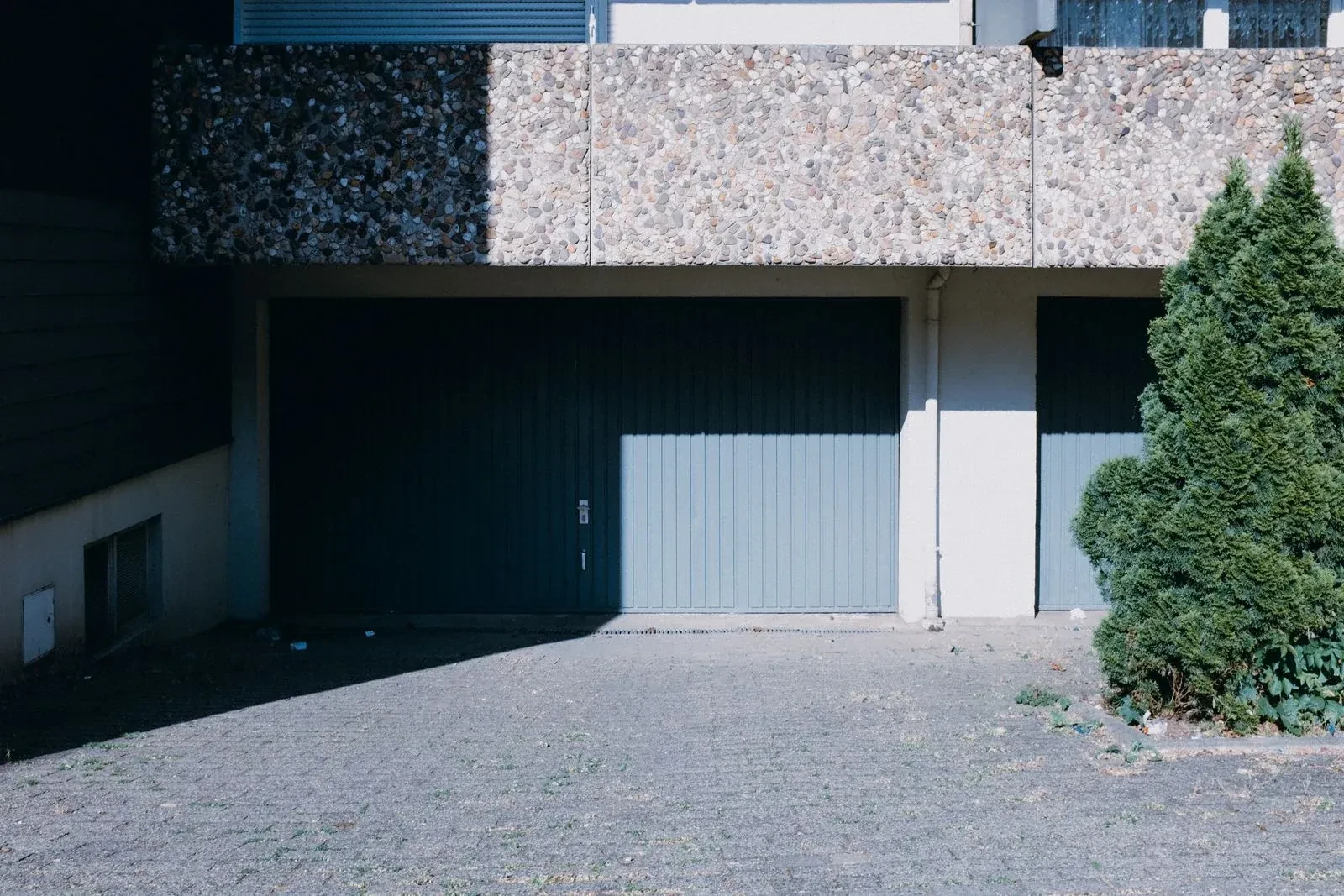
Garage Doors in Lansing, OntarioNew siding.New door to match.
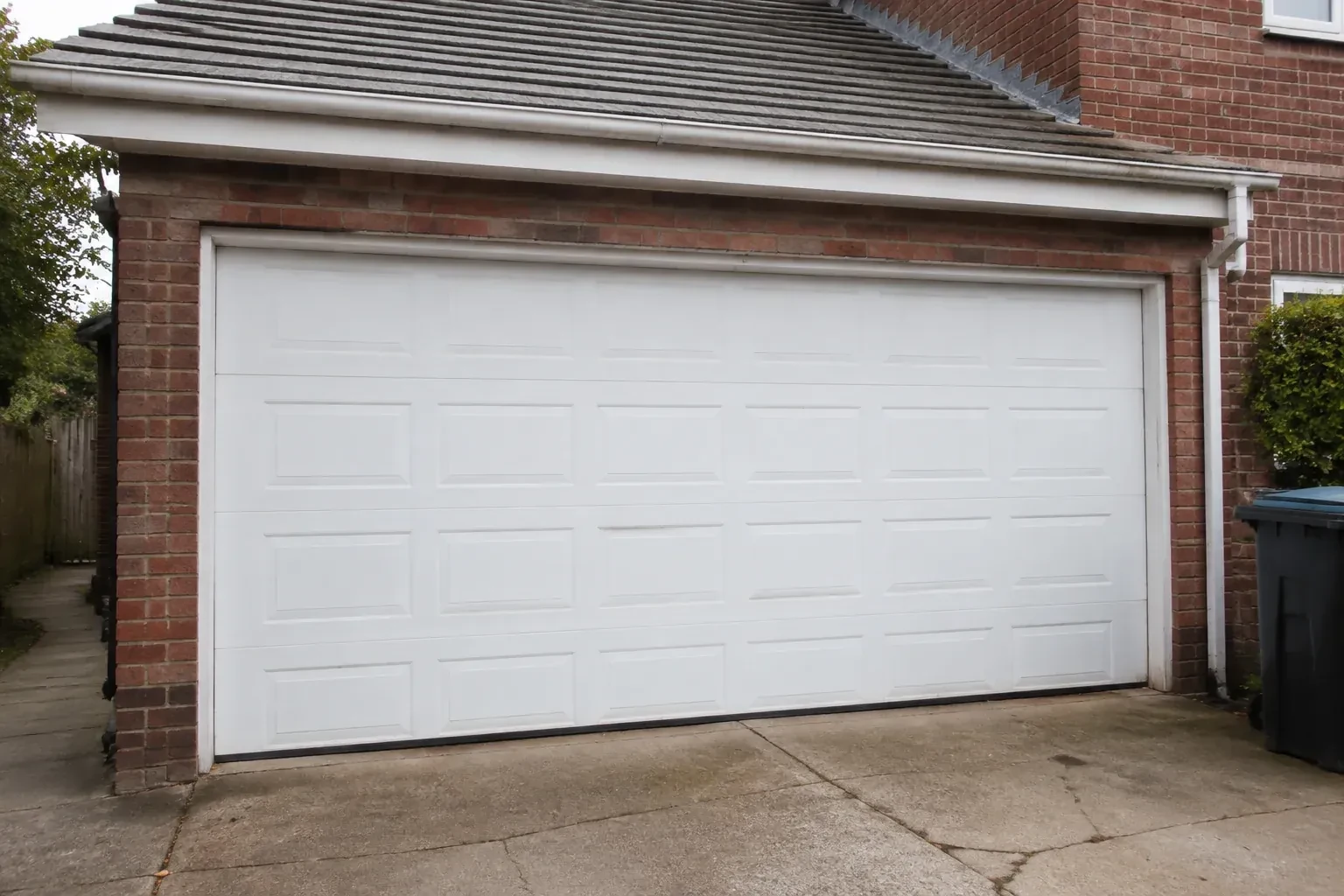
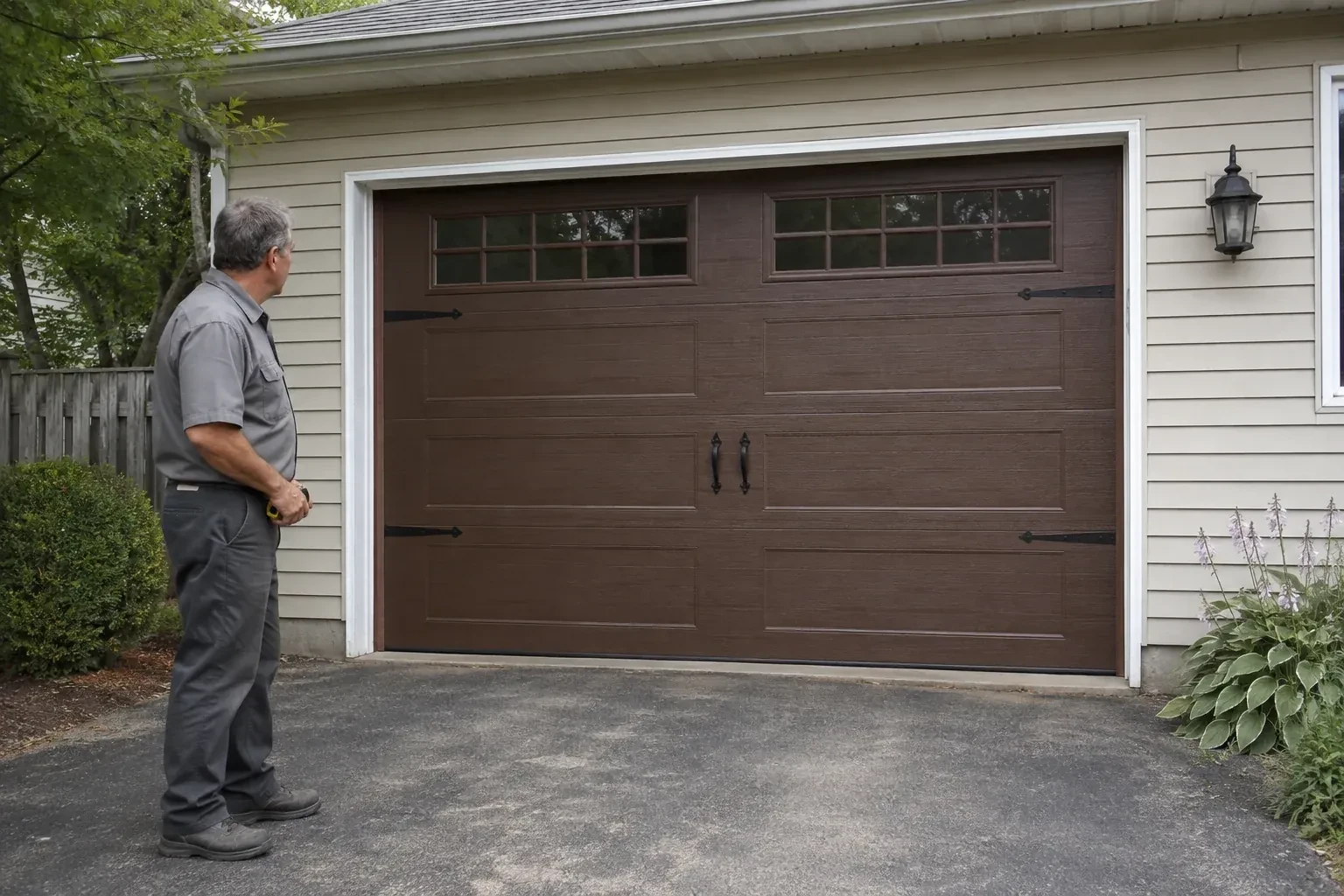
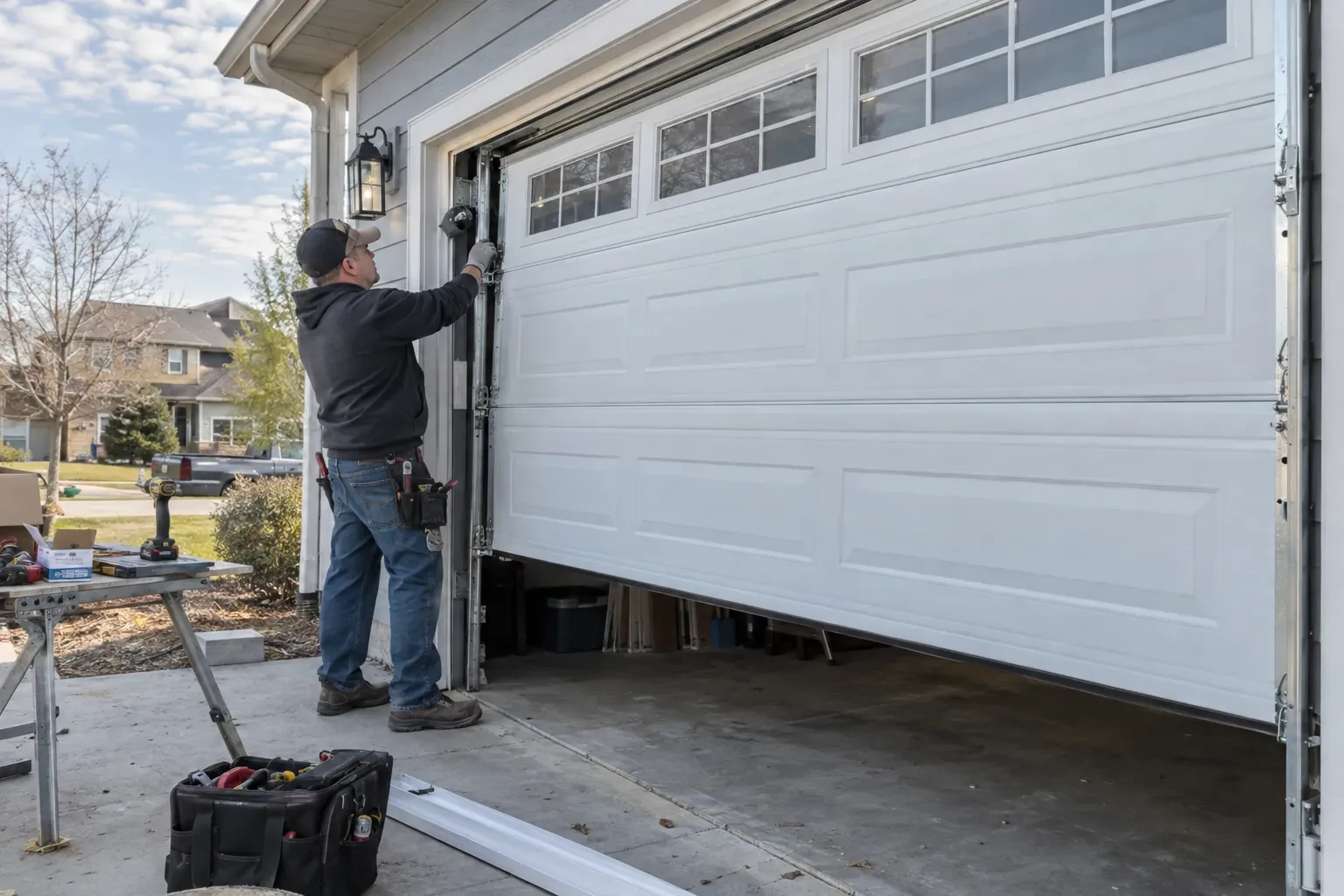
A renovation changes the face of a house, and the old garage door can suddenly look out of place. We help homeowners in Lansing pick panel styles, window inserts, colours and hardware that suit the new exterior, then install the door plumb and level so it looks intended rather than added. Calls from North York are covered too.
A renovation changes the face of a house, and the old garage door can suddenly look out of place. We help homeowners in Lansing pick panel styles, window inserts, colours and hardware that suit the new exterior, then install the door plumb and level so it looks intended rather than added. Calls from North York are covered too.
Springs, openers and everything between.
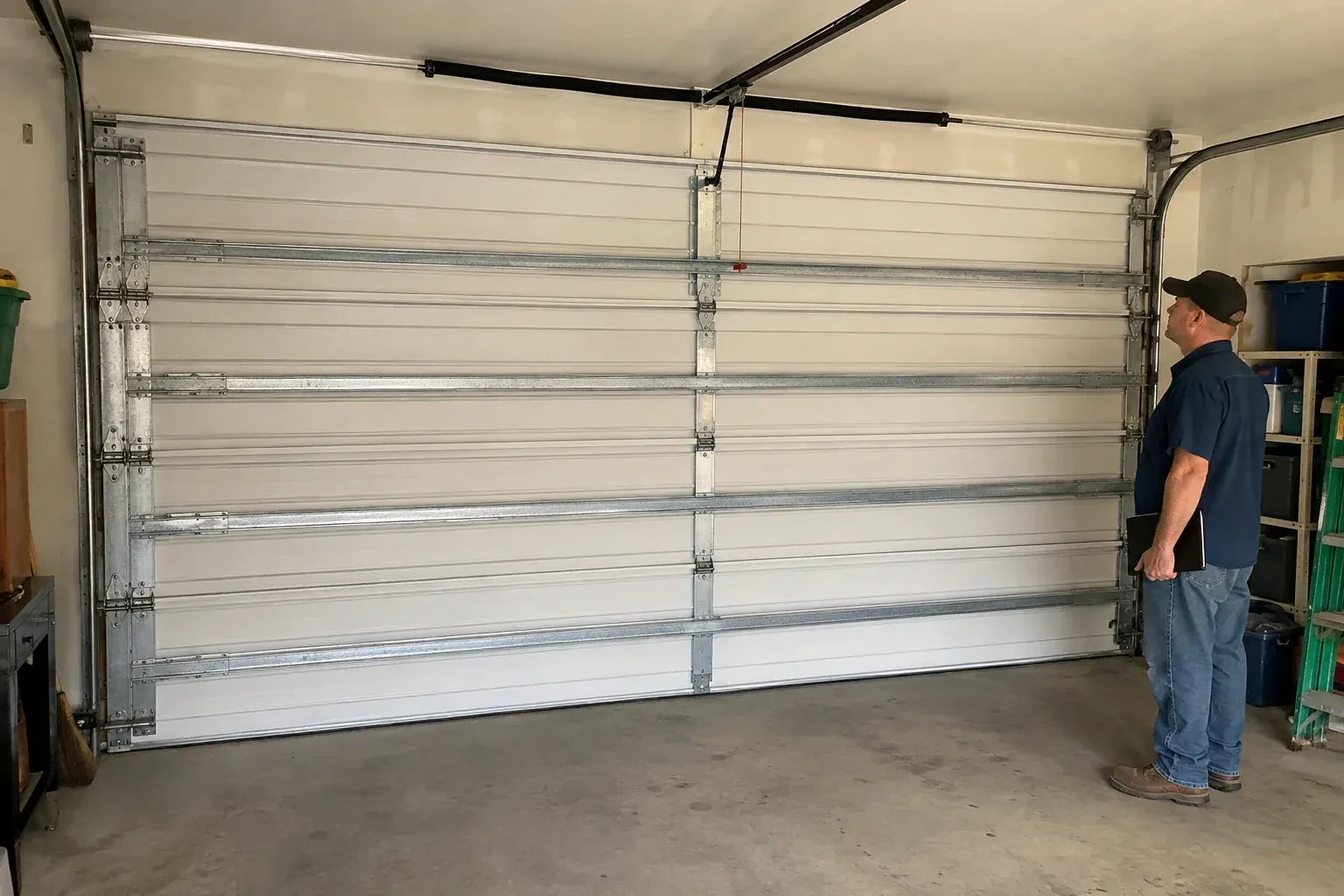
For an older door in Lansing we look for ways to keep it. Original wood doors and extension-spring setups can run for many more years with safety cables, fresh pulleys and a properly set opener. When a door truly is finished, we say so and explain what a replacement would involve, without pushing.
Landlords and property managers with buildings in Lansing call us because a stuck garage door is a tenant problem as much as a mechanical one. We arrange access, keep whoever is responsible informed, and record what was done so the next service is simpler. The doors themselves get the same full inspection and careful repair as any family home.
13years in business
24/7open every day
Talk before tools. The visit begins with a conversation about what you noticed and ends with one about what we did. The work sits in between.
Tidy job, tidy garage. Loose hardware collected, packaging taken away, tracks wiped. We judge our work partly by how the garage looks when we leave.
Options with honest trade-offs. A basic part, a heavier-duty one, or a new door: we describe how each will behave over time and let you weigh it.
Homeowners in Lansing can read below about the repairs we make most, the parts we replace, the opener and remote work we do, and how a new door is chosen and installed. Commercial customers will find rolling and sectional door service alongside the residential pages.
About 58% of homes in Toronto were built in 1980 or earlier, according to the 2021 Census.
Older homes
Older garages are frequently used as workshops or storage as much as parking, which means the door opens many times a day and collects dust on the sensors. Sealed rollers, protected photo-eyes and a tune-up schedule suit that pattern well.
Single-detached houses make up about 23% of homes in Toronto (2021 Census).
Townhouse and condo owners often share responsibility for the door with a board or property manager, so we provide a clear written report after each visit: what was found, what was replaced and what is likely to need attention next, ready to pass along.
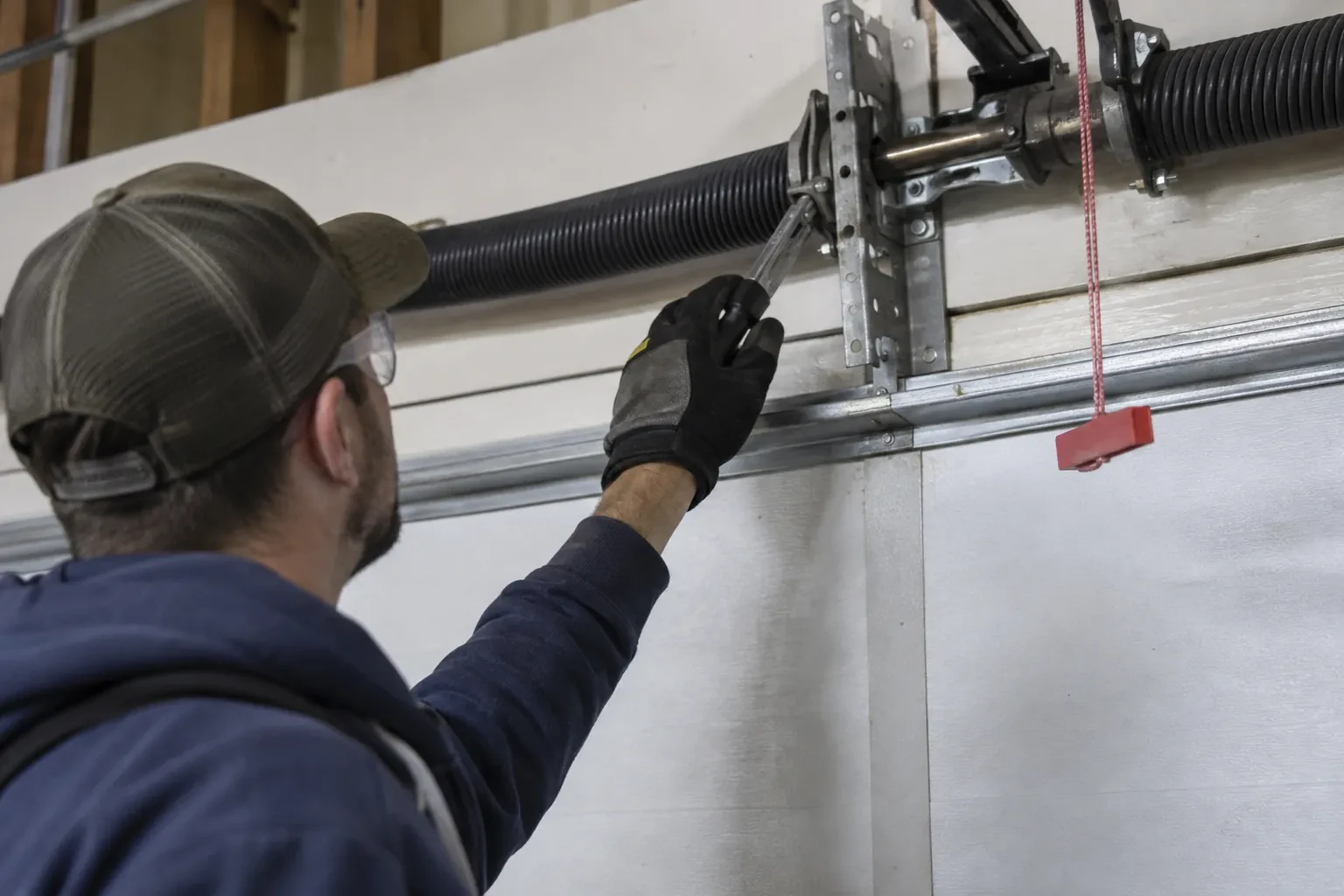
Nothing on a garage door stores more energy than a wound spring. Handling it well means securing the door, releasing the tension in a controlled way, fitting the correct replacement and rewinding to the right count. This category is that work.
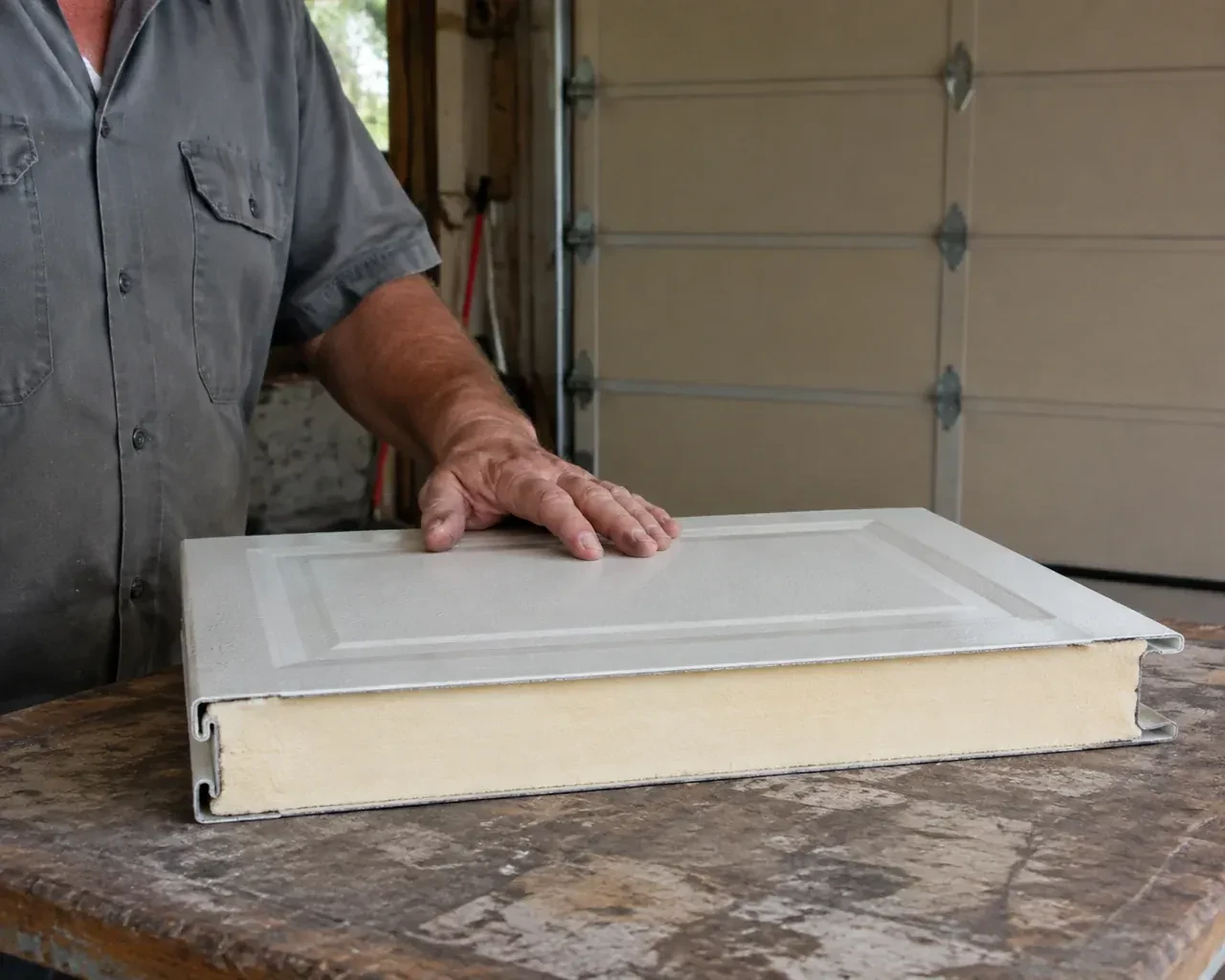
An older home with an original wood door often has an opening that is out of square. Fitting a new door into it well takes care with the jambs and the tracks, and that care is what makes the door seal and run straight.
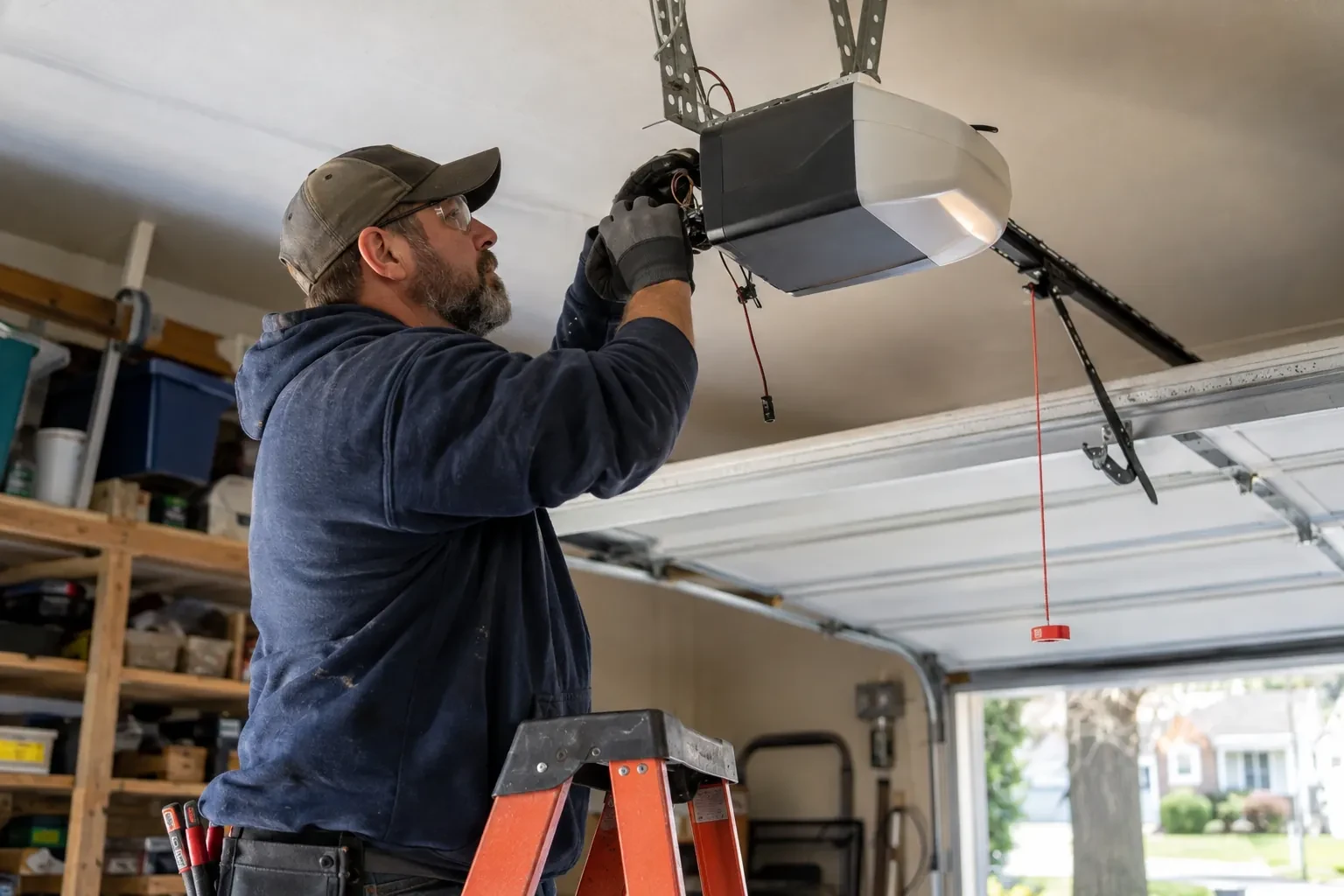
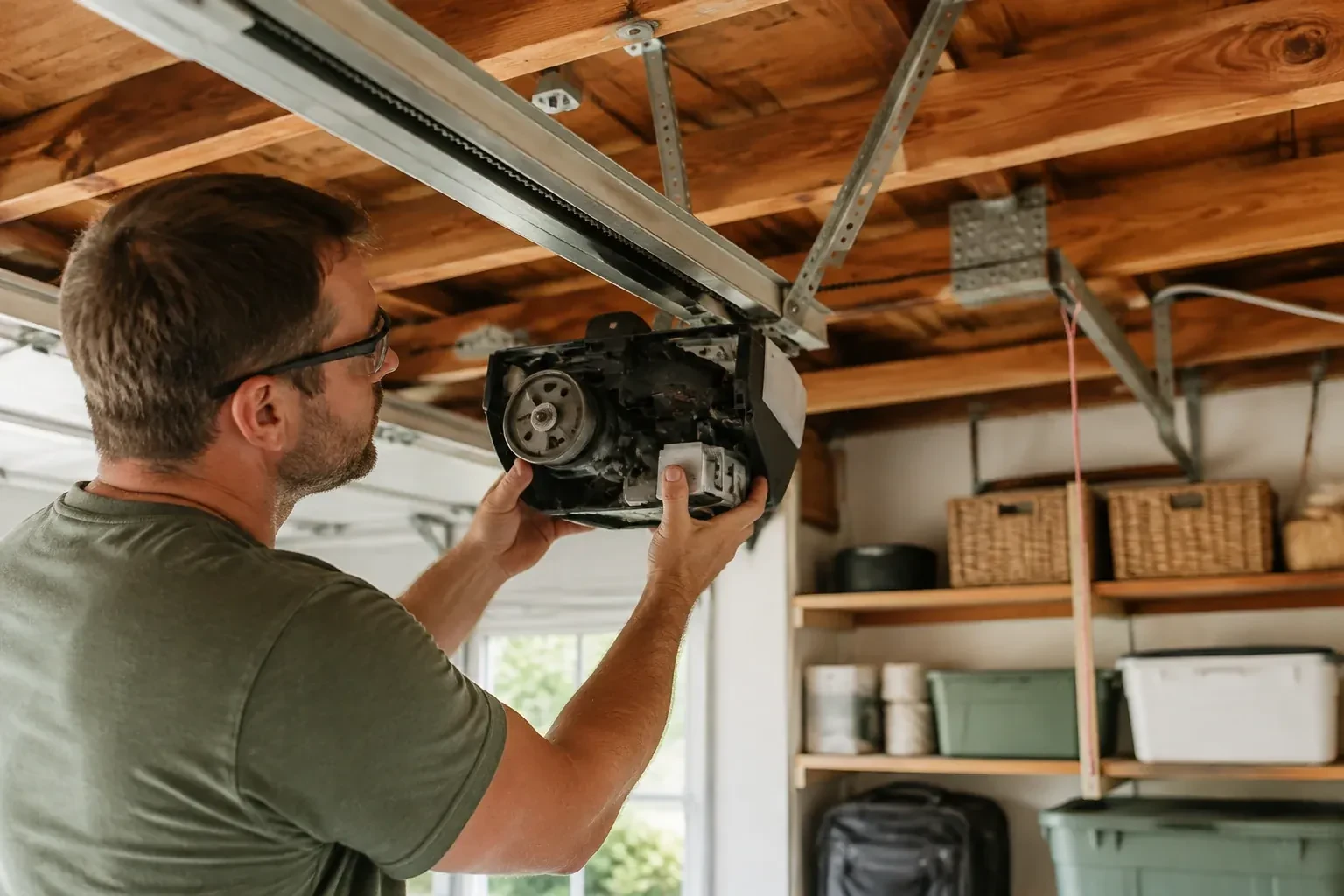
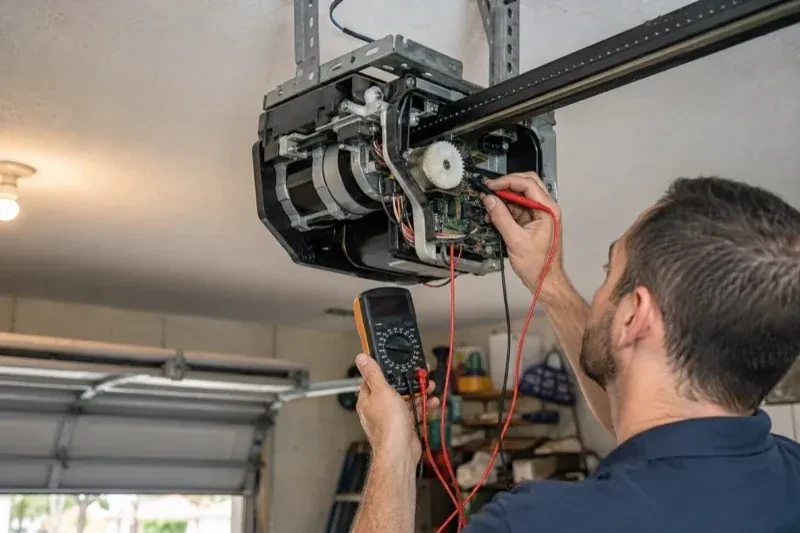
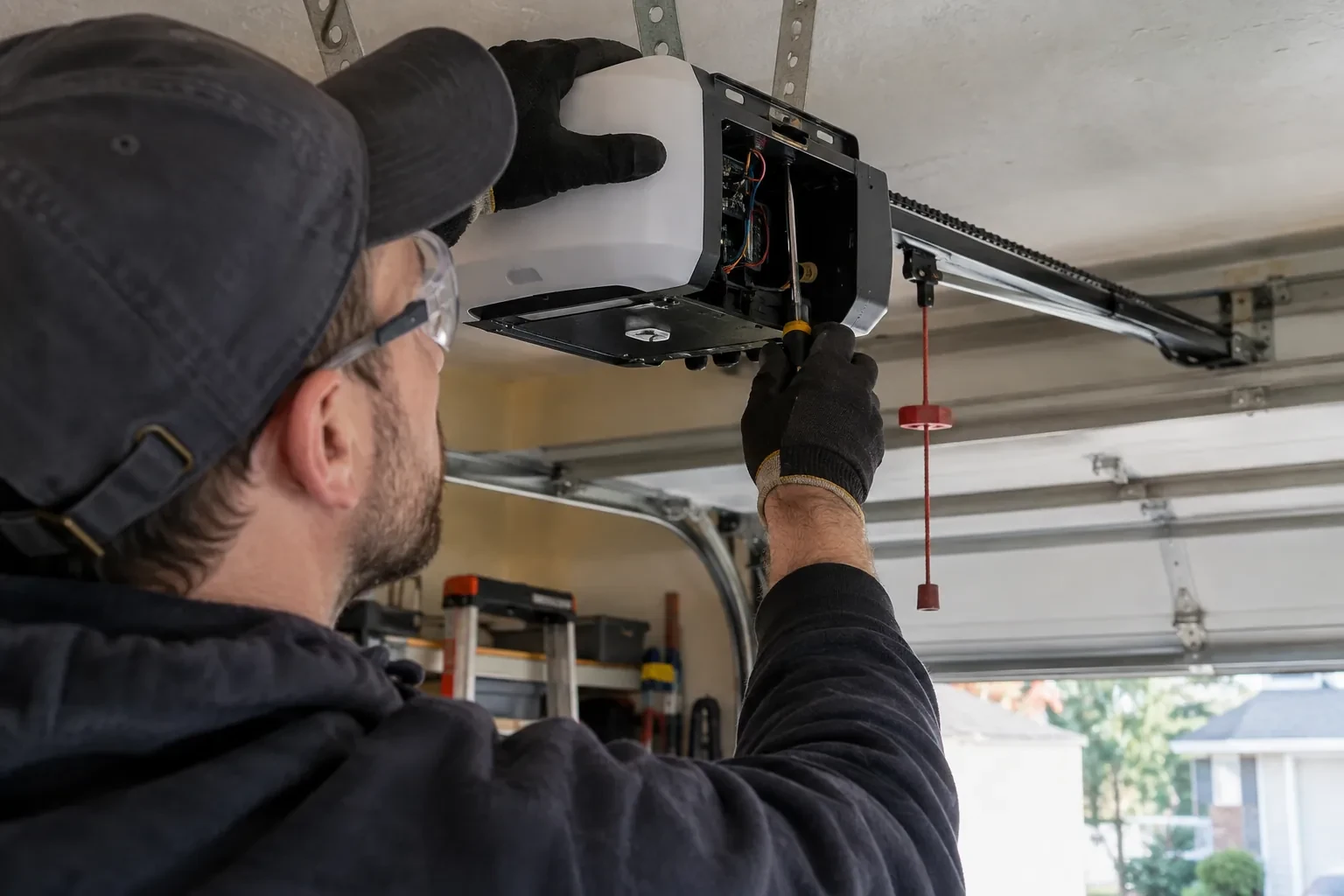
The rail shakes when the door runs. The steel straps holding it to the ceiling have worked loose, the chain rattles the length of the garage, and a bolt has already dropped onto the hood of the car.
The belt looks fine from a distance, but up close the rubber has cracked across the back in dozens of places and, in one spot, you can see the steel cords showing through.
During the ice storm the power was off for two days. You came home in the dark, found the door dead, and had to climb out of the car to pull the red cord in the cold.
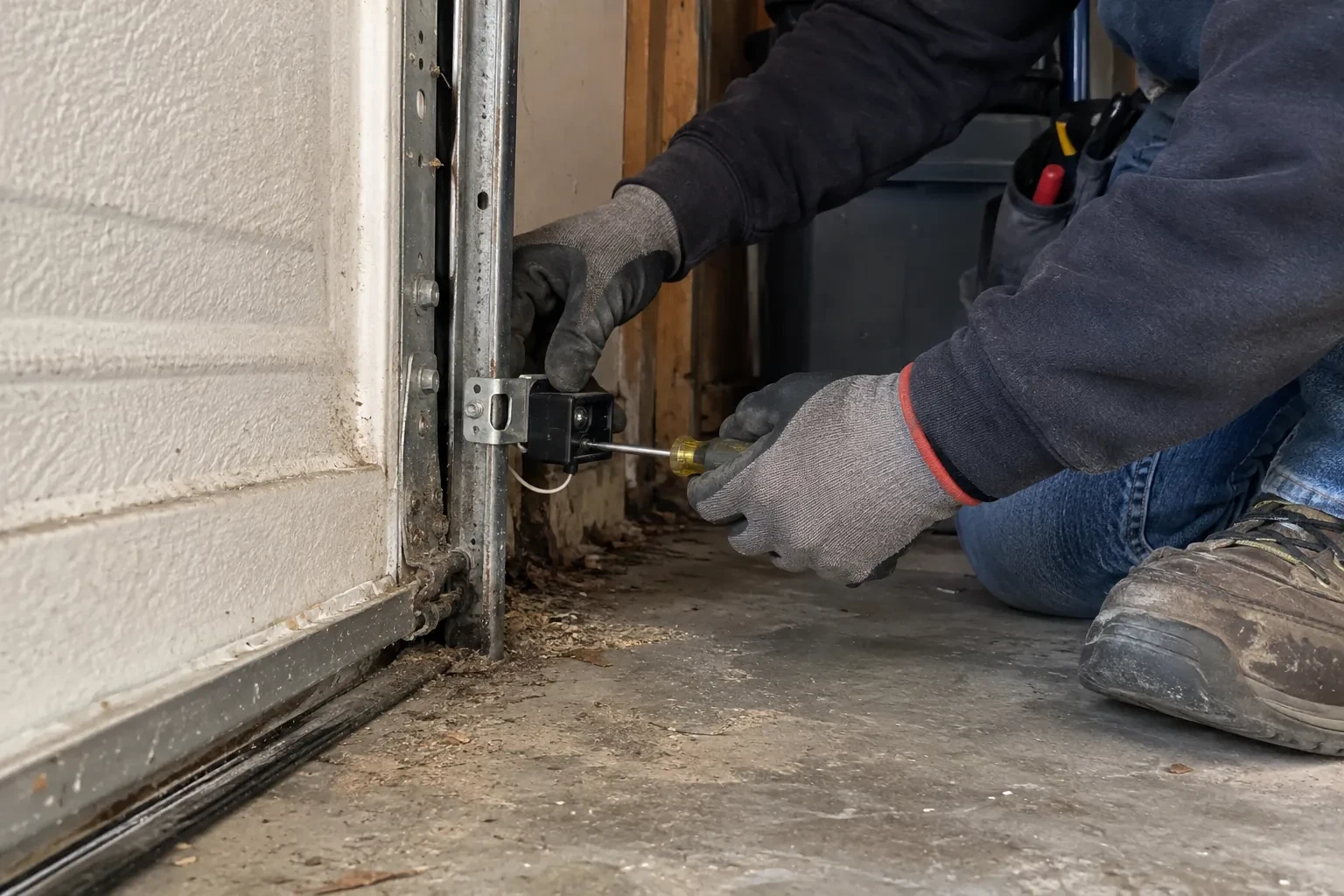
Someone backed the car in a little too far, a bin or a bicycle brushed the track, and since then the door starts to close and comes back up. One sensor now sits at a slightly different angle from the other.
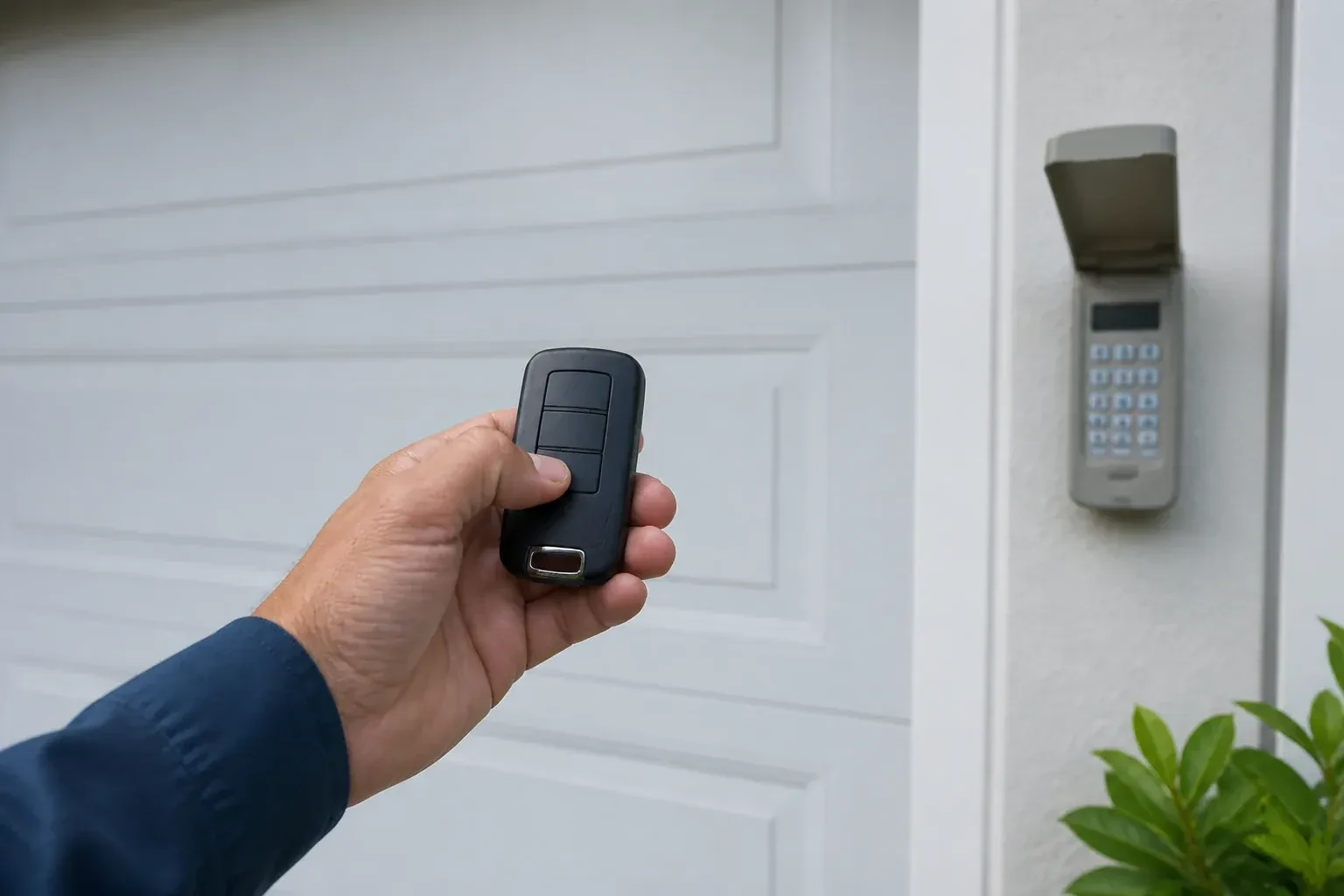
After the move, the previous owner's remotes are somewhere in another city and the keypad on the outside wall wants a code nobody wrote down. The wall button works.
Your daughter gets home from school an hour before anyone else. She has lost two house keys this year, and the garage keypad code has been shared with half her class.
After a week of lifting the door by hand you pressed the button, hoping it would catch. Instead the motor grinds, the trolley thumps against the end of the rail, and the little lever that should snap back stays stubbornly upright.
Which fix fits?
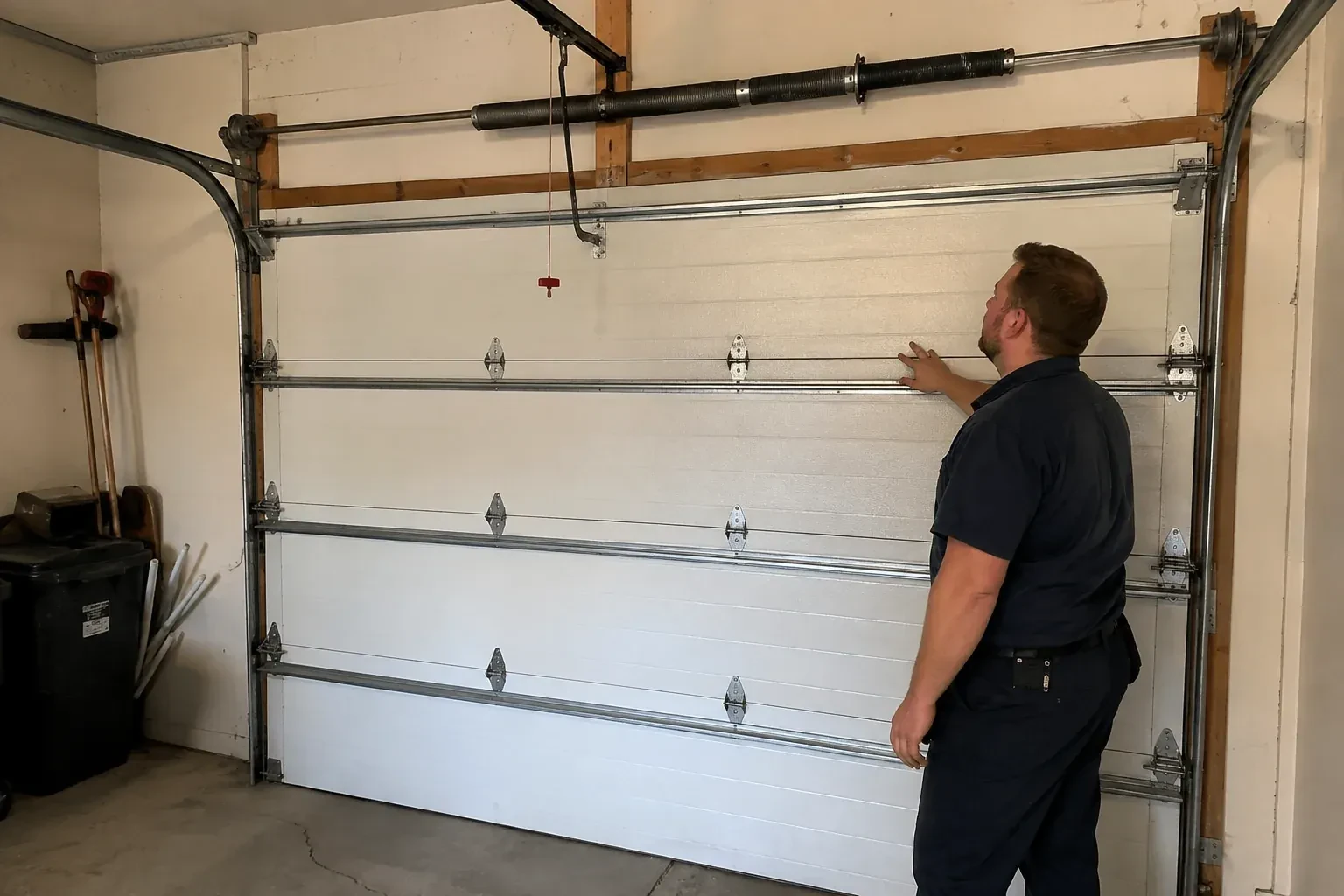
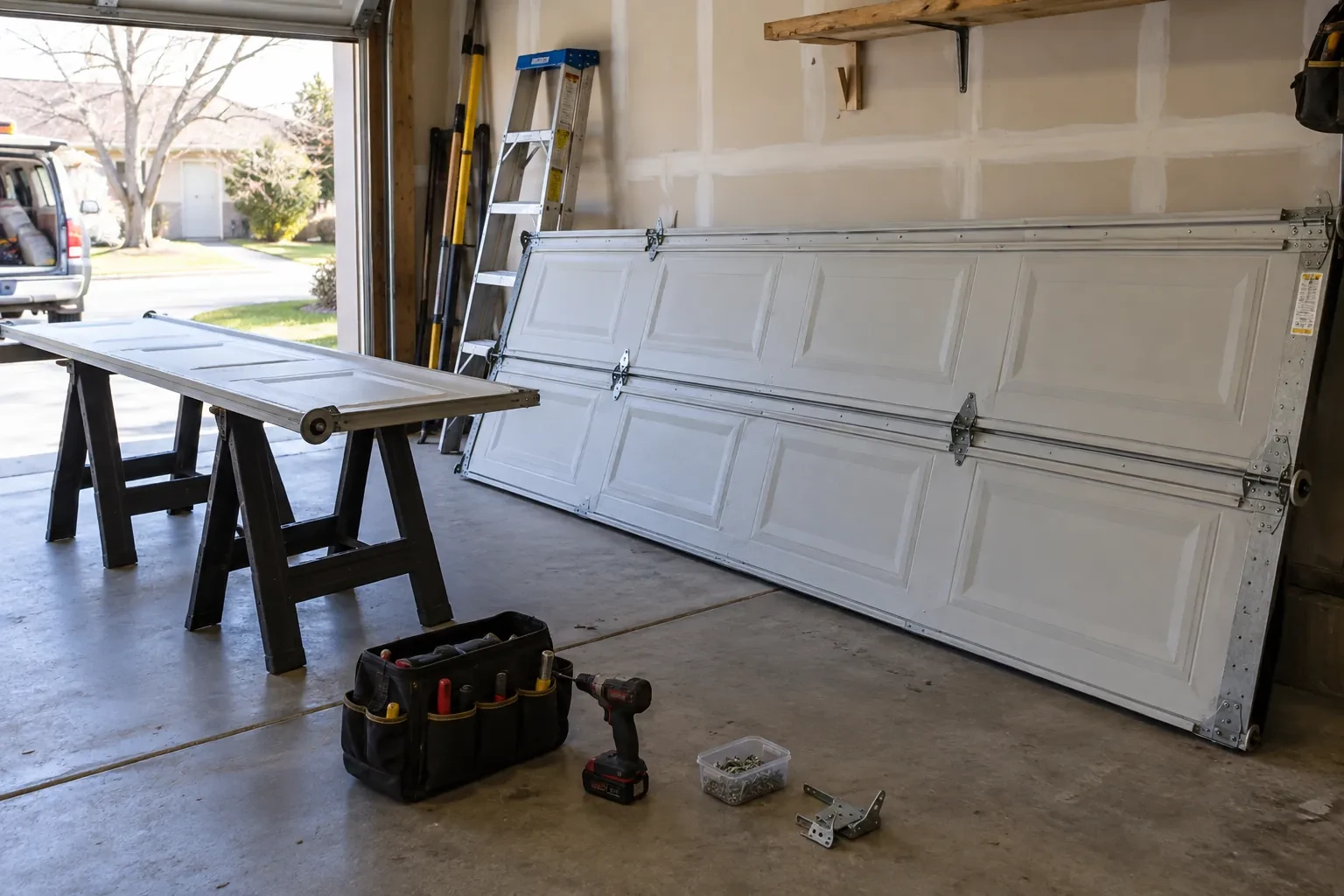
The roller at the top of the second panel is leaning outward and only half of the wheel is still in the track.
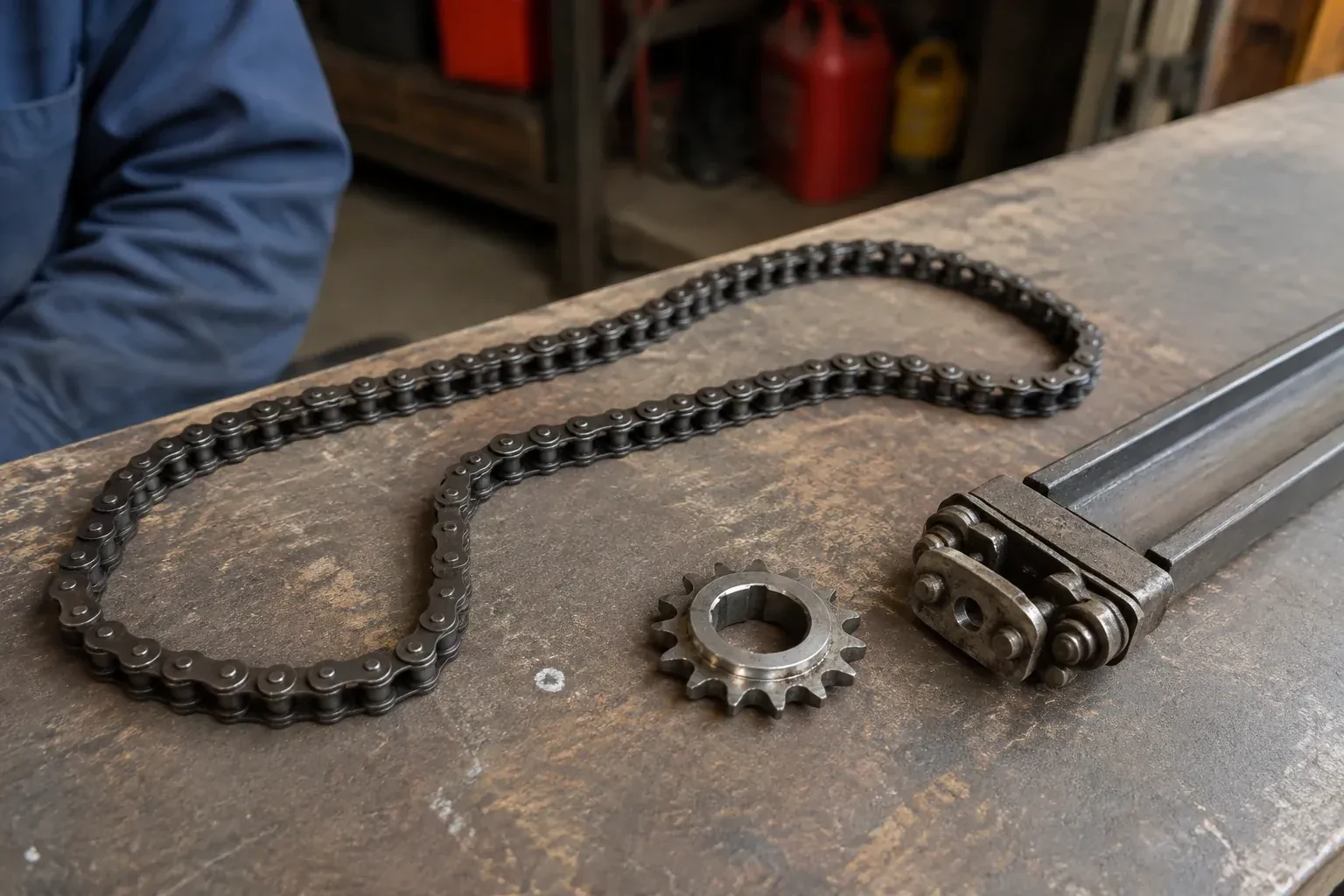
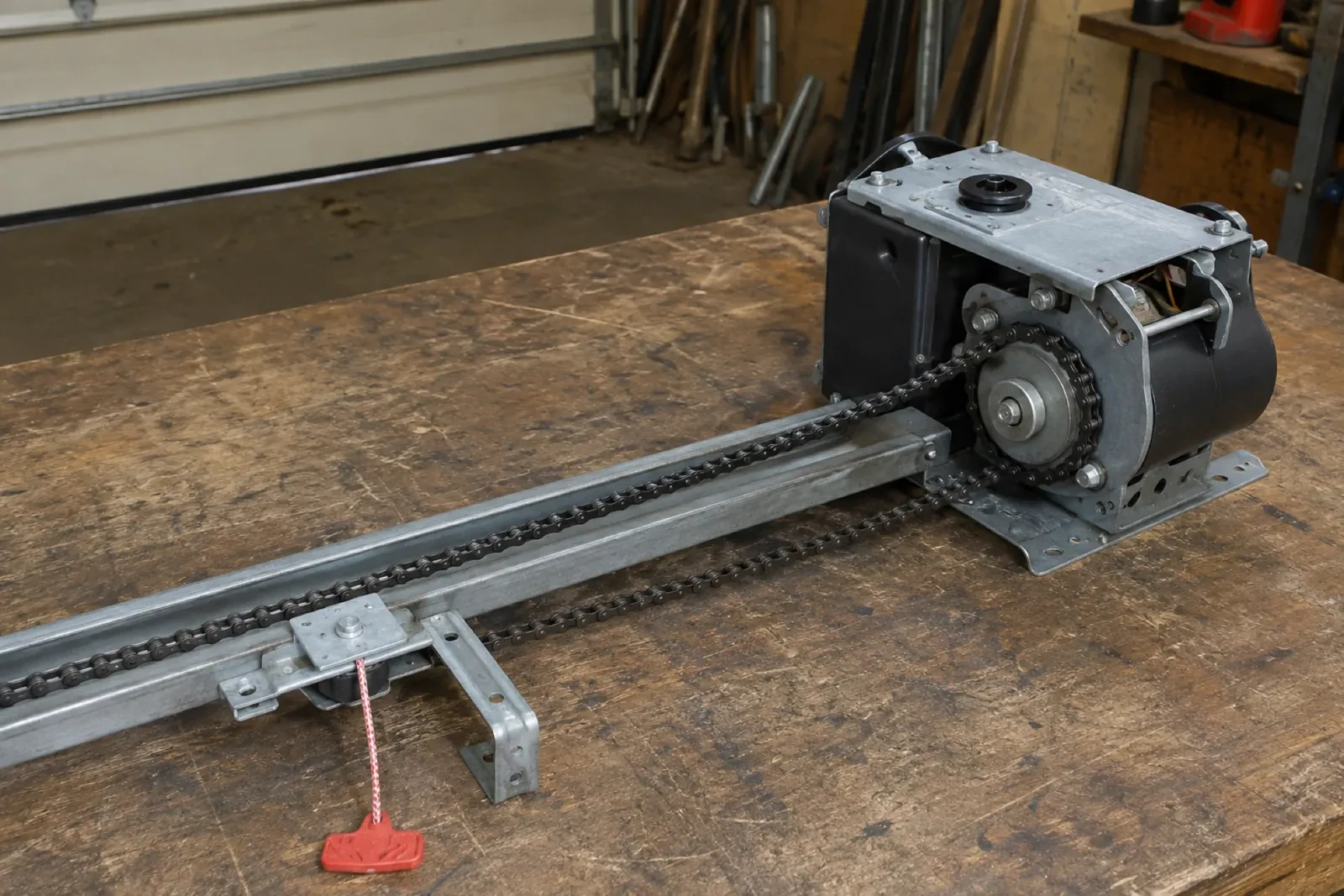
WhyThe trolley is the carriage that rides the rail carrying the door arm, and many chain-drive calls end there.
The belt looks fine from a distance, but up close the rubber has cracked across the back in dozens of places and, in one spot, you can see the steel cords showing through.
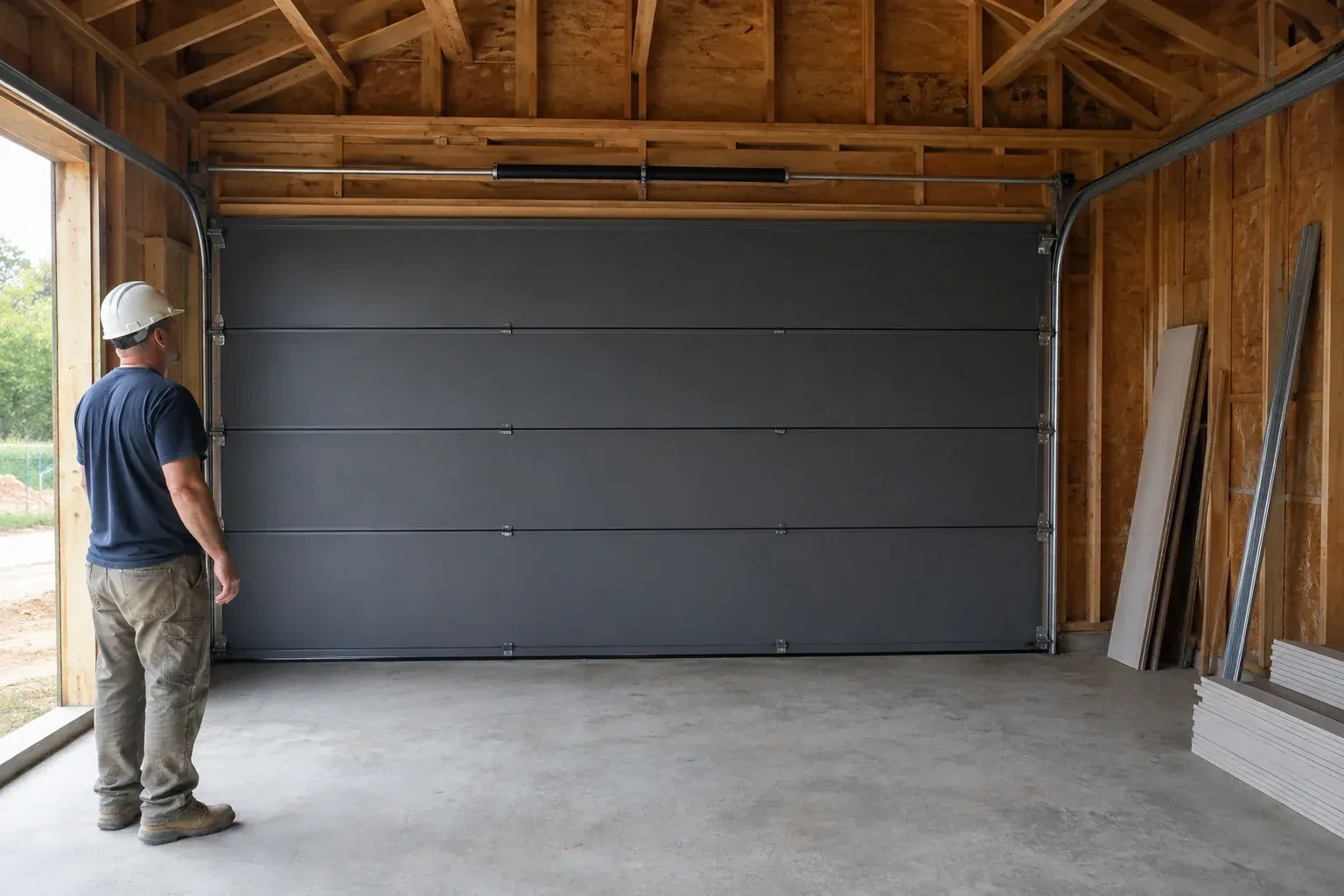
WhyA successful installation begins before the door arrives.
Workshop equipment is moving in, and the present opener rail and door sections occupy the same overhead zone planned for lighting and clear working space.
WhyA high-lift project can often retain sound door sections while changing the hardware that guides and balances them.
An entrance. Not an afterthought.
1/10Garage Door Hinge Replacement
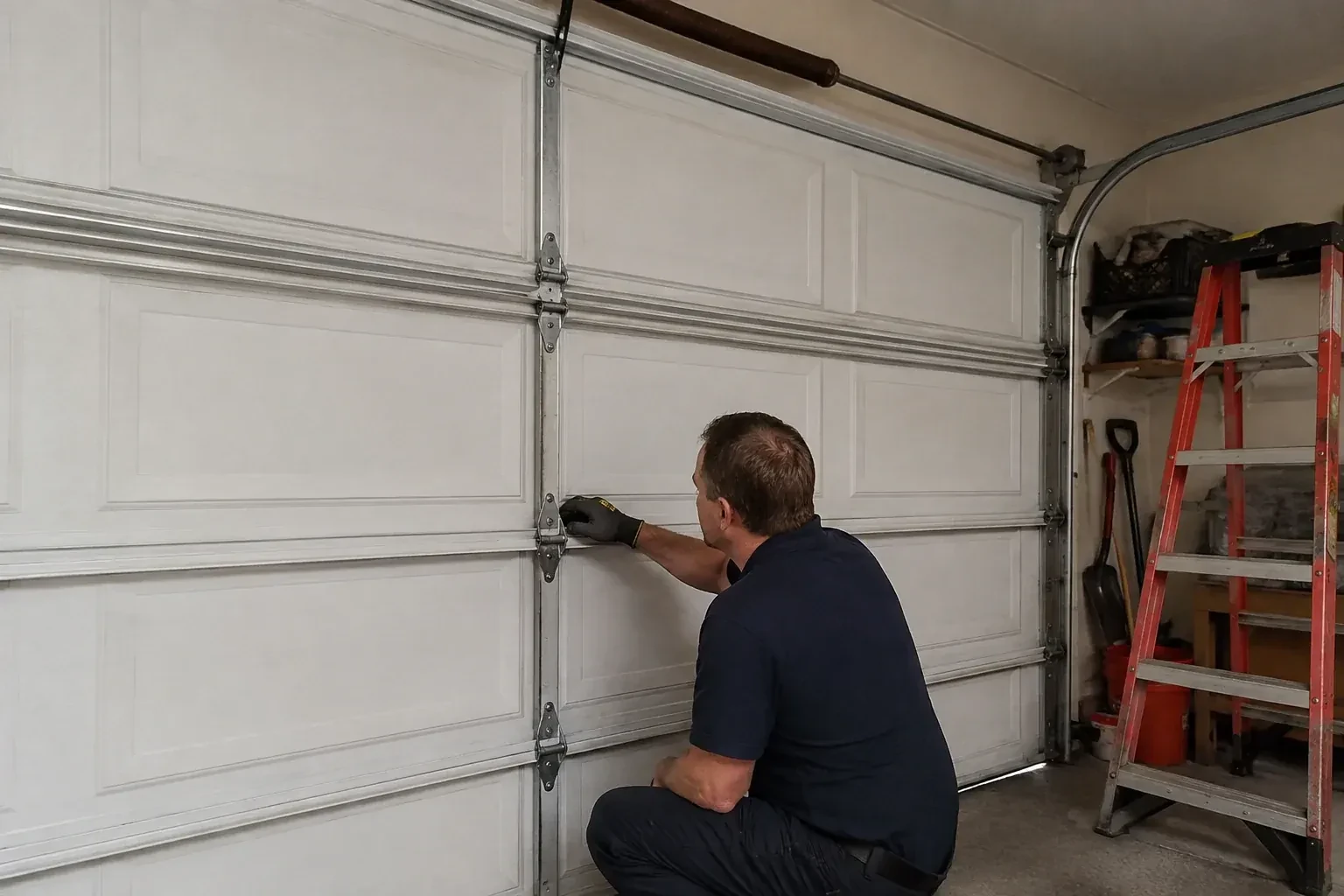
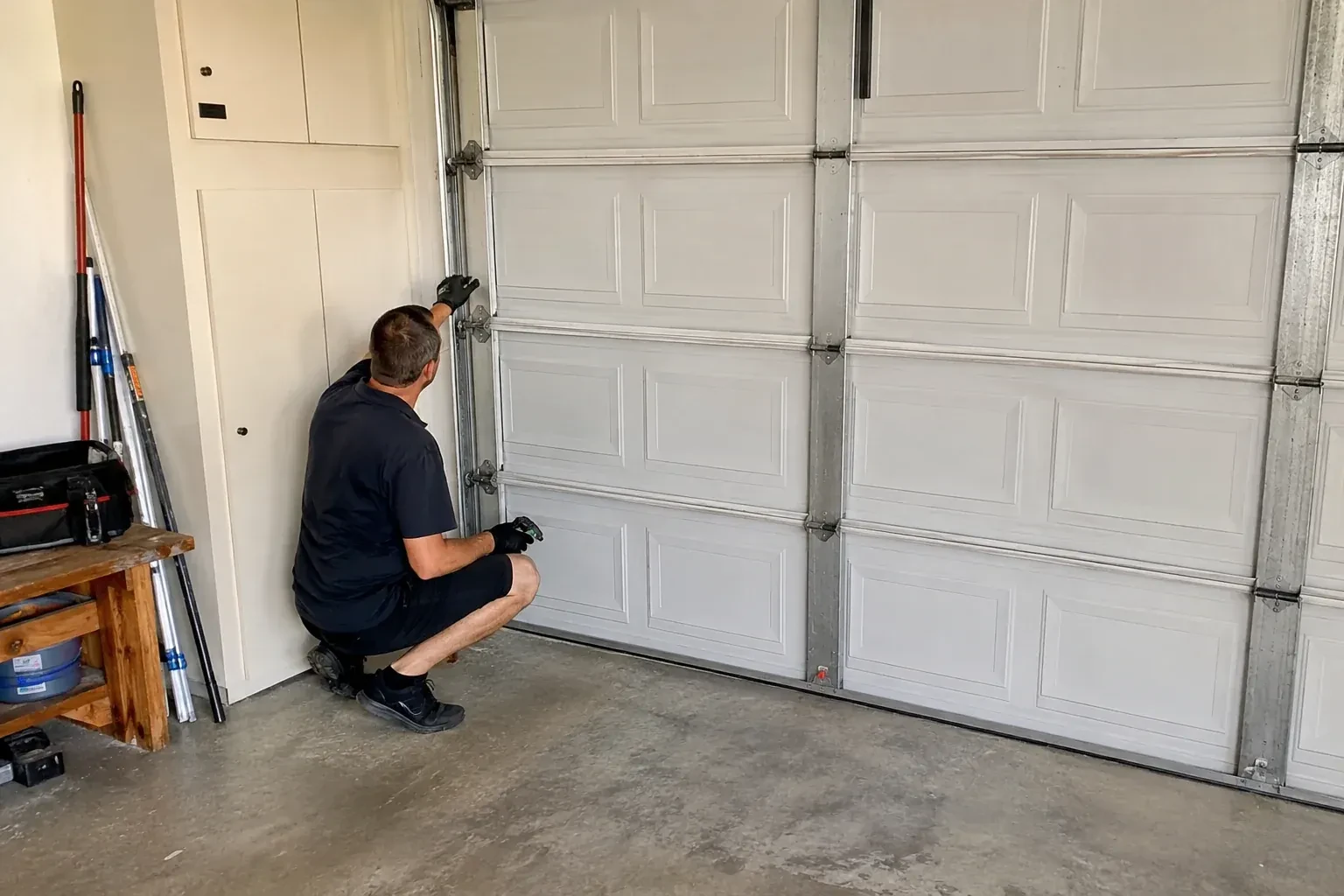
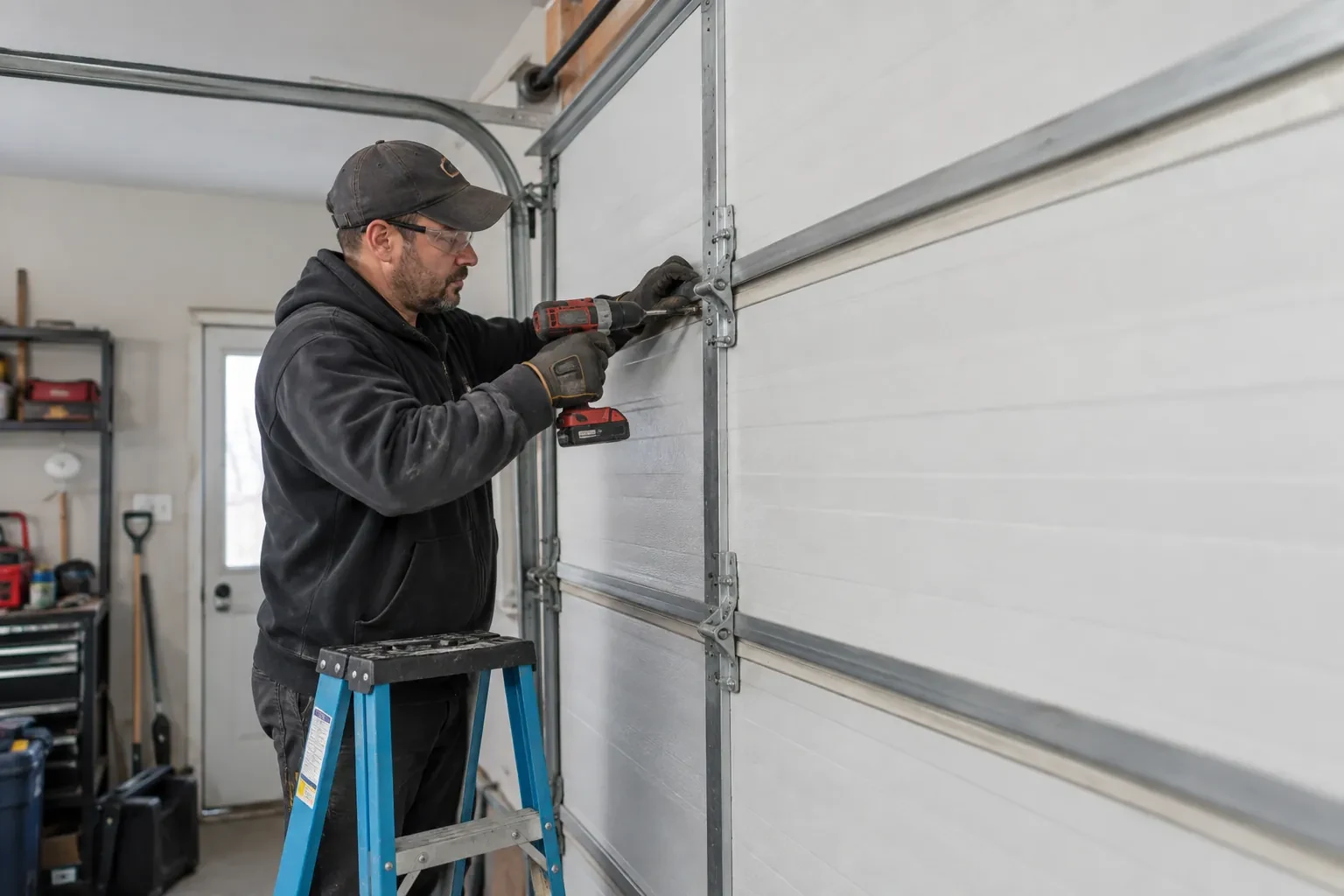
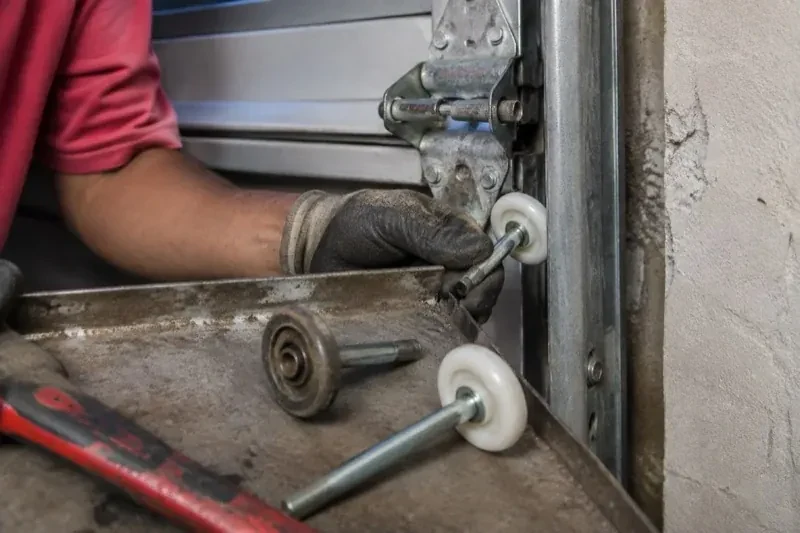
The roller at the top of the second panel is leaning outward and only half of the wheel is still in the track. Behind it, the hinge that should hold it flat against the door has a screw missing and another hanging by a thread.
Someone replaced the springs a while back and the door has bounced at the top ever since. It slams open against the stops, then creeps down a few inches, and the opener trolley rattles because the door is pushing where it should be resting.
The door closes, touches the floor, then climbs straight back up as if it hit something. Nothing is in the way, the sensor lights are steady, and it has been doing this since the weather turned.
The belt looks fine from a distance, but up close the rubber has cracked across the back in dozens of places and, in one spot, you can see the steel cords showing through.
You press the remote, the door drops a few centimetres, then climbs straight back to the top while the opener light blinks. Nothing is under the door. It has done this every evening this week.
Your remote was in the visor when the car was broken into last night. So was the insurance slip with your address on it. The door still answers that remote, wherever it is now, and you would very much like it not to.
The garage becomes notably colder each winter, with drafts around the perimeter and condensation on thin door sections. You want a replacement selected for better sealing and insulation as part of a more comfortable space.
The current double door shudders when pressure changes outside, and daylight appears briefly along one edge. Its tracks are light, the jamb material is aging, and no one knows which reinforcement was originally specified.
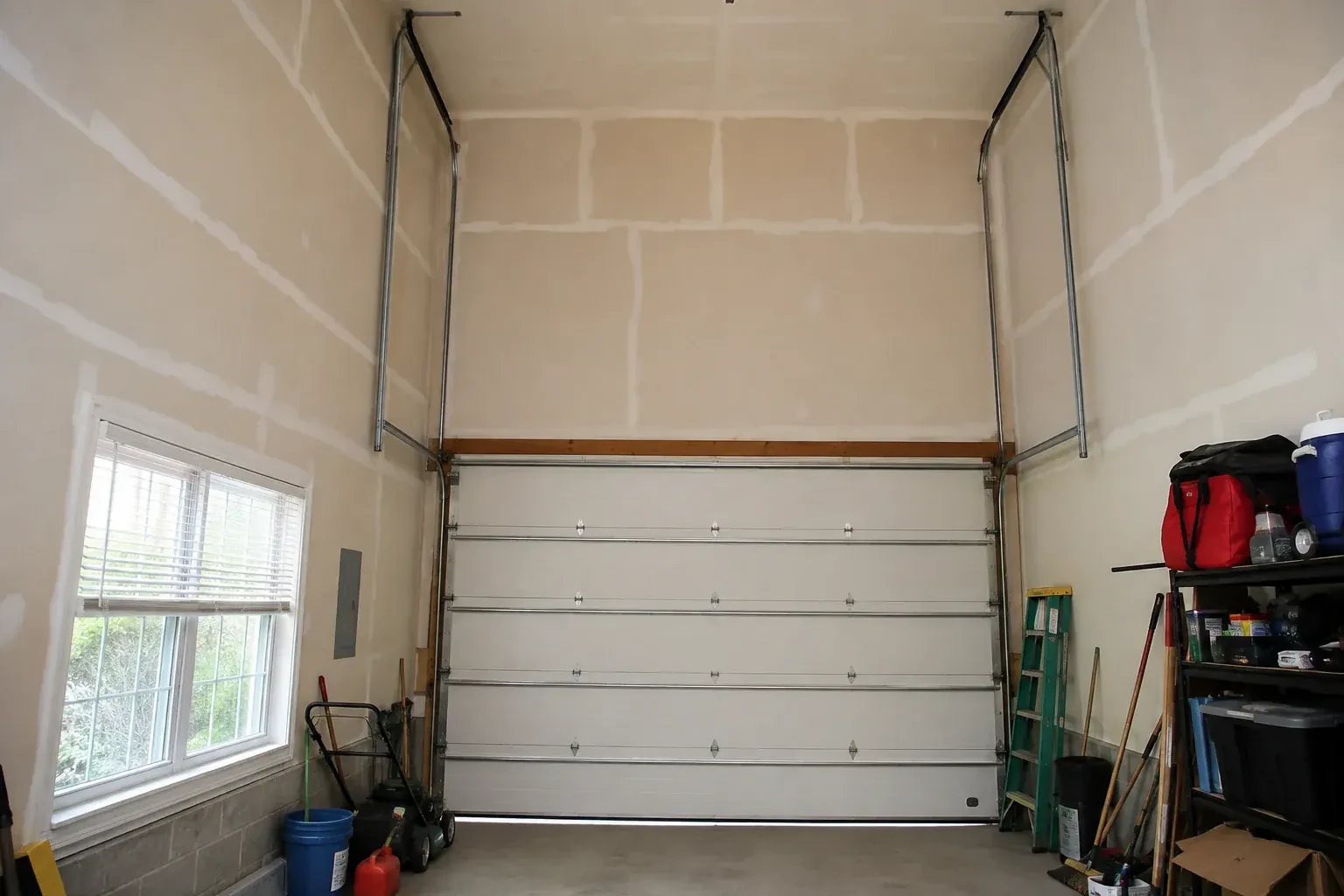
A beam, sloped ceiling or duct crosses the space above the new opening. The door still needs a clear path, which makes headroom, backroom and the right track arrangement central to the plan.
Workshop equipment is moving in, and the present opener rail and door sections occupy the same overhead zone planned for lighting and clear working space. A different travel path could organize that ceiling area more effectively.
The screws spin in their holes. Can the hinge still be fitted securely?
Yes. A stripped hole is common on older steel doors and on wood doors where the timber has softened. The technician either shifts the hinge to fresh metal within the stile, uses a larger self-drilling screw that cuts new threads, or drills through and fits a bolt with a nut and washer or a backer plate on the inside. Any of these gives the new hinge a firmer anchor than the original screws had.
The door was fine until a power cut. Why is it heavy now?
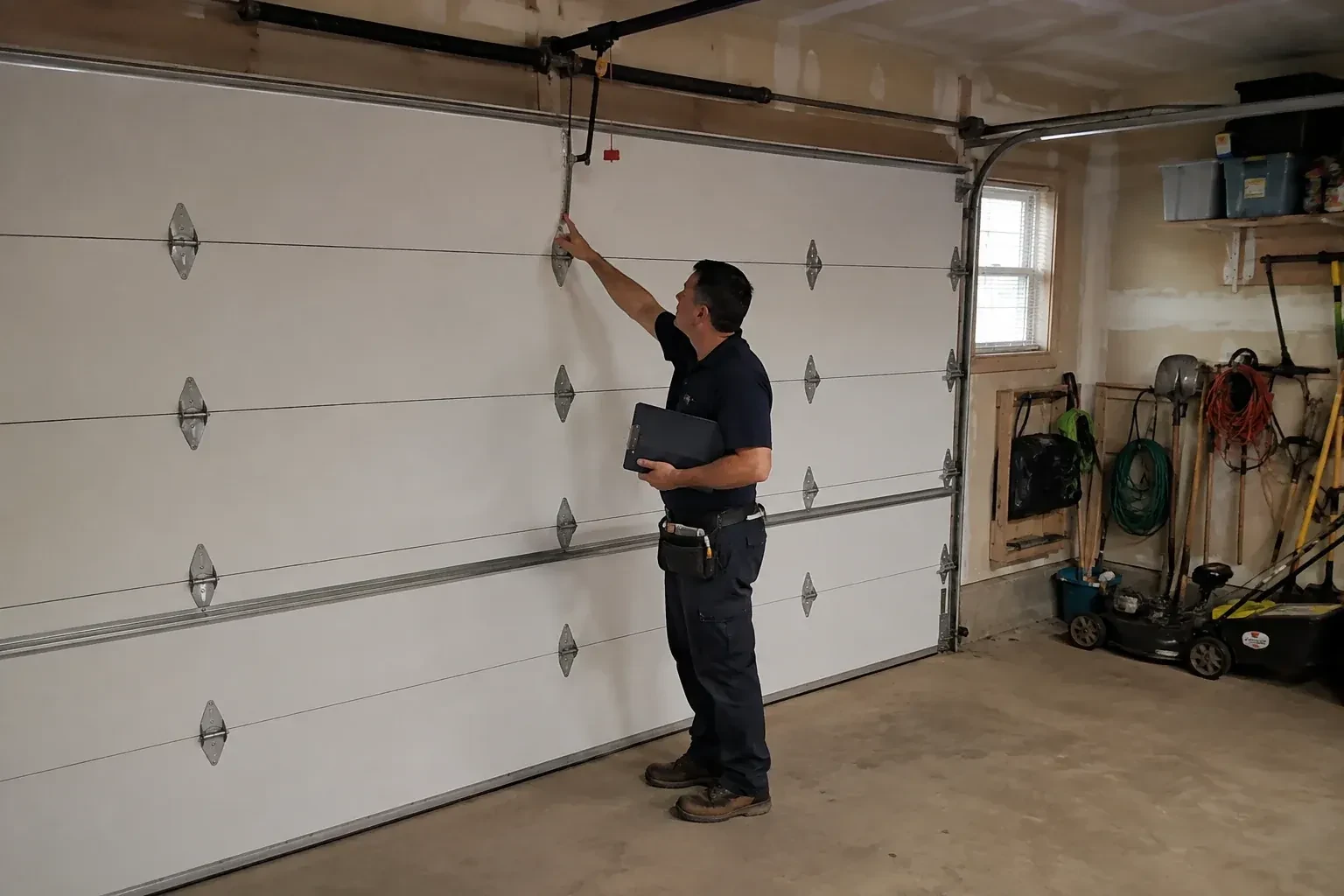
During a power cut the door is often released and moved by hand for the first time in years, and what people discover is a door that had already grown heavy while the opener quietly covered for it. The outage did not change the springs; it revealed them. A balance check confirms what the door weighs against what the springs give, and resets them to match.
My opener is decades old. Can the chain drive still be repaired?
Often, yes. Gear kits, sprockets, chains and trolleys are still made for many older heads, and tension, phase and limits can be set on almost any unit. The limit is parts: some makers no longer support units made before the mid-1990s, and those also lack the photo-eye protection expected today. The technician checks parts availability for your model and lays out repair beside renewal so you can decide with the facts.
What are the plastic shavings under the motor head?
They are from the drive gear inside the head unit, which is stripping its teeth. On a belt drive the gear turns the sprocket that moves the belt, so a stripped gear leaves the motor humming and the belt still. The gear-and-sprocket kit is replaced as a set, the shaft's end play is checked, and the belt is refitted and phased.
How should I clean the lenses?
Gently, with a soft dry or lightly damp cloth, the way you would clean eyeglasses. Never scrape a lens or use a solvent, since a scratched or clouded lens scatters the beam. Wipe both sensors, then check that the receiving light comes on steadily. If a lens frosts on cold mornings, give it a few minutes to clear or dry it with a cloth. A quarterly wipe keeps dust, cobwebs and salt film from building up.
Why does my remote work only when I am right under the door?
Short range is a signal problem, not a pairing problem. LED bulbs in the opener's own sockets can emit radio noise that swamps the receiver, an antenna wire tucked into the housing cannot hear well, and a coin cell near the end of its life transmits weakly before it dies. Swapping the bulb, letting the antenna hang free and fitting a fresh cell usually restore range; if not, the receiver is checked.
How is the correct spring system selected?
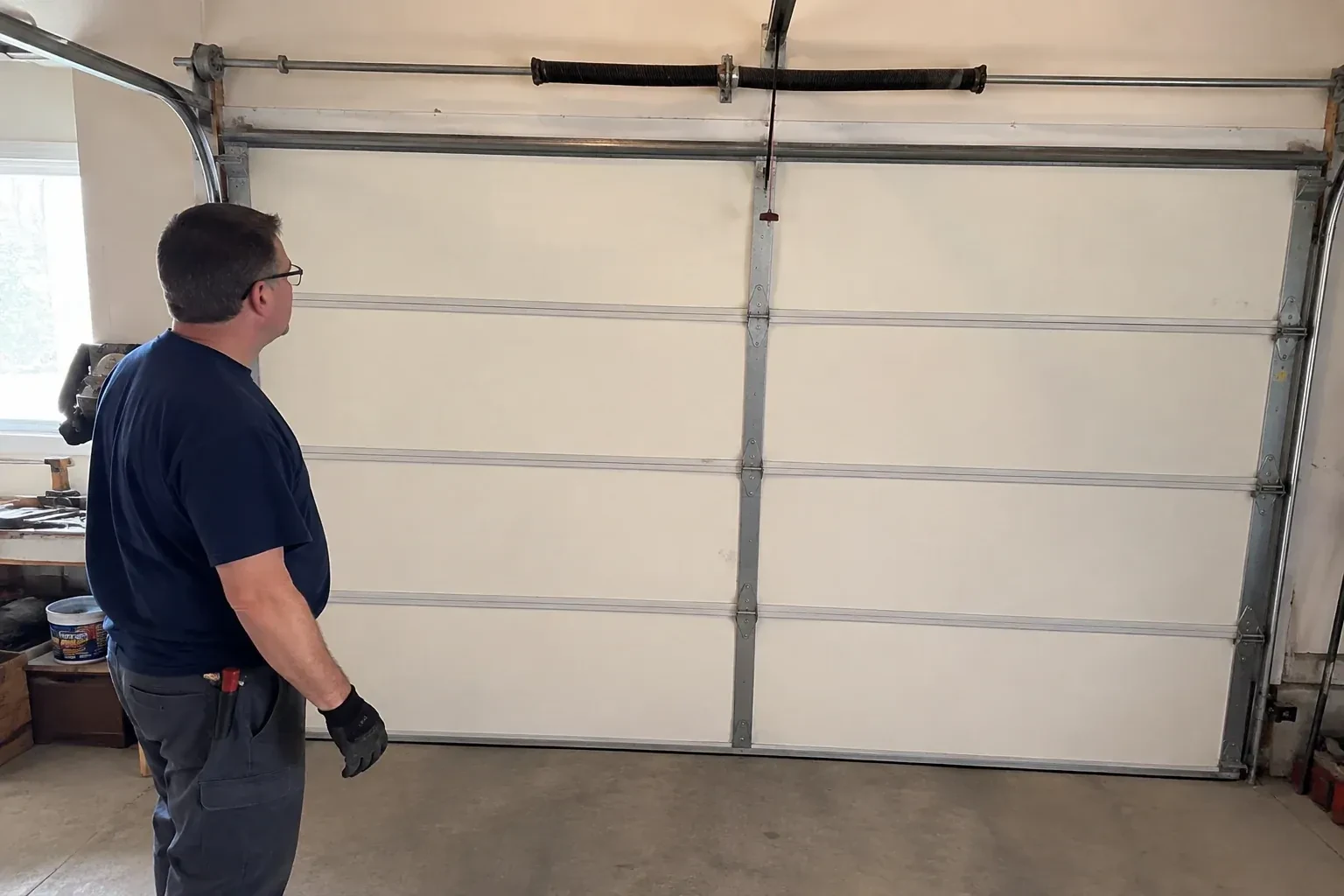
Counterbalance parts are chosen from the new door's actual size, completed weight, track arrangement and hardware configuration, using the door system's specifications. Torsion and extension layouts use different components and space. Once installed, controlled adjustment and manual balance checks confirm how the spring system supports the door through its travel.
Will a reinforced door be heavier than my old one?
It may be. Added struts, different section construction, glazing, and heavier hardware can change the total door weight. The counterbalance springs are selected for the finished assembly, and the opener is checked for compatibility and correct attachment. With proper balance, the door should still move in a controlled way by hand and under power.
When would a high-lift track arrangement be considered?
High-lift hardware extends the vertical track farther up the wall before the horizontal run begins, which preserves overhead clearance and can follow a taller ceiling. It may suit garages planned for vehicle lifts or other overhead uses. The decision depends on available height, roof structure, door weight, spring arrangement and operator selection. Measuring all obstructions and future equipment is essential before the track geometry is specified.
What records should I receive after the work?
Keep a record of the high-lift dimension, final open-door clearance, track arrangement, drums, cables, spring specification, shaft parts and operator configuration. Component labels, manuals, layout notes and completed test results are also useful. These details help future service and allow other garage projects to respect the door's movement, attachment and access requirements.
Request a visit
For an older door in Lansing we look for ways to keep it. Original wood doors and extension-spring setups can run for many more years with safety cables, fresh pulleys and a properly set opener. When a door truly is finished, we say so and explain what a replacement would involve, without pushing.