Springs · Silver Hills
Garage Door Cable Replacement in Silver Hills
Someone left the snow shovel leaning in the opening and the door came down on it.
In plain words
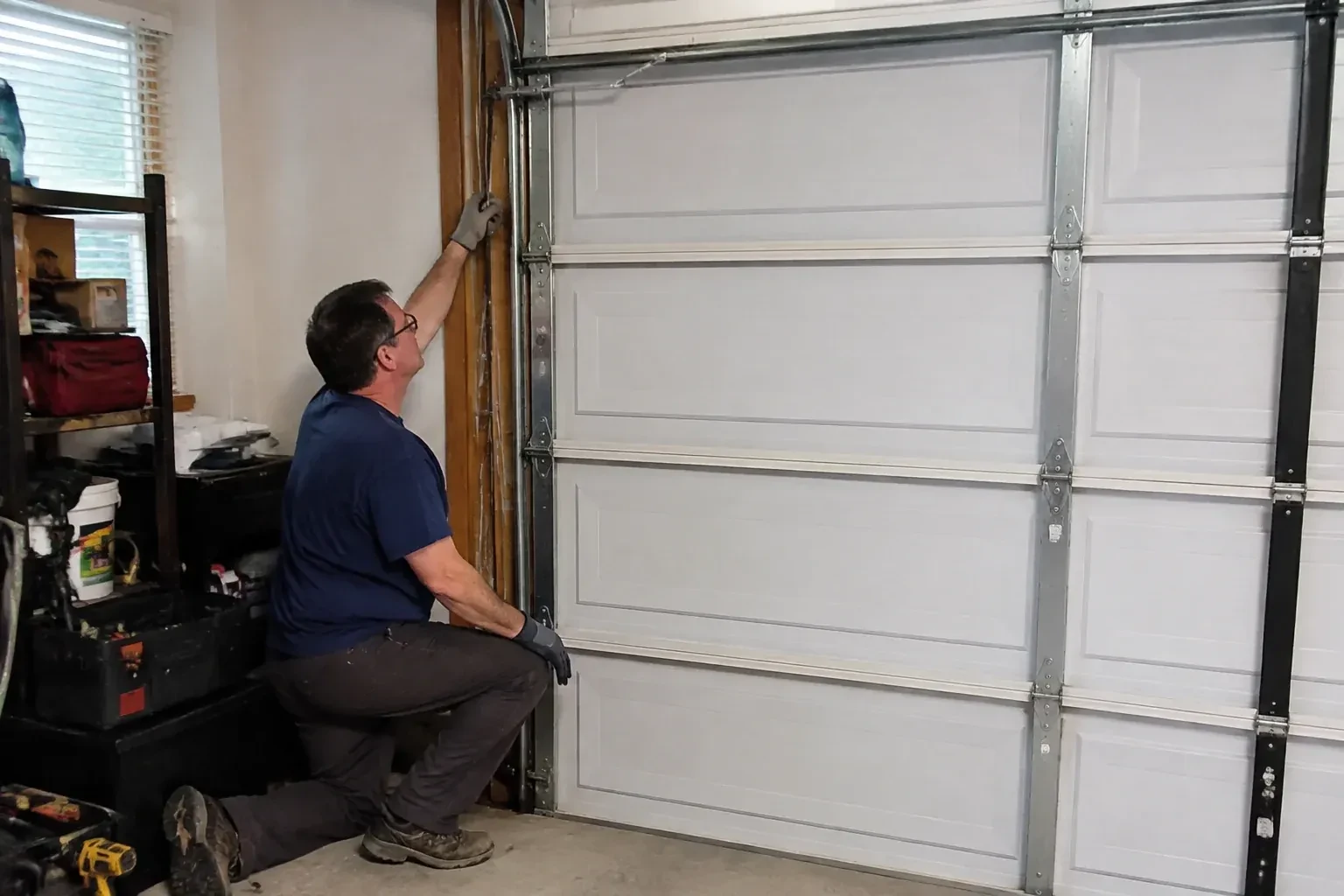
Which counterbalance your door has shapes the job. Torsion doors carry a spring on a shaft above the opening, and the cables wind onto grooved drums at each end; the technician winds the spring down with steel bars, swaps the cables, sets the drums and winds it back up. Extension doors, common on older detached garages, run the cables over pulleys beside the horizontal tracks with a spring stretched behind each; here the door is opened and clamped so the springs relax, then the cable is threaded, adjusted at its clip and checked against its containment cable. Either way, the service ends with a balanced door.
How the visit goesThe car bumper kissed the door on the way in. The bottom panel has a dent, the bracket in that corner sits crooked, and the cable on that side has jumped and gone slack, so the door reverses every time it tries to close.
Garage Door Cable Replacement
How the visit goes
Track, rollers and the door itself
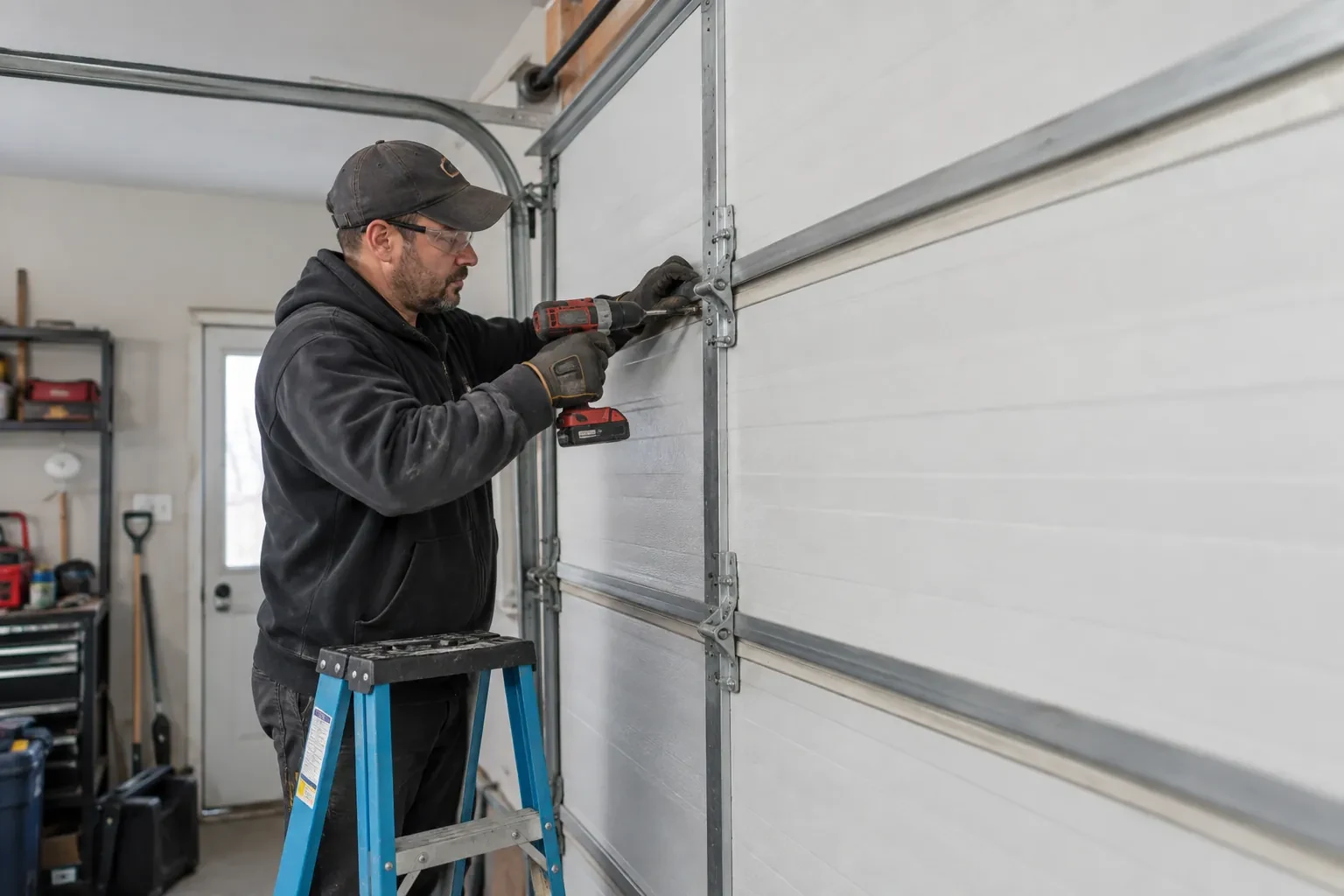
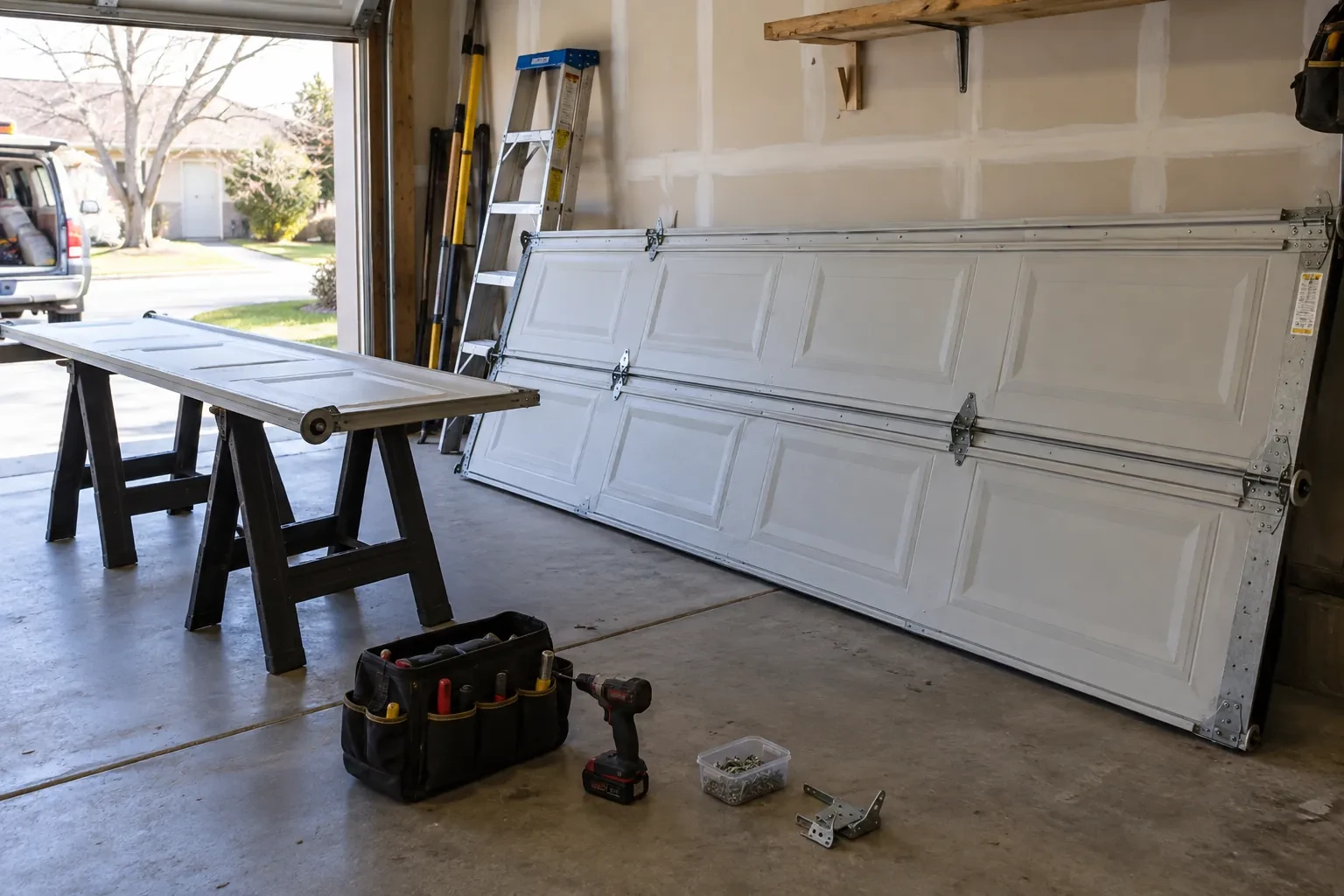
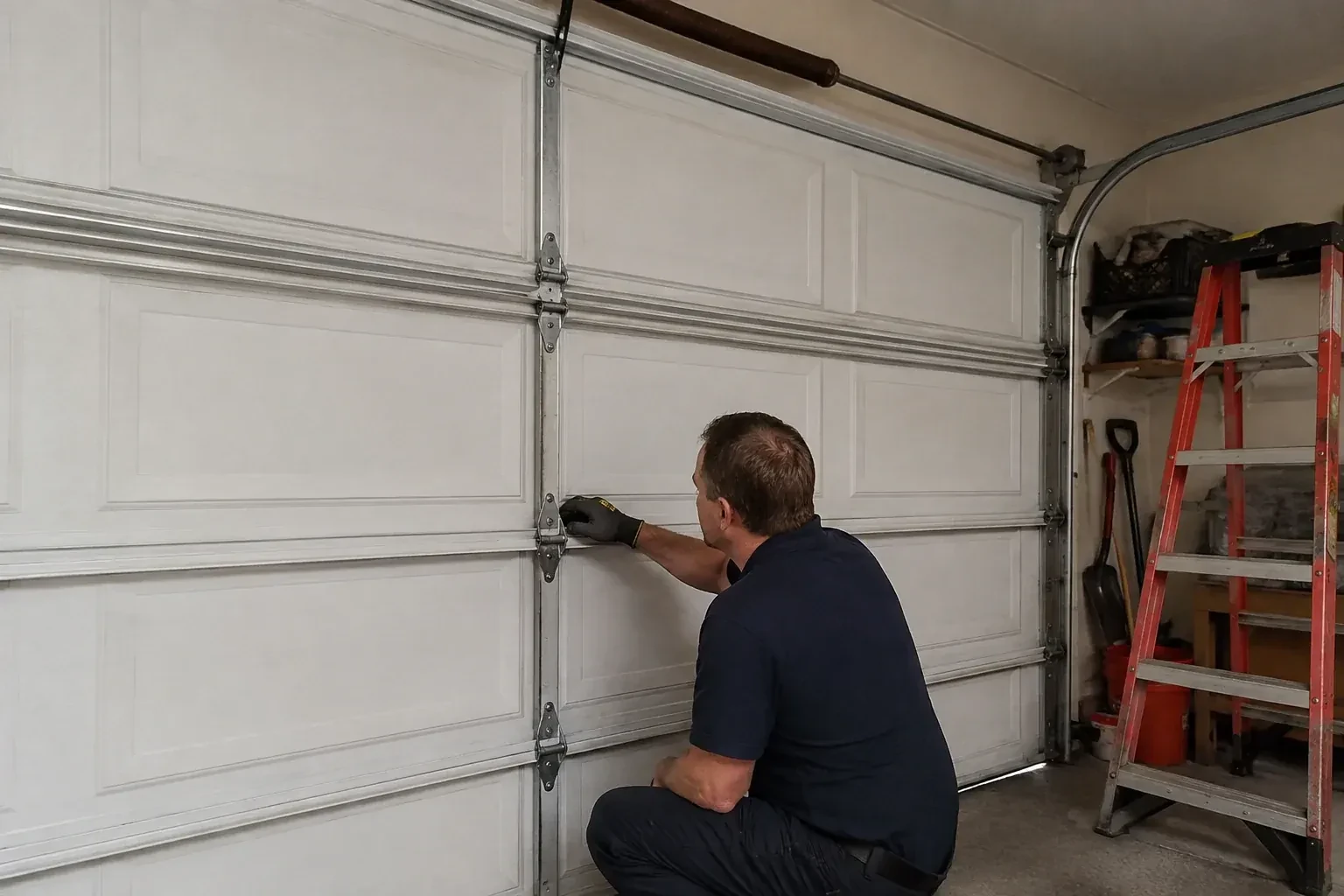
The last part of the first look follows the door's path. The technician checks that the vertical tracks are plumb and evenly spaced from the door, that the curve into the horizontal run is smooth, and that the track brackets are tight to the jamb. Rollers are checked for cracked wheels and bent stems, hinges for splits, and the bottom section for a dent or bow from a vehicle. Any of these can rub a cable or hold one corner back, and each is easier to correct while the counterbalance is unloaded. If the door is off its track as well, that is set straight as part of the same work.
Renewing drums and brackets in the same visit
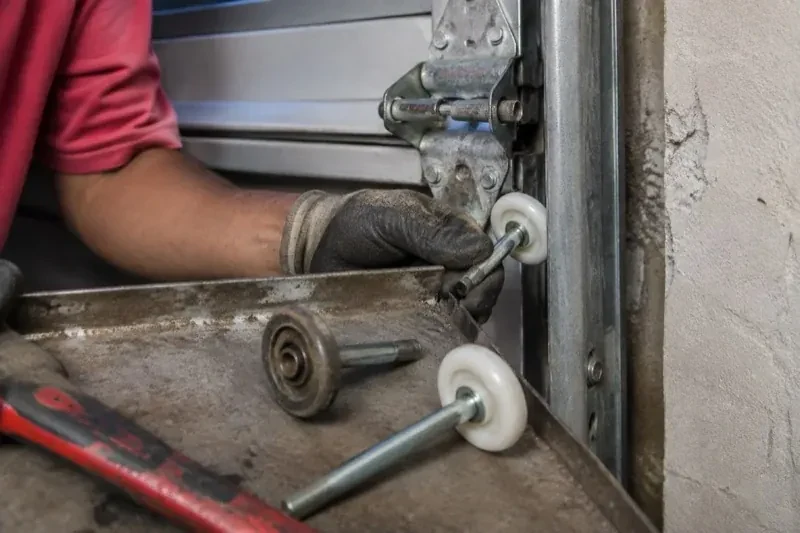
Where the inspection found a drum with worn grooves or a slipped set screw, or a bottom bracket bent by a bumper or eaten by salt, that hardware is replaced while the system is unloaded and the cables are already off. Drums are changed as a matched pair so both sides wind identically. A new bottom bracket is fixed with the correct fasteners into a sound part of the section, and the bottom roller is renewed if its stem or wheel is worn. Doing this in one visit adds a few minutes and avoids fitting fresh cable onto the very part that damaged the old one.
A clear threshold
Most cables that jump their drums do so because the door came down on something. Keep the opening clear of bins, bikes and the snow shovel, and in winter clear the ridge of packed snow and ice that forms at the threshold before running the door. If the door does meet an obstruction and stops, leave it where it is rather than pressing the button again, since a second attempt is what turns a slack cable into a tangled one. The photo eyes near the floor should be clean and aligned so they catch anything in the path; a wipe with a soft cloth each season keeps them working.
Garage Door Cable Replacement
In the van
Torsion springs and winding cones
Containment cables
Galvanized aircraft-type lift cables
Drum set screws
Clevis pins and cotter pins
Garage Door Cable Replacement
What affects the quote
Worn rollers and hinges found on the way
Cracked roller wheels or split hinges seen during the inspection are pointed out and offered as optional items, since replacing them while the door is unloaded is efficient.
Extension-spring pulleys and containment cables
On an extension door, pulleys with grooved wheels or seized bearings are replaced with the cable, and a containment cable is added where one is missing. Each is a small parts line.
Door weight and width
A heavy insulated double door needs a heavier cable and sometimes different drums than a light single, and the springs behind it take longer to wind down and back up.
What to have ready
- Is it a single or a double door, and roughly how tall?
- Can you see a cable hanging loose, frayed, or wound around the shaft?
- Do you have the door's manual or a label showing the model?
Garage Door Cable Replacement: questions
QuestionsCan a cable be too long or too short for the door?
Yes, and both cause trouble. A cable that is too long runs out of drum groove and starts a second layer over the first, which wears it and throws the balance off near the top of travel. A cable that is too short leaves the door hanging out of level or the drum without a secure wrap. The correct length comes from the door height, the drum and the lift type, so the technician measures rather than guesses.
Why should the bottom brackets never be loosened by hand?
The bottom bracket is where the cable attaches, so whenever the springs are wound it carries a share of the door's weight as tension. Loosening it while the counterbalance is loaded releases that tension all at once. Many manufacturers now fit tamper-resistant fasteners for this reason. The technician unloads the springs first, after which the bracket is just a piece of hardware to unbolt and replace.
Should both cables be replaced when only one has failed?
Yes, as a rule. The two cables were fitted together, have flexed around their drums the same number of times and have sat in the same slush, so the survivor is close to the end of its life. A new cable beside a stretched one also makes it harder to set the door level. Two matched cables give an even lift and one visit instead of two.
Related services
- Garage Door Hinge ReplacementAfter a cold night the bottom seal had frozen to the slab.
- Garage Door Track Repair or ReplacementHalfway up, the door lurches and one roller rides onto the lip of the channel.
- Torsion Spring ReplacementThe door starts to rise, gets about the height of your knee, then shudders and reverses.