Openers · Toronto
Garage Door Opener Replacement
During the ice storm the power was off for two days.
In plain words
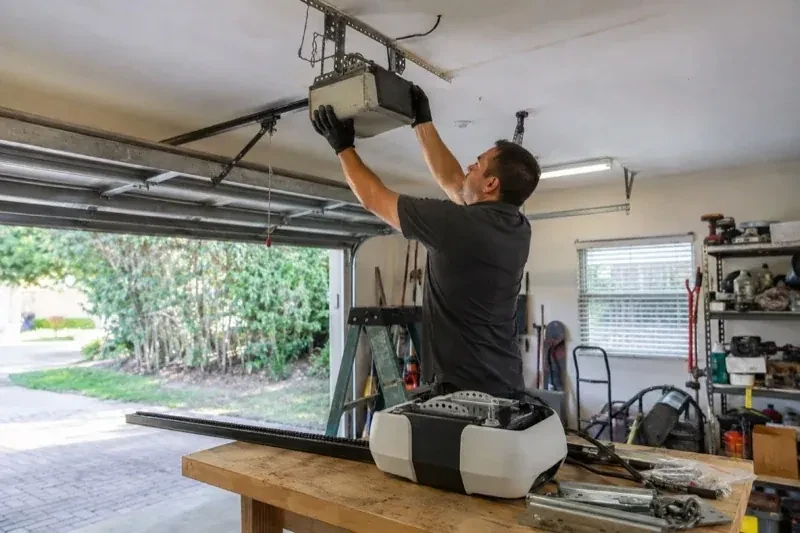
The most useful thing to know about a new opener is how little lifting it does. A garage door weighs as much as a small piano, and the springs hold nearly all of that weight so the door floats in the track. The operator only guides a door that is already balanced. That is why the replacement starts with the door disconnected and lifted by hand: if it holds its position partway up, the new operator will have a long, calm life. If it drops or drifts, the springs are tuned first, so the motor is never asked to do a job it was not built for.
How the visit goesPress the button and the motor hums, but the door stays exactly where it is. Under the housing there is a dusting of white plastic shavings, the sign of a stripped drive gear, and this is the second time it has happened.
Garage Door Opener Replacement
How the visit goes
Reading the old opener
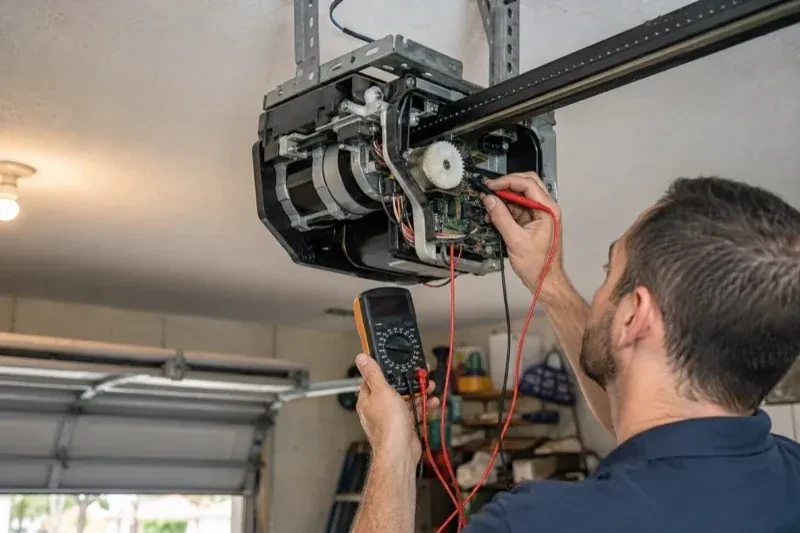
The existing unit has a story to tell. Its label gives the make, model and year, which says whether it predates photo-eye sensors and rolling-code remotes. The technician checks for oil leaking from the gearbox, plastic shavings from a stripped gear, scorching on the board, a bent rail or a worn trolley, and whether the travel limits have been fighting the door. This confirms the replacement is the right path and shows what, if anything, can be kept: the low-voltage wiring to the wall console is often reusable, while sensors and controls are matched to the new brand and generally come with the unit.
Sensors, console and wiring
The photo eyes are mounted on both sides of the opening no higher than about 15 cm off the floor, aimed at each other until their indicator lights hold steady, and their wire is stapled neatly along the wall and ceiling to the head. The wall console goes at least 1.5 m above the floor, in clear sight of the door and away from moving parts, so it is out of reach of small children and the door can be watched while it runs. Low-voltage wire is kept clear of the rail and the chain. Finally the head is plugged into its grounded receptacle and powered up for the first time.
Keeping the door balanced under the new operator
The new operator will run for many years if the door it moves stays balanced. Once a season, pull the release with the door closed, lift it by hand to about a metre and let go: it should stay there. If it drops or creeps upward, the springs have drifted and want a tune before the operator starts working harder to compensate. Watch too for a door that pauses or jerks at one point in its travel, which is usually a roller or a track bracket rather than the motor. A yearly service visit that checks balance, cables, rollers and the safety tests keeps both the door and the operator in step with each other.
Garage Door Opener Replacement
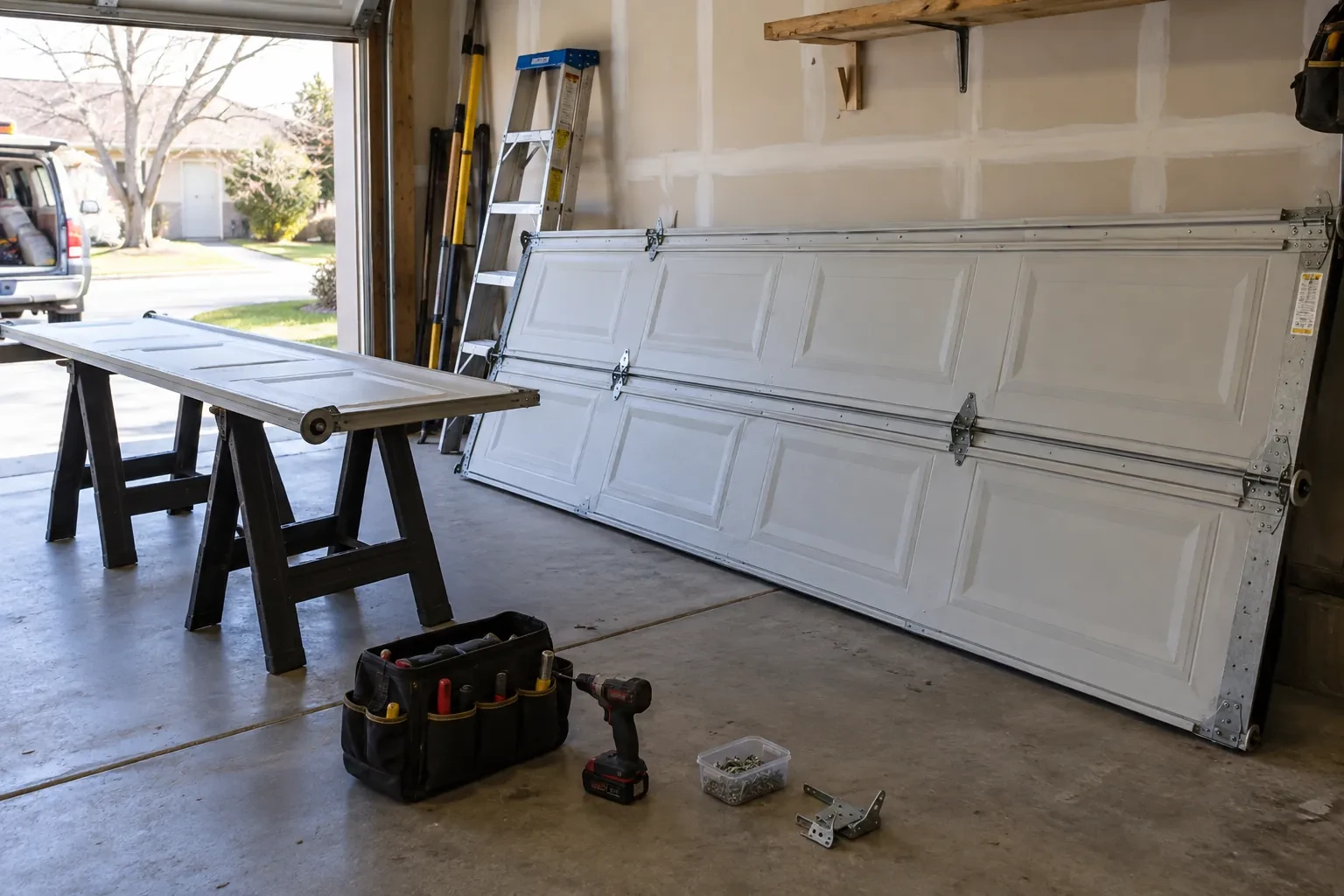
In the van
Backup battery
Rail sections and trolley
Wall control console
Top-section reinforcement strut
Photo-eye sensors
Garage Door Opener Replacement
What affects the quote
Wall-mount accessories
A wall-mount operator is installed with a cable tension monitor and a powered track lock, and sometimes a separate light kit, since the unit itself hangs no lamp over the garage.
Top-section reinforcement
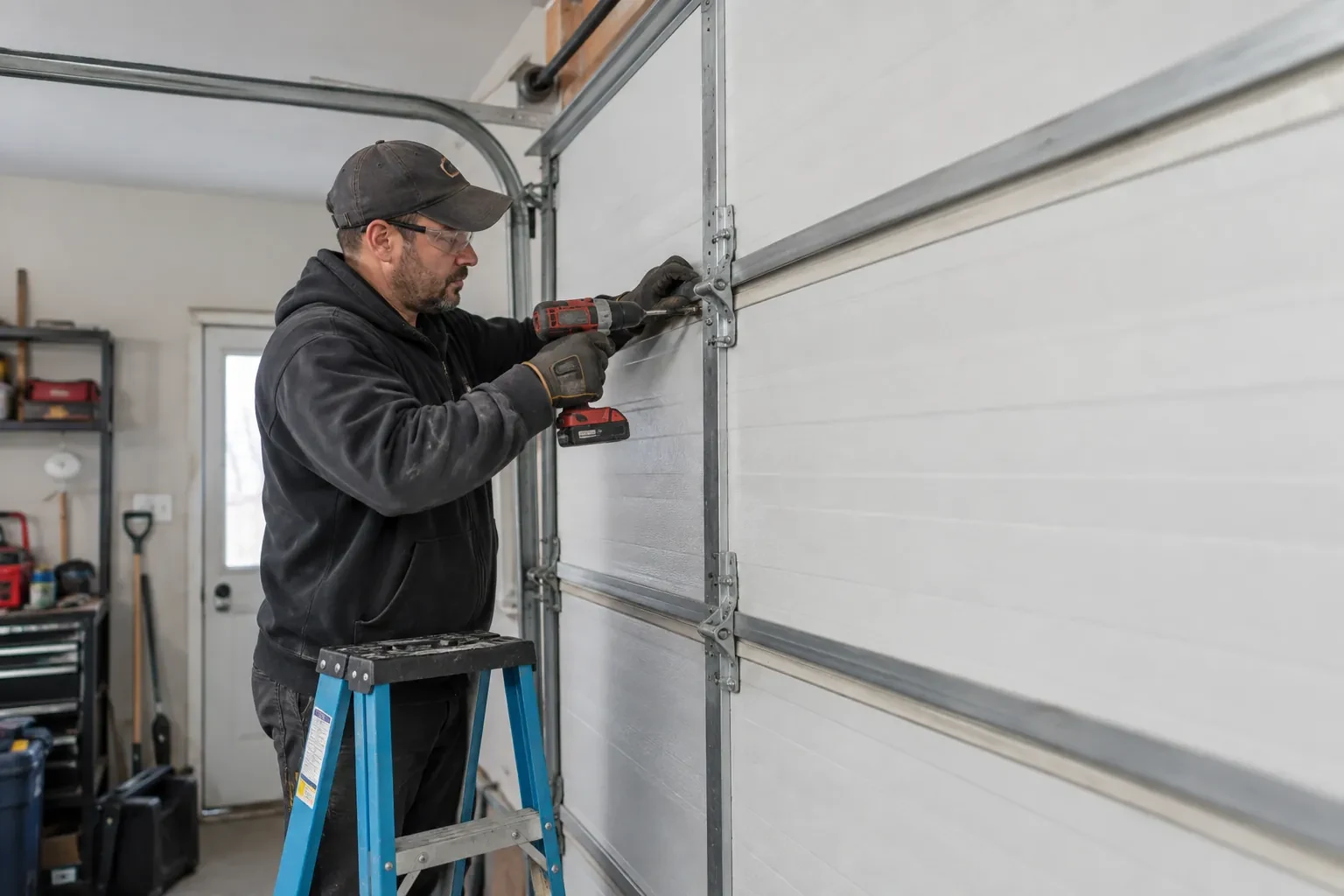
Lightweight steel, glazed and wide doors need a strut or operator bracket across the top section before the arm is attached, so the pull is spread across the door rather than concentrated at one point.
Removing and recycling the old unit
Taking down the old head, rail, hangers, sensors and wiring, and carrying them away for metal and electronics recycling, is labour that appears on the quote alongside the installation.
What to have ready
- Can you send photographs of the opener, the top of the door and the ceiling?
- Is the door steel, wood or aluminum, and is it insulated?
- Is the garage attached and heated, or detached and unheated?
Garage Door Opener Replacement: questions
QuestionsCan the new opener use my old rail?
The rail, trolley and drive are designed as one system with the head unit, so a new operator comes with its own rail matched to its motor and drive type. Reusing an old rail would mix parts that were never meant to run together. The old rail, head and hangers come down and are recycled, and a fresh rail is assembled to suit your door's height.
Will the buttons built into my car work with the new opener?
Nearly always, yes. The in-car transmitter is taught to the new operator using the learn button on the head unit, much like a handheld remote. Some older vehicles predate the newest rolling-code systems and pair through a small repeater or bridge that the technician can supply. Bring the car into the driveway on installation day so it can be programmed and tested before the technician leaves.
The door is frozen to the floor. Why does the opener reverse?
Because the operator is protecting the door. Its force setting is tuned to the small effort a balanced door needs, so a seal glued to the concrete by ice registers as an obstruction and the door heads back up rather than ripping the rubber or bowing the top panel. Loosen the seal with a plastic scraper or a hair dryer along the sill, then try again; a shovelled threshold before a cold night keeps it from recurring.
Related services
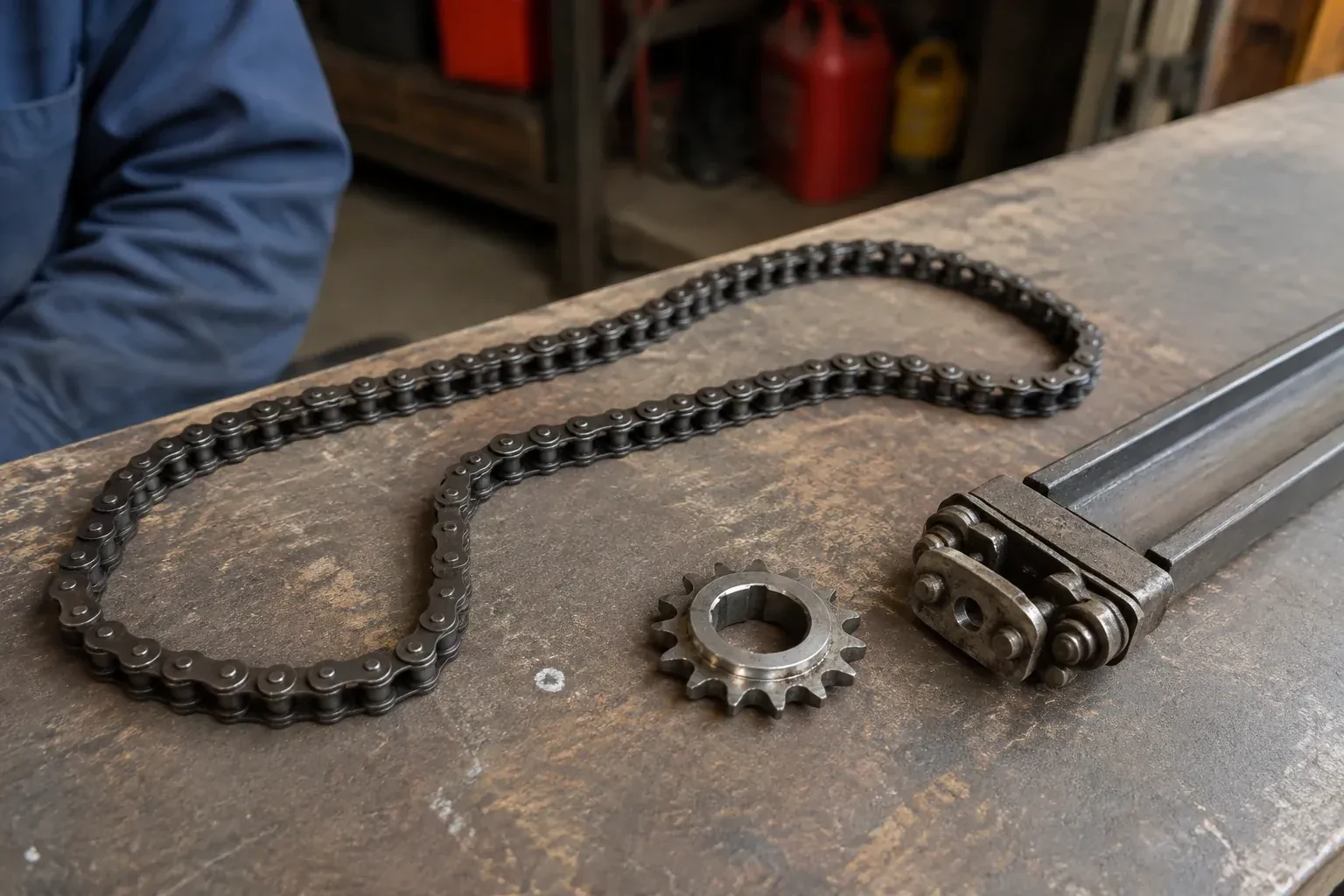
- Chain-Drive Opener RepairThe rail shakes when the door runs.
- Belt-Drive Opener RepairThe belt looks fine from a distance, but up close the rubber has cracked across the back in dozens of places and, in one spot, you can see the steel cords showing through.
- Photo-Eye Sensor Alignment or ReplacementSomeone backed the car in a little too far, a bin or a bicycle brushed the track, and since then the door starts to close and comes back up.