Repairs · Toronto
Garage Door Perimeter Weatherstrip
The new door went in last year and looks perfect, but the old wooden stop and its tired seal were left in place.
In plain words
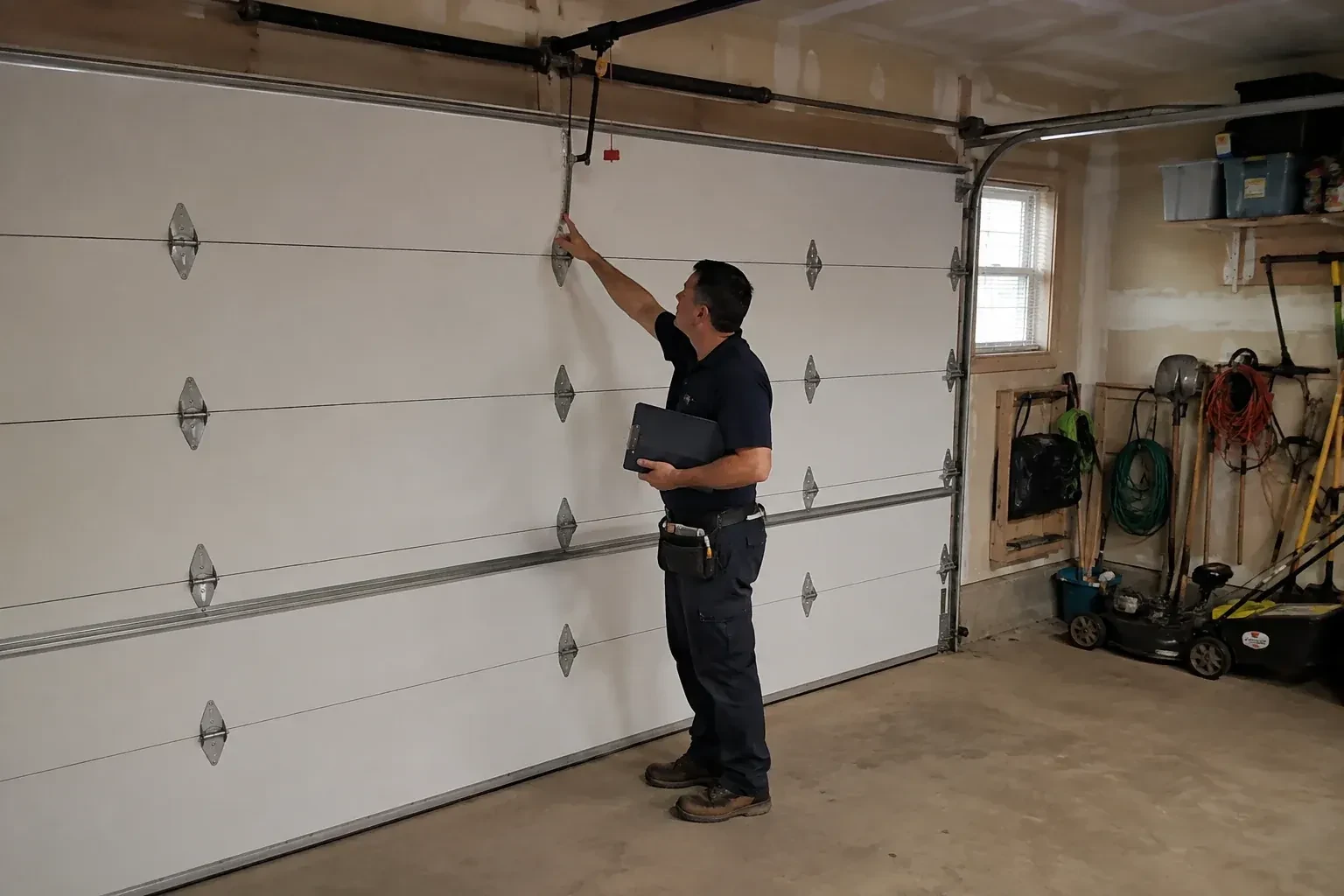
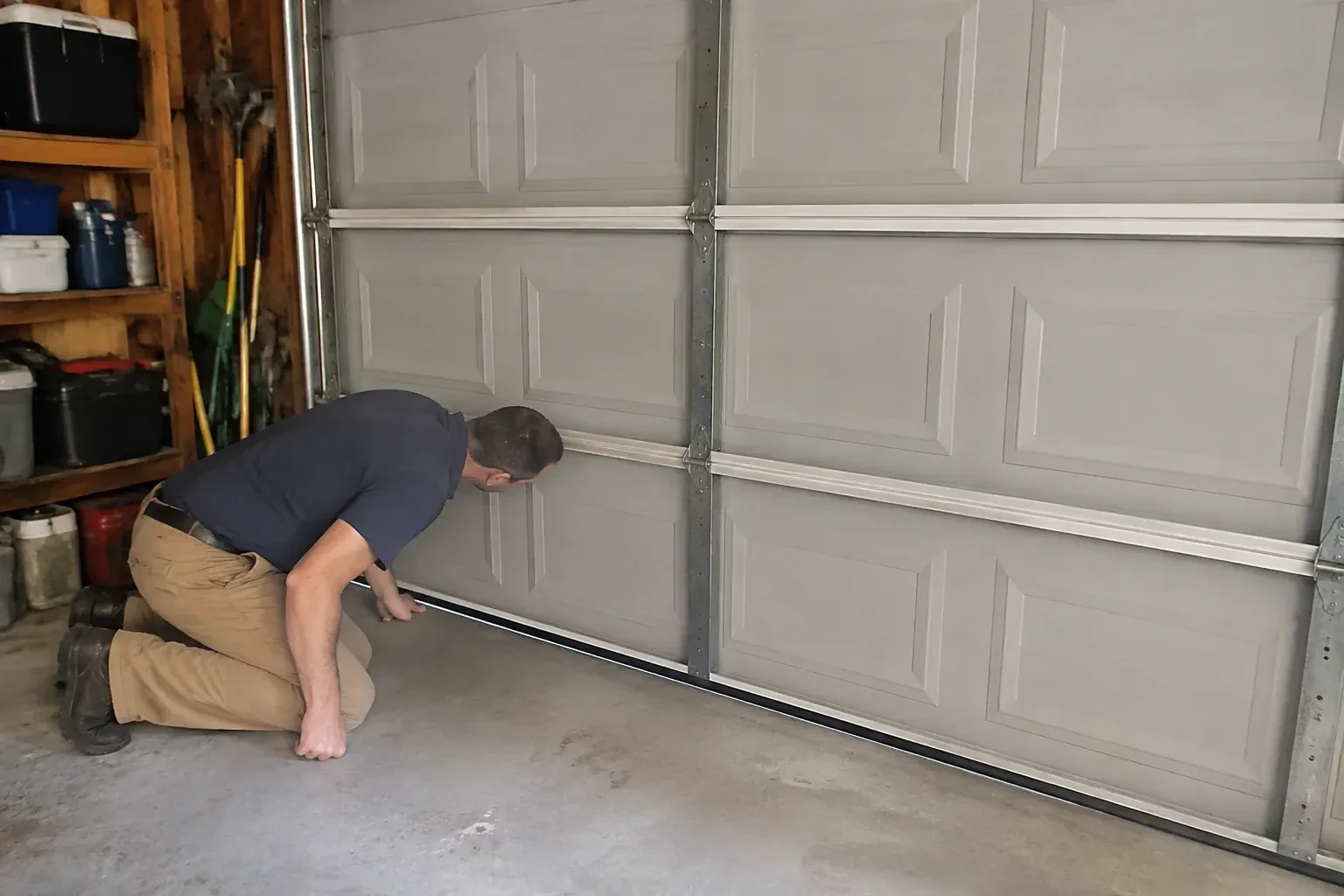
The job follows a steady order. First the door is closed and the gaps are found from inside, by daylight and by feel. Then the door itself is checked for how it sits in the opening, since a seal only works against a door that is square to the frame. The jambs and header are inspected for rot and for how the old strip is fixed. The old material comes off, the surface is cleaned and repaired where needed, the header piece is fitted first and the sides after it, and the door is cycled several times to confirm nothing catches. You are shown the result with the lights off.
How the visit goesAfter a windy night there is a fine ridge of snow on the garage floor along one side of the door, and another across the top step. The door was shut the whole time; the snow came in around it.
Garage Door Perimeter Weatherstrip
How the visit goes
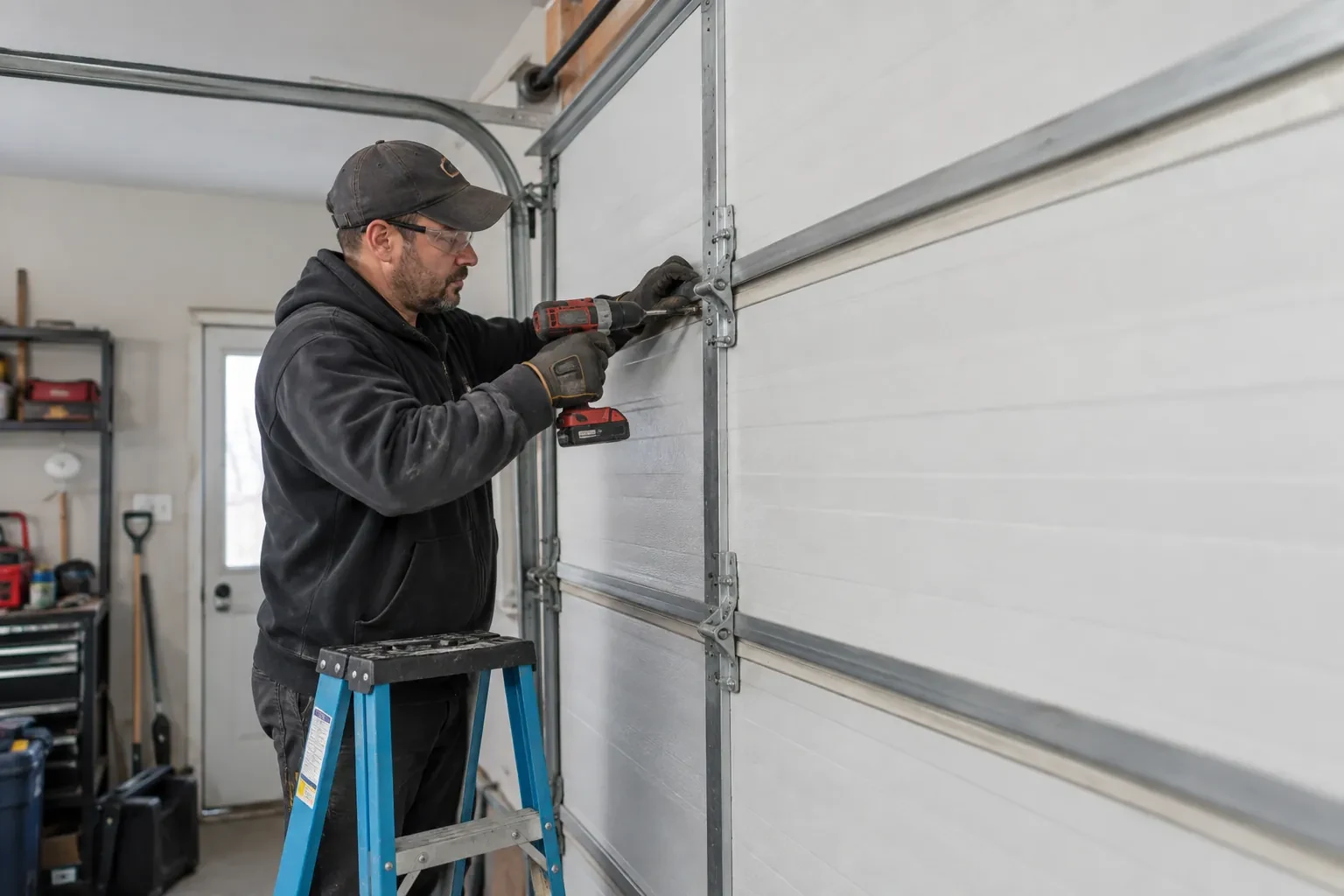
How the door sits in the opening
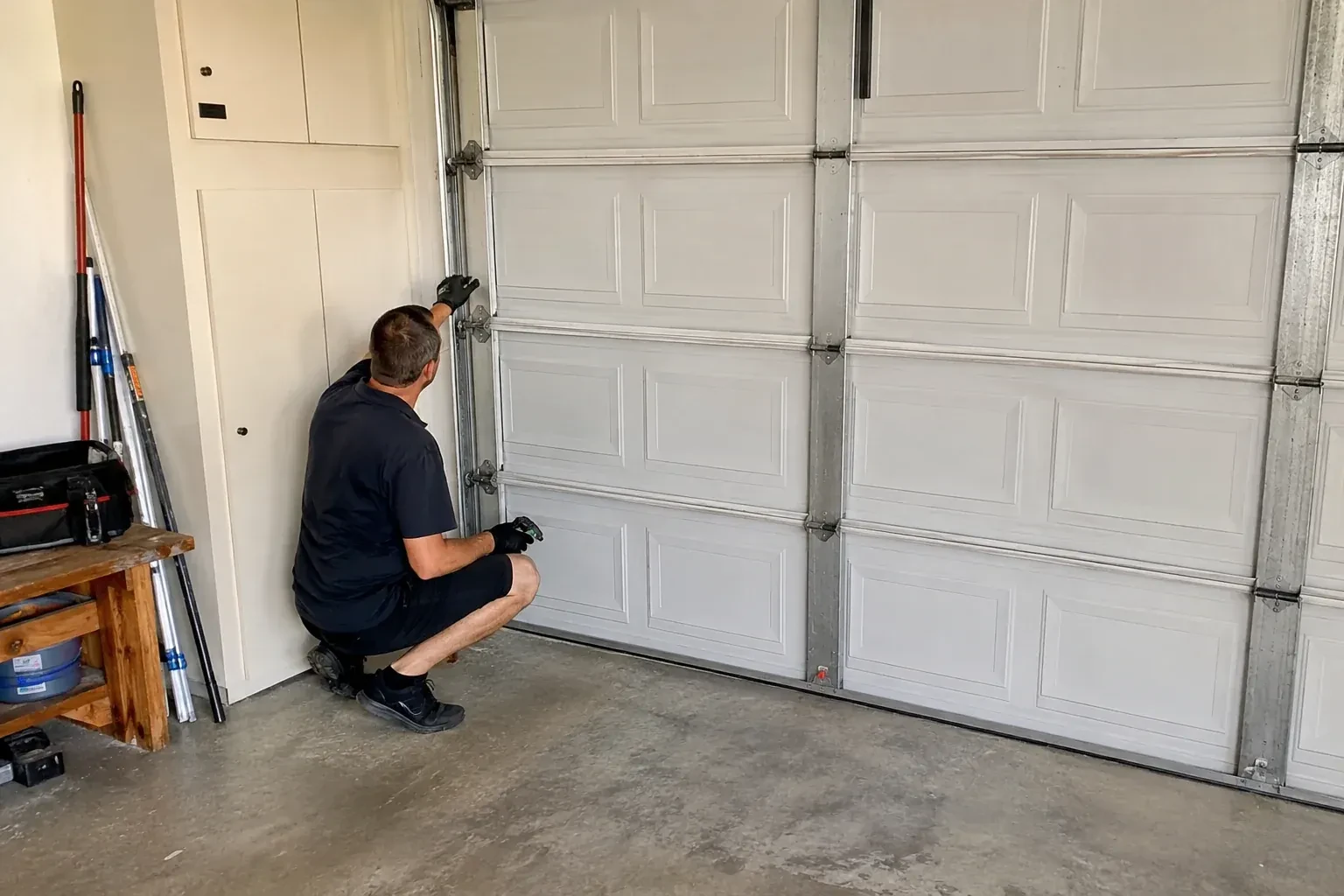
A perimeter seal can only follow a door that sits where the frame expects it, so the door is checked before any strip is ordered or cut. Each edge is checked for plumb, the gap to both jambs is compared, and the top section is watched as it meets the header to see whether it bows away or leans in. Rollers, hinges and the spacing of the vertical tracks are looked at because any of them can shift the door face toward one jamb and away from the other. Small corrections, such as re-setting a track bracket, are noted so the new seal is fitted to a door that closes square and stays that way.
Cycling the door and sealing the joints
Once all three lengths are on, the door is run through several full cycles by hand and then with the opener, while the technician watches each fin for catching, folding or rubbing and listens for a squeal. The daylight test is repeated from inside with the lights off. Any joint between the new stop and the trim or brickmould where water could get behind is caulked with an exterior sealant, and the fin is wiped with a silicone spray to cut the odds of ice bonding it to the door. The old material is bagged and removed, and the household is walked round the finished opening.
Slush, salt and the bottom of the jambs
The lowest part of each jamb is where the weather does its work, so a little attention there protects the whole seal. Push slush away from the jambs when clearing the driveway rather than piling it against them, and rinse the salt off the bottom of the stop on a mild day. Keep the joint between the jamb and the sill caulked so meltwater runs off the face instead of behind it. If a section of jamb was replaced, keep its paint or PVC surface intact. A dry jamb base holds its fasteners, and fasteners that hold keep the seal tight.
Garage Door Perimeter Weatherstrip
In the van
Silicone spray lubricant
Jamb repair lumber or PVC trim
Exterior caulking and gun
Exterior screws and weatherproof staples
Galvanized or stainless trim nails
Garage Door Perimeter Weatherstrip
What affects the quote
Removing the old stop and paint build-up
Lifting a wood stop that has been painted for decades, scraping old adhesive and knocking down paint ridges takes longer than pulling a loose fin, and the time shows in the quote.
Commercial or oversized openings
Wider and taller commercial doors often carry an aluminum retainer with a rubber insert or a brush seal, and the material and fitting time differ from a residential vinyl seal.
Doing the bottom seal at the same time
When the bottom seal on the door is also worn, renewing it during the same visit is offered as a separate line and saves the cost of a second call.
What to have ready
- Where do you see daylight, drafts or snow: sides, top, or corners?
- Have mice, leaves or water been getting in?
- Is your garage attached to the house, and is it heated?
Garage Door Perimeter Weatherstrip: questions
QuestionsWhat should I do before the technician arrives?
Move the car out of the garage or well back from the door, and clear anything stored against the jambs inside and any bins, planters or snow piled against them outside. Leave the door closed so the gaps can be seen as they are. If you have noticed where the daylight, drafts or snow come in, or where the mice appear, be ready to point it out.
Can you replace just one side or only the top piece?
Yes, a single damaged length can be replaced when the rest is sound and still soft; the new piece is matched to the existing profile and colour and its corner is overlapped with the neighbouring fin. When the whole set is the same age and the others are hardening too, replacing all three at once gives an even seal and saves a second visit, and the technician will say which applies.
What are perimeter seals made of?
Most residential seals are flexible vinyl or a rubber compound formed into a fin that bends against the door. They come either as a flexible strip that is nailed to a wood stop or moulded onto a rigid vinyl stop as one piece. Commercial doors sometimes use an aluminum retainer holding a replaceable rubber insert, or a brush seal. Manufacturers make them to flex thousands of times as the door operates.