Springs · Toronto
Garage Door Track Repair or Replacement
Halfway up, the door lurches and one roller rides onto the lip of the channel.
In plain words
What you get back is a door that runs its full height without a catch, hesitation or bang, with every roller seated in its channel and both sides rising together. The track sits plumb and firm on the jambs, the horizontal runs hold level from solid hangers, and the door seals along the stop when closed. Because the track was set to the door and the springs re-tensioned to it, the door balances by hand and the opener works lightly. You also leave with a note of the track profile, radius and lift type, which makes any later part a simple match.
How the visit goesThe door has started rubbing the frame on the left, leaving a shiny stripe down the weatherstrip. Looking closely, the bracket near the floor stands a finger's width off the wood, its screws half out.
Garage Door Track Repair or Replacement
How the visit goes
Plumb, spacing and taper of each vertical run
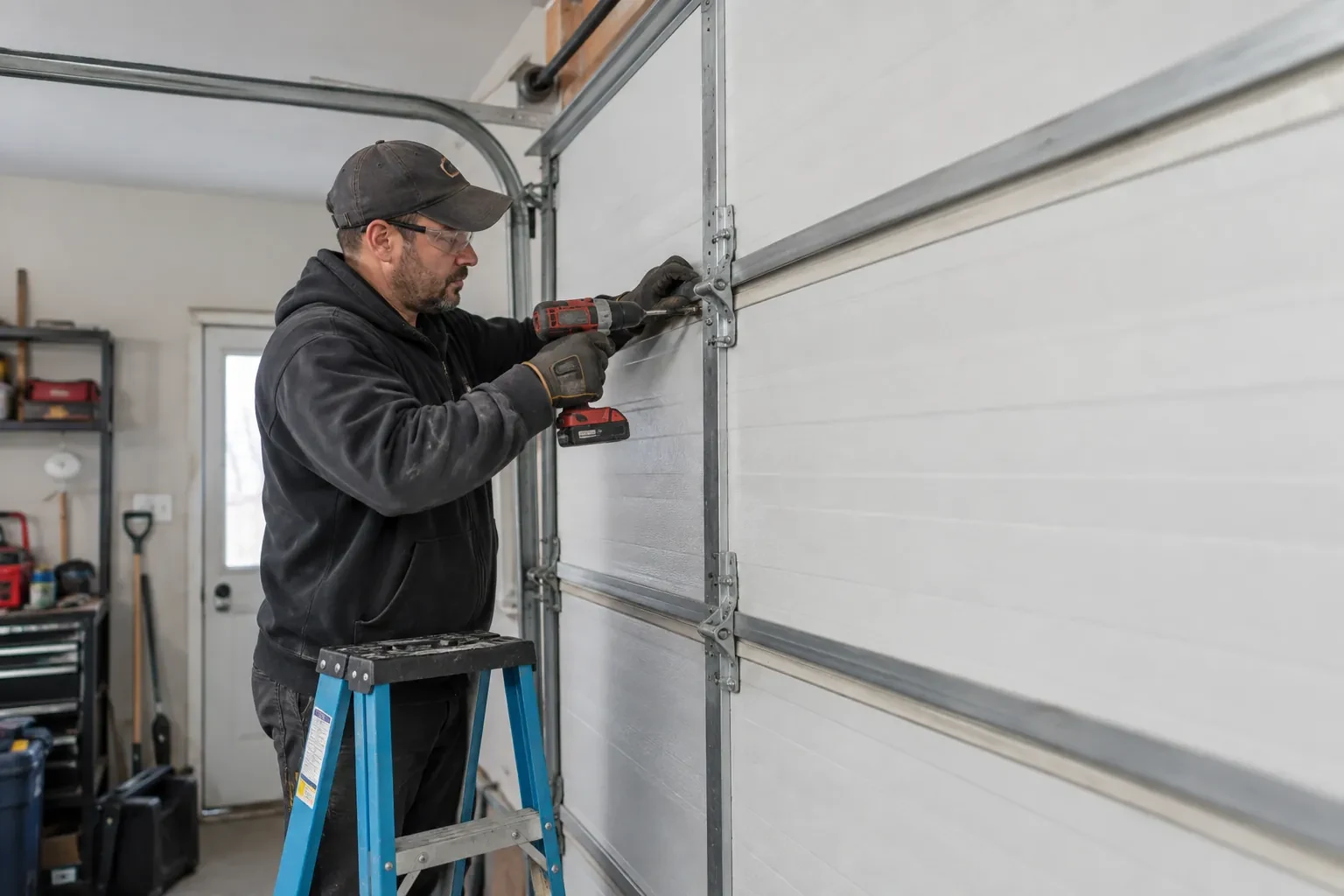
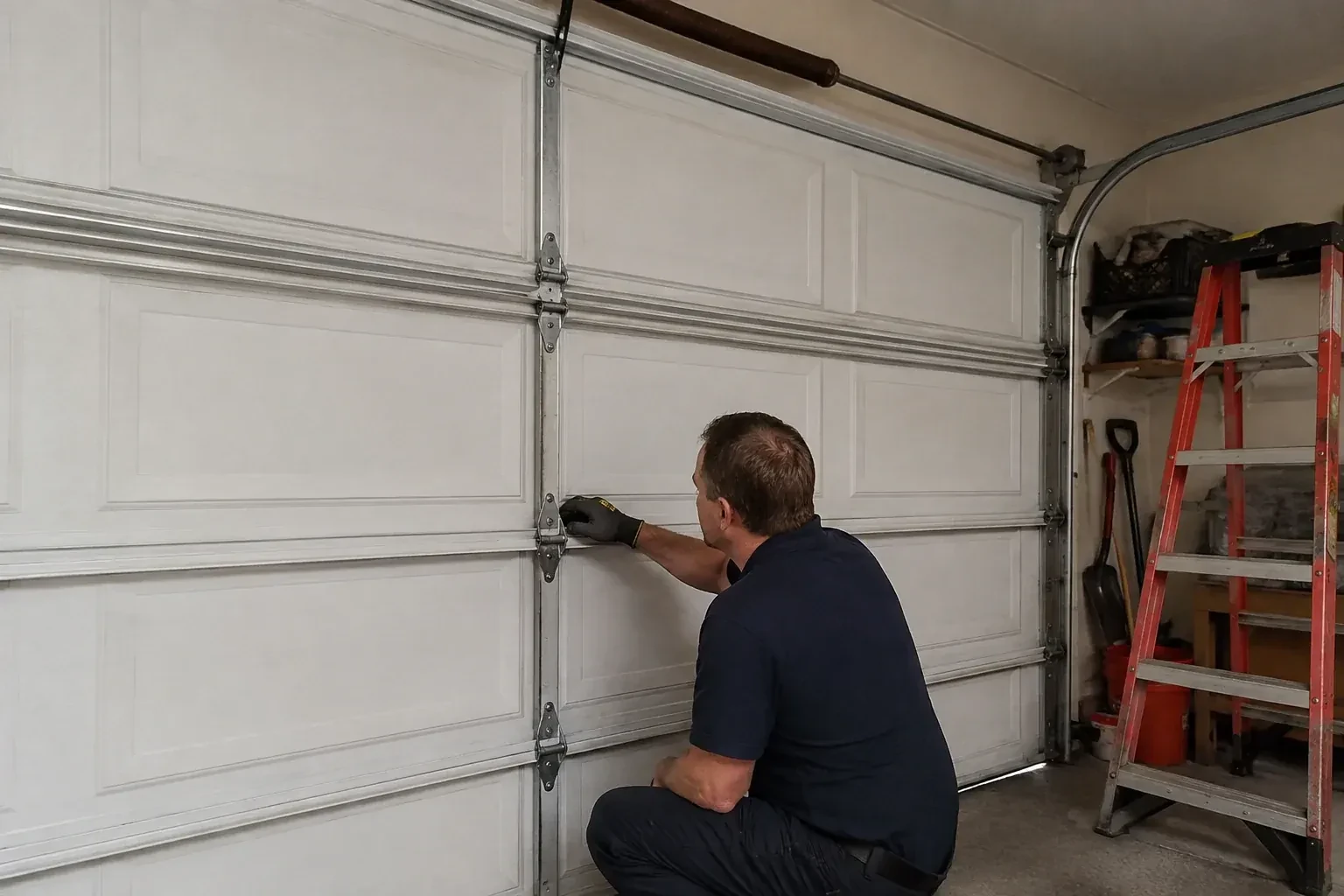
A level goes on each vertical track, and a tape measures the gap between the track and the edge of the door at the top and the bottom. The run should be plumb, and the two sides should sit the same distance from the door so both columns of rollers carry evenly. There is also a deliberate detail: the top of the vertical track stands a little further from the jamb than the bottom, so the closed door presses into its stop moulding for a seal and swings clear the moment it starts to rise. A track pushed flat to the jamb makes the door drag; one standing too far out lets it rattle.
Closing a channel that has spread
When worn rollers have pried the lip of the track open, the channel is squeezed back to its original width along the affected length. The technician measures the opening against an undamaged stretch, then closes it in stages with track pliers or a clamp and block, checking with a roller after each pass. The lip is dressed so no burr remains to nick the wheel. Because the spread came from rollers dragging on one edge, the wheels that did it are replaced in the same visit, otherwise the new profile opens again within a season. The corrected length is then re-fixed to its bracket so the shape holds.
Parking and storage habits around the track
Most creased tracks are met by a bumper or a mirror, and most bent horizontal runs by a ladder, a bike or a shelf. It is worth walking the garage after the repair and noticing what sits close to the track: move the recycling bins and the hockey bags a hand's width further in, hang nothing from the back hangs, and leave the horizontal runs clear of stacked boxes. Inside the car, a strip of tape on the floor or a tennis ball on a string marks where to stop. None of this is a chore, and it addresses the single most common reason a straightened track needs straightening again.
Garage Door Track Repair or Replacement
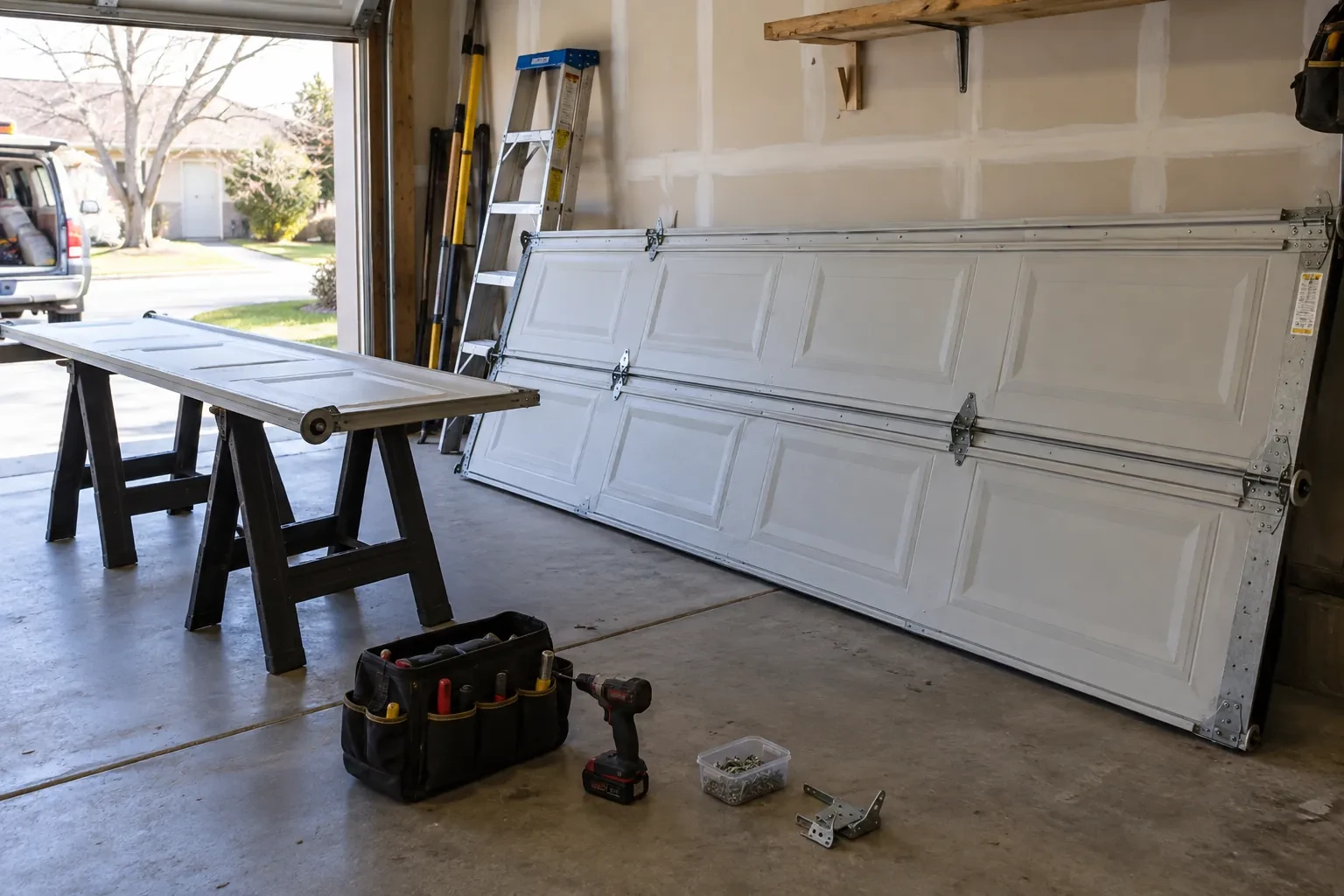
In the van
Top fixtures
Winding bars and track clamps
Track pliers and dead-blow hammer
Vertical track, two-inch or three-inch
Replacement rollers and hinges
Garage Door Track Repair or Replacement
What affects the quote
Ceiling hangers and what they are fixed to
A hanger that has bent or pulled from a joist is replaced, and a run that was only fixed into drywall gets angle reaching to solid framing. Each hanger corrected is named in the quote.
Low-headroom or high-lift hardware
Changing the layout, rather than repairing the existing one, brings new horizontal track, curve pieces, top fixtures and often drums and spring adjustment, and is quoted as a separate scope.
Damage to sections and bottom hardware
When a bumper strike has also dented the bottom section or bent a bottom bracket, that repair is described and priced separately from the track so you can decide each on its own.
What to have ready
- Is the wood beside the door soft, split or discoloured at the floor?
- Is anything stored against or hung from the overhead track?
- Do you know what caused it, such as a car, a ladder or stored items?
Garage Door Track Repair or Replacement: questions
QuestionsWhy is there a gap between the track and the edge of the door?
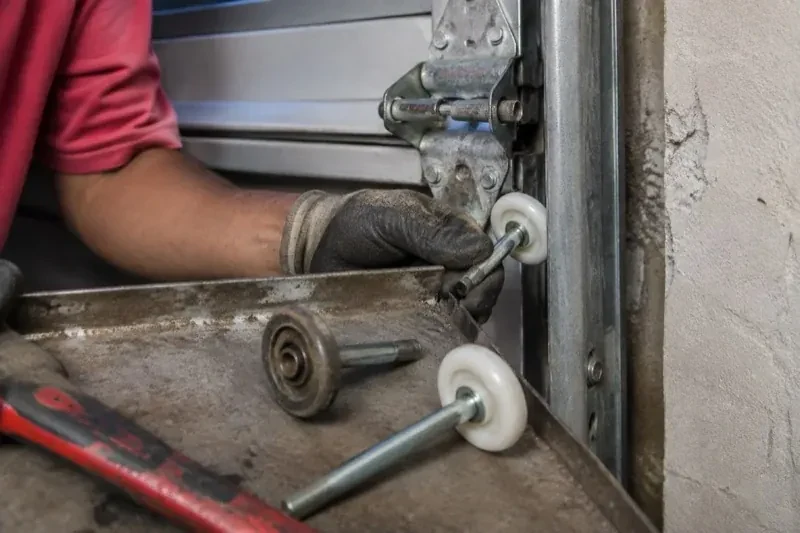
That gap is intentional. The rollers sit on stems that reach out from the hinges, and the track stands a set distance from the door so the wheels ride in the channel without the door's edge touching the track. The gap should be equal on both sides and slightly larger at the top of the vertical run, which is the taper that lets the door seal at the stop and release on opening. Unequal gaps are a sign the track has moved.
What is the flag bracket and why does it matter?
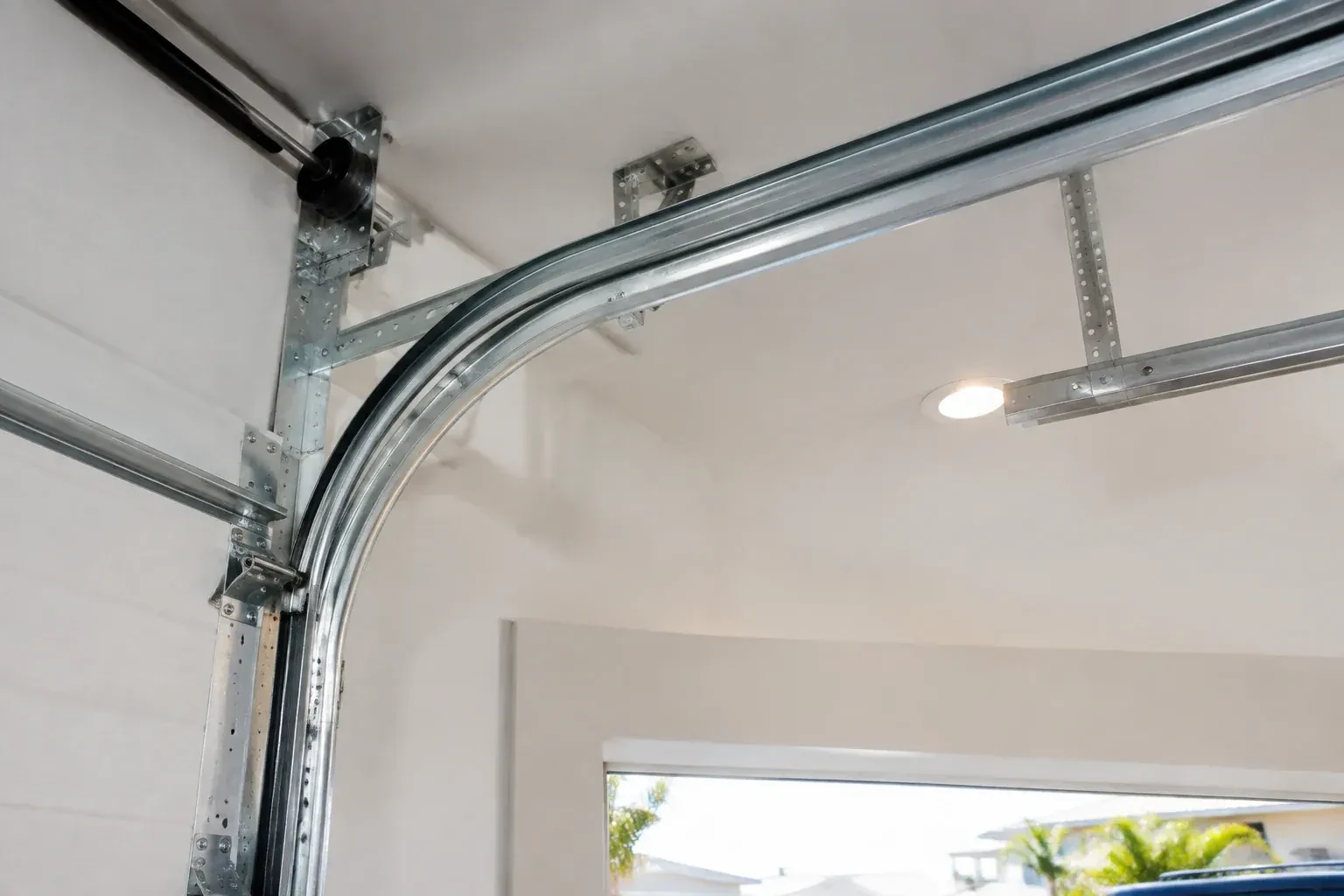
The flag bracket is the L-shaped angle at the top of each vertical track. It ties the vertical run, the curve and the horizontal track together, and on a torsion-spring door it also carries the end bearing plate for the spring shaft. Because so much meets there, a loose or bent flag bracket throws the whole path off. The technician unloads the springs before moving it and squares it carefully when it goes back.
Can I hammer the track back myself?
A track is under load from the door resting in it and, at the top, from the spring shaft on the flag bracket, so working on it means securing the door and sometimes unloading the springs first. Freehand hammering also tends to push a dent into a ripple that a roller feels even more. The technician clamps the door, shapes the steel in small steps with a block or track pliers, and gauges the result with a roller.
Related services
- Garage Door Hinge ReplacementAfter a cold night the bottom seal had frozen to the slab.
- Garage Door Cable ReplacementSomeone left the snow shovel leaning in the opening and the door came down on it.
- Torsion Spring ReplacementThe door starts to rise, gets about the height of your knee, then shudders and reverses.