Springs · Lansing
Garage Door Balance Adjustment in Lansing
The door has grown heavy so gradually you stopped noticing, until a visitor tried to lift it and could not.
In plain words
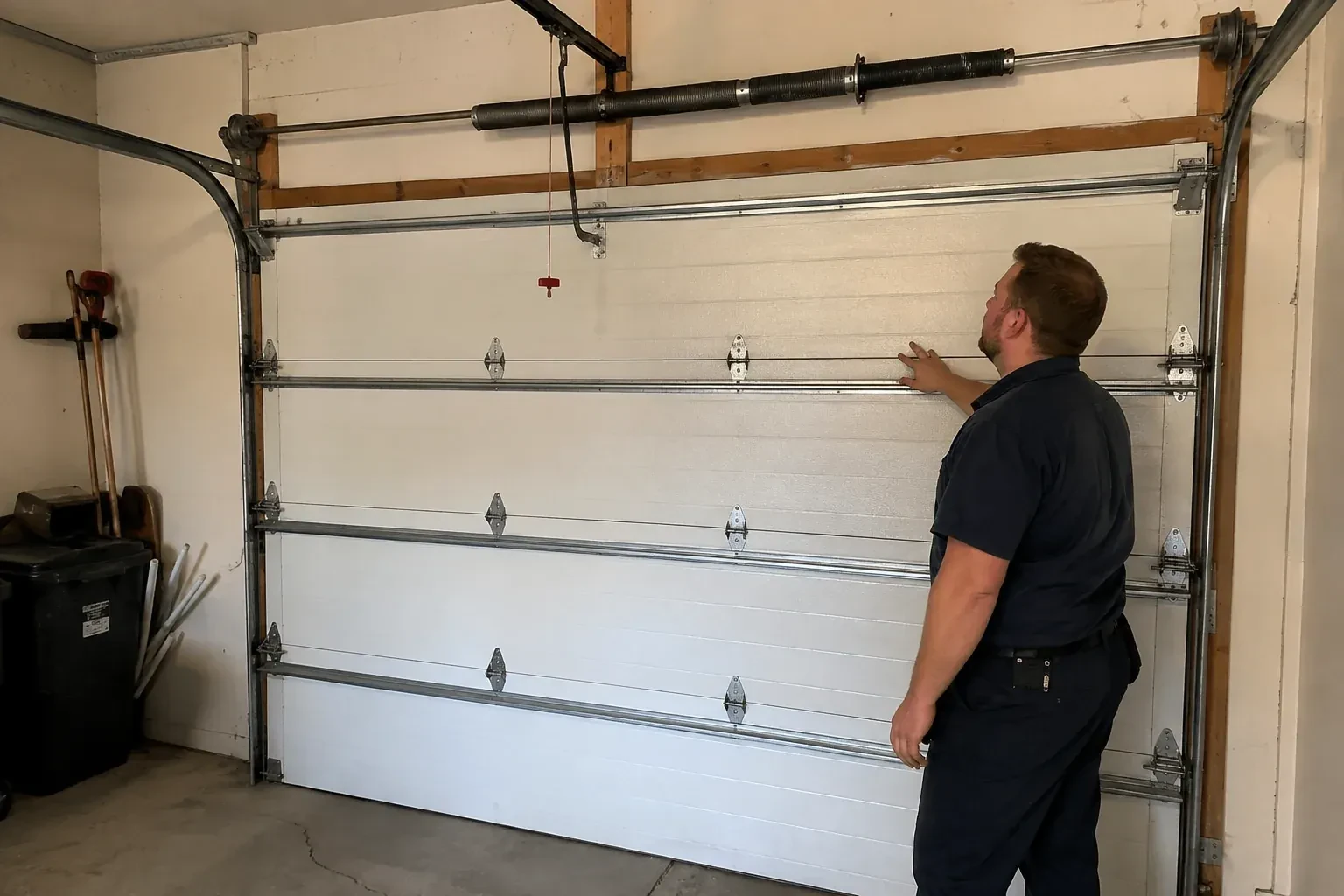
The whole service is built around one simple test that door manufacturers and safety bodies describe the same way. With the opener released, the door is lifted by hand to roughly a metre off the floor and let go. A balanced door stays where it is. One that drifts upward is carrying too much spring tension; one that sinks is carrying too little. The technician reads that behaviour at several heights, checks the door is level across its width, and then adjusts the counterbalance a quarter turn at a time, testing to the manufacturer's specified height and tolerance, until the door meets that standard and moves smoothly.
How the visit goesSomeone replaced the springs a while back and the door has bounced at the top ever since. It slams open against the stops, then creeps down a few inches, and the opener trolley rattles because the door is pushing where it should be resting.
Garage Door Balance Adjustment
How the visit goes

Friction along the path
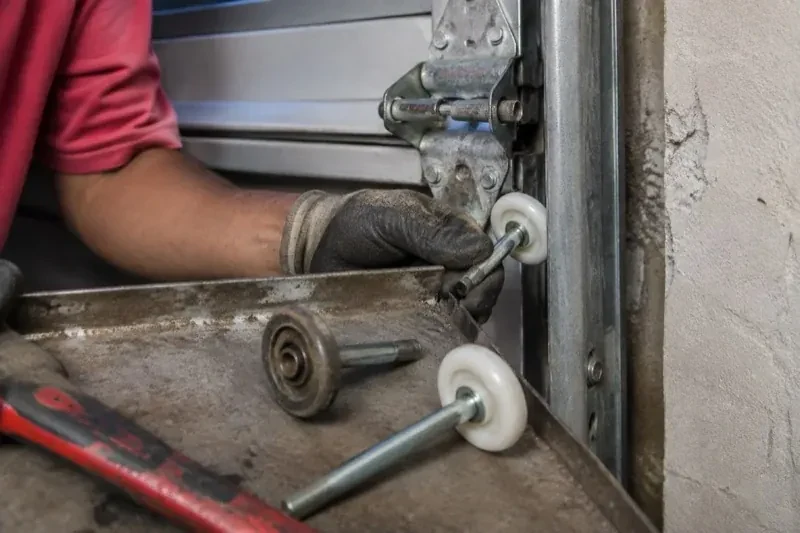
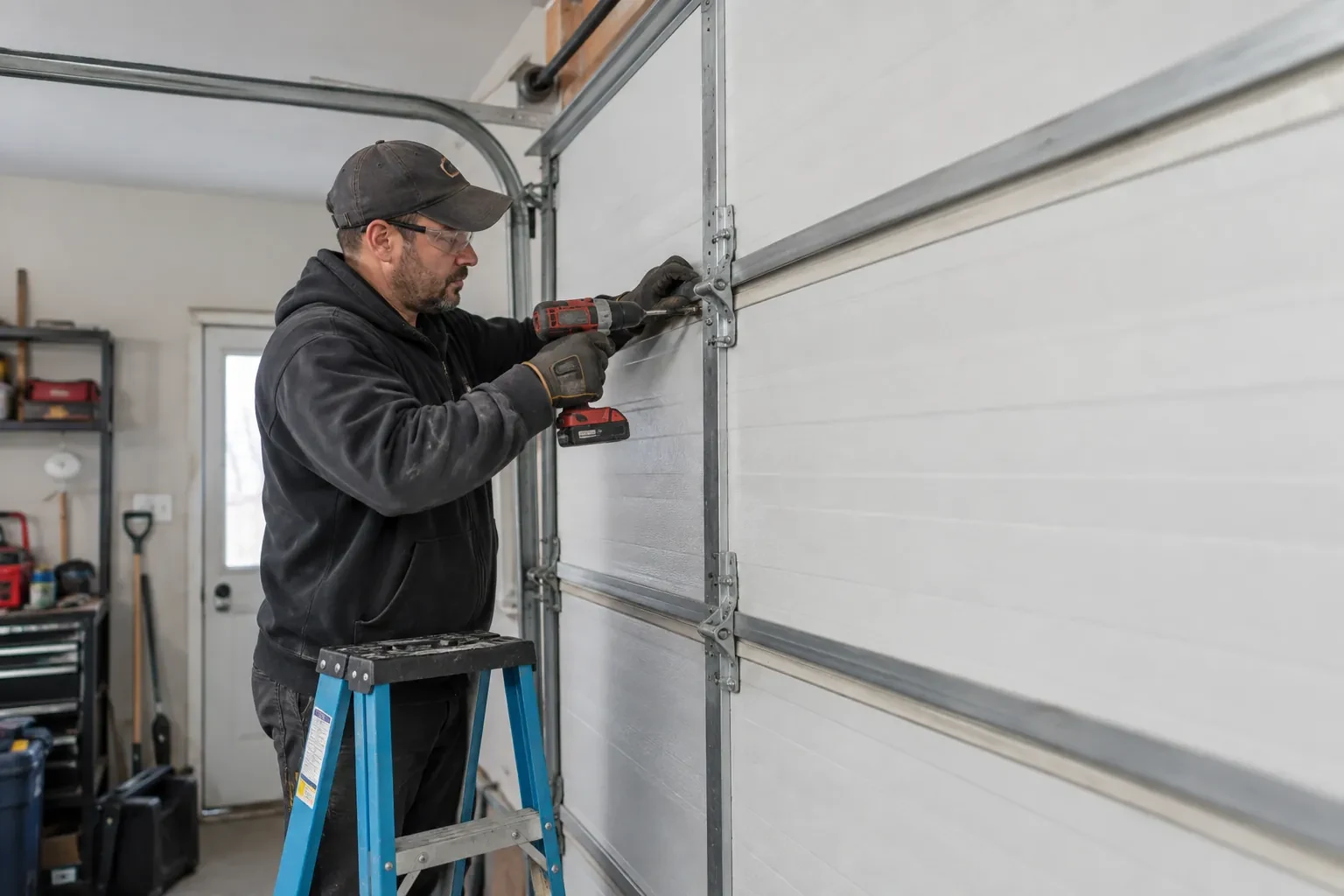
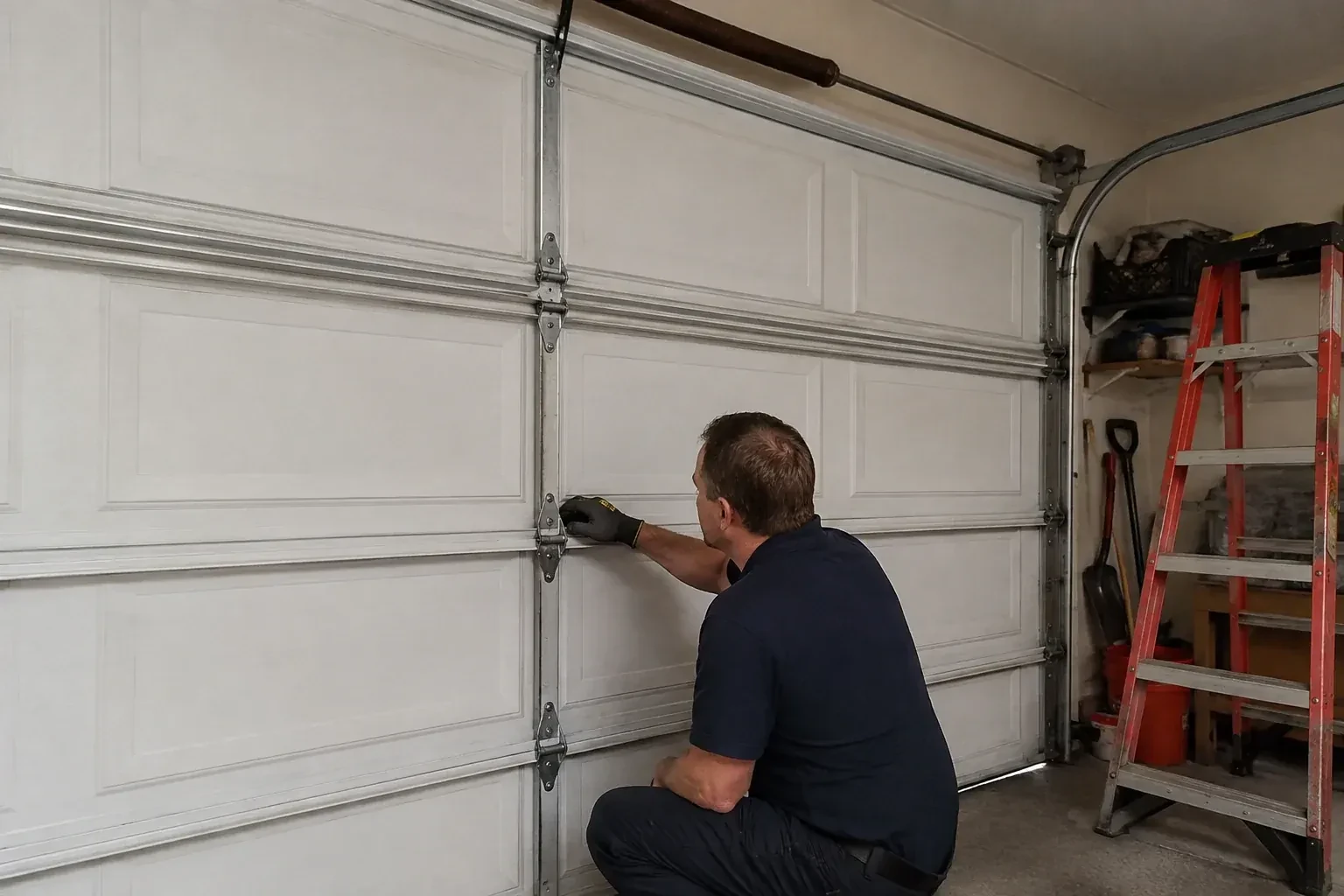
Some doors that feel heavy are not short of spring tension at all; they are dragging. The technician runs a hand and an eye along the vertical and horizontal tracks for dents, misaligned joints and brackets that have pulled away from the jamb, spins each roller to find seized bearings or cracked wheels, and flexes each hinge for play or splits. Dry, worn rollers alone can add real effort to every lift. Binding at one point in the travel, rather than heaviness everywhere, is the signature of a friction problem, and correcting it first means the springs are then adjusted to the door's true weight rather than to the drag.
Adding or releasing quarter turns on a torsion spring
With one winding bar seated firmly in the winding cone and a second ready, the technician loosens the cone's set screws and either adds tension by levering the bar upward or releases it by letting the bar down, always a quarter turn at a time, always with a bar in the cone. After each quarter turn the set screws are tightened onto the shaft, the clamp is removed and the door is lifted by hand to test. A door that sank now holds a little higher; a door that climbed now settles. On a two-spring door the same change is made to both springs so they share the load equally.
Keeping the opener honest
A balanced door lets the opener's safety settings stay at sensible values, and it is worth keeping them there. If the door ever starts to reverse for no reason or struggles to lift, resist the temptation to turn the force up on the motor; that hides a door that has grown heavy again and takes the entrapment protection out of its proper range. Instead, release the door and try the hand test. If it no longer holds, the springs want attention, and a balance adjustment puts the weight back on them so the opener can remain at the gentle settings it was left with.
Garage Door Balance Adjustment
In the van
Torsion springs, matched pair
Lift cables
Containment cables
Track clamps or locking pliers
Winding bars
Garage Door Balance Adjustment
What affects the quote
Whether a second person is needed to support the door
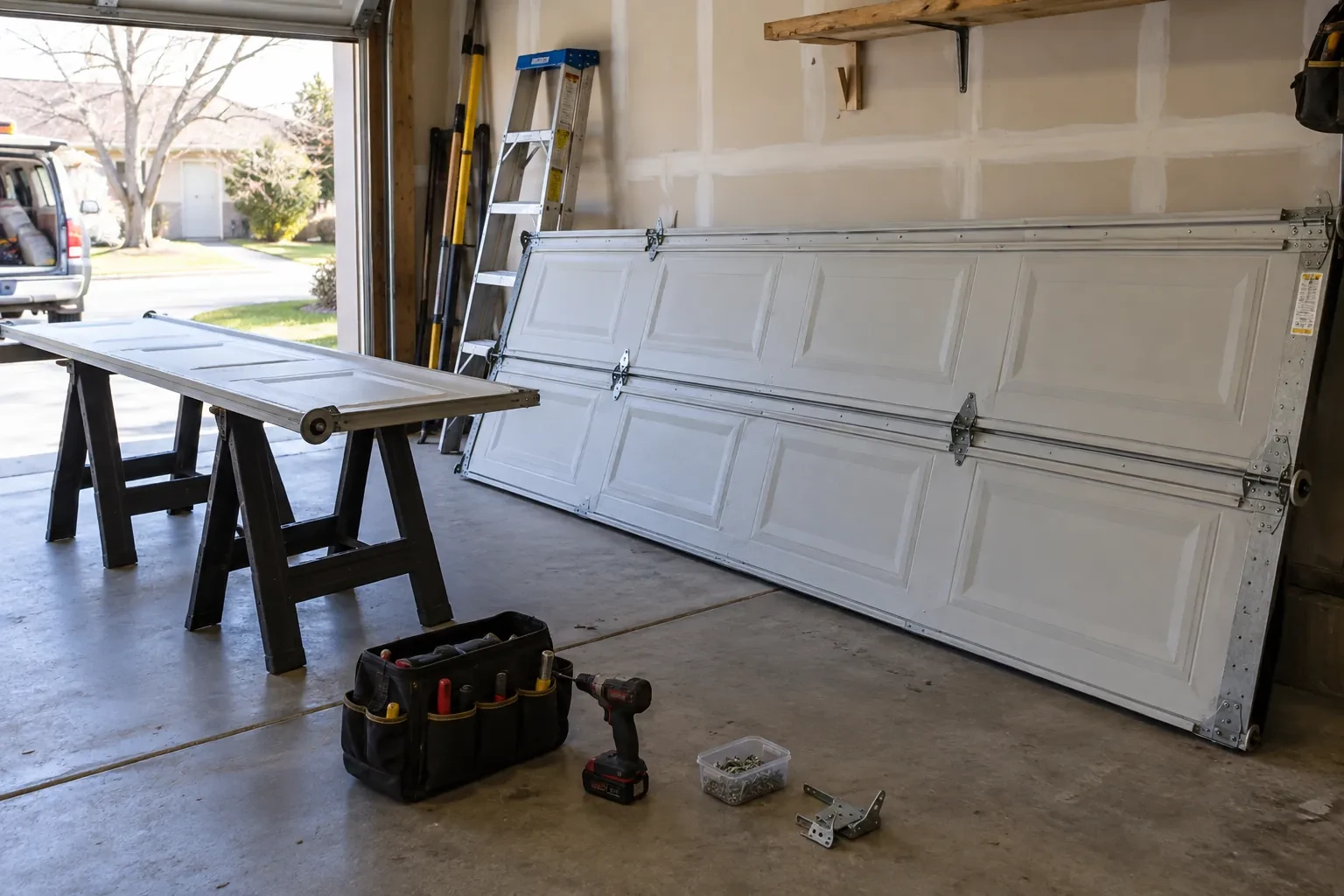
A heavier double door or one already sitting unevenly is sometimes safer to adjust with a second person steadying it while the springs are reset. That extra pair of hands is called in once the technician sees how the door is behaving on site.
Access to the spring shaft
Shelving, bikes or storage close to the header, a very high ceiling or a tight low-headroom installation slow the work. Clearing the area beforehand helps the time quoted.
Door out of level
A door with one corner high needs its cables reset on the drums before the tension is set, which adds a step to the visit and is listed as its own item.
What to have ready
- Is there storage or shelving near the spring shaft that needs moving?
- Has anyone turned up the force setting on the opener?
- Is there a spring on a shaft above the door, or springs along the tracks?
Garage Door Balance Adjustment: questions
QuestionsWill I need new springs, or just an adjustment?
The inspection decides, and looks past appearance alone. A spring can look sound, with tight, evenly spaced coils, no rust pitting and no gap, and still be the wrong specification for the door or nearing the end of its service life. The technician checks the spring's specification against the door's weight and history: a spring that checks out is wound and left in service, while one that is undersized, stretched, corroded or close to its cycle life is better replaced. Either path ends in a balanced door.
The door was fine until a power cut. Why is it heavy now?
During a power cut the door is often released and moved by hand for the first time in years, and what people discover is a door that had already grown heavy while the opener quietly covered for it. The outage did not change the springs; it revealed them. A balance check confirms what the door weighs against what the springs give, and resets them to match.
Is this something I can do myself?
The hand test, yes, and it is a good habit. The adjustment itself is a job for a trained technician, because the springs, cables, drums and bottom brackets are under high tension whenever the door is closed, and the industry's own guidance reserves any change to them for someone with the right bars, clamps and method. Leaving that part to the visit keeps the whole thing uneventful.
Related services
- Garage Door Hinge ReplacementAfter a cold night the bottom seal had frozen to the slab.
- Garage Door Track Repair or ReplacementHalfway up, the door lurches and one roller rides onto the lip of the channel.
- Garage Door Cable ReplacementSomeone left the snow shovel leaning in the opening and the door came down on it.