Openers · Toronto
Garage Door Opener Diagnosis and Repair
Nothing.
In plain words
Winter changes what an opener is asked to do. Grease in the gear case and on the rail thickens in the cold, rollers turn stiffly, and the bottom seal can freeze to the concrete overnight so the door is briefly glued shut. A force setting that was right in July now reads every one of those as an obstruction and stops. A cold-weather diagnosis sorts the seasonal from the structural: freeing the seal, lubricating the moving parts with a product made for low temperatures, checking that the balance is still right, and then confirming the force is low enough to stay safe while high enough to work.
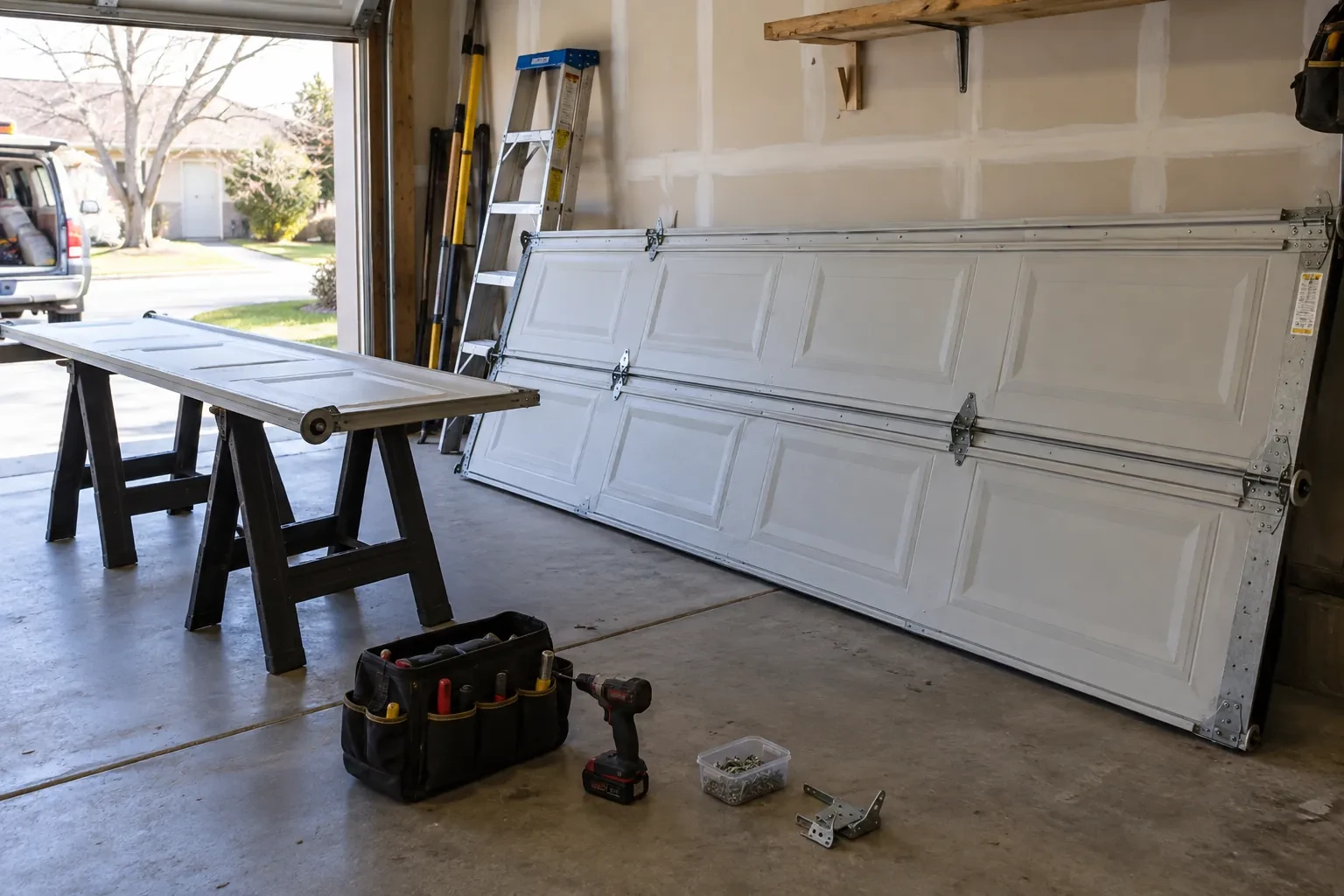
How the visit goesIt is a January morning and the door lifts about a hand's width, groans, and settles back down. When you pull the release and try by hand the door feels far heavier than it used to, and the bottom seal is stuck hard to the slab.
Garage Door Opener Diagnosis and Repair
How the visit goes
The two small eyes near the floor
The photo-eye sensors are inspected together with their wiring. Each sensor carries a small indicator; a steady light on both means the beam is aligned, while a flicker, a dark light or one that goes out when the bracket is nudged points to misalignment, a loose mount or a damaged wire. The technician sights along the beam, looks for obstructions, cobwebs, frost and low sun on the receiving lens, checks that the sensors sit no higher than about fifteen centimetres off the floor, and traces the wire back to the head unit for staples, kinks and chew marks. Sensor faults are the single commonest reason a door refuses to close.
Restoring power the right way
When the fault is electrical supply, the fix is matched to the cause rather than simply reset. A tripped breaker or ground-fault device is reset and then watched through several cycles to be sure it holds; one that trips again points to a damaged cord, a wet outlet or a failing motor. A blown board fuse or a dead transformer is replaced with the part specified for the model. Surge damage after lightning often shows as a board that lights up but ignores every control, and that board is replaced where the model is still supported. New receptacles or hard wiring are referred to an electrical contractor.
Ready for the cold months
After a winter diagnosis the door is set up for the season rather than for the day. The bottom seal has been freed and, if it was tearing, replaced, with a light silicone wipe so it releases from the slab. Moving parts carry a low-temperature lubricant. The photo eyes have been cleaned and, where low sun was blinding one, shaded or swapped side to side. Force has been set for a cold, stiff door without being pushed up to hide one. Keep snow and ice cleared from the threshold and the sensor lenses, and expect the door to be a shade slower on the coldest mornings.
Garage Door Opener Diagnosis and Repair
In the van
Start capacitor
Remote batteries (coin and cylinder cells)
Wall control
Garage door lubricant
Photo-eye sensor pair
Garage Door Opener Diagnosis and Repair
What affects the quote
Remotes and keypads
Each remote or keypad to be reprogrammed, re-batteried or replaced is counted individually. Say how many devices you have so the quote reflects all of them.
Repair or replacement
When diagnosis points to replacement, the quote changes shape entirely: a new head unit, rail and sensors with installation, plus removal of the old opener, rather than a single part and labour.
Whether the door needs work first
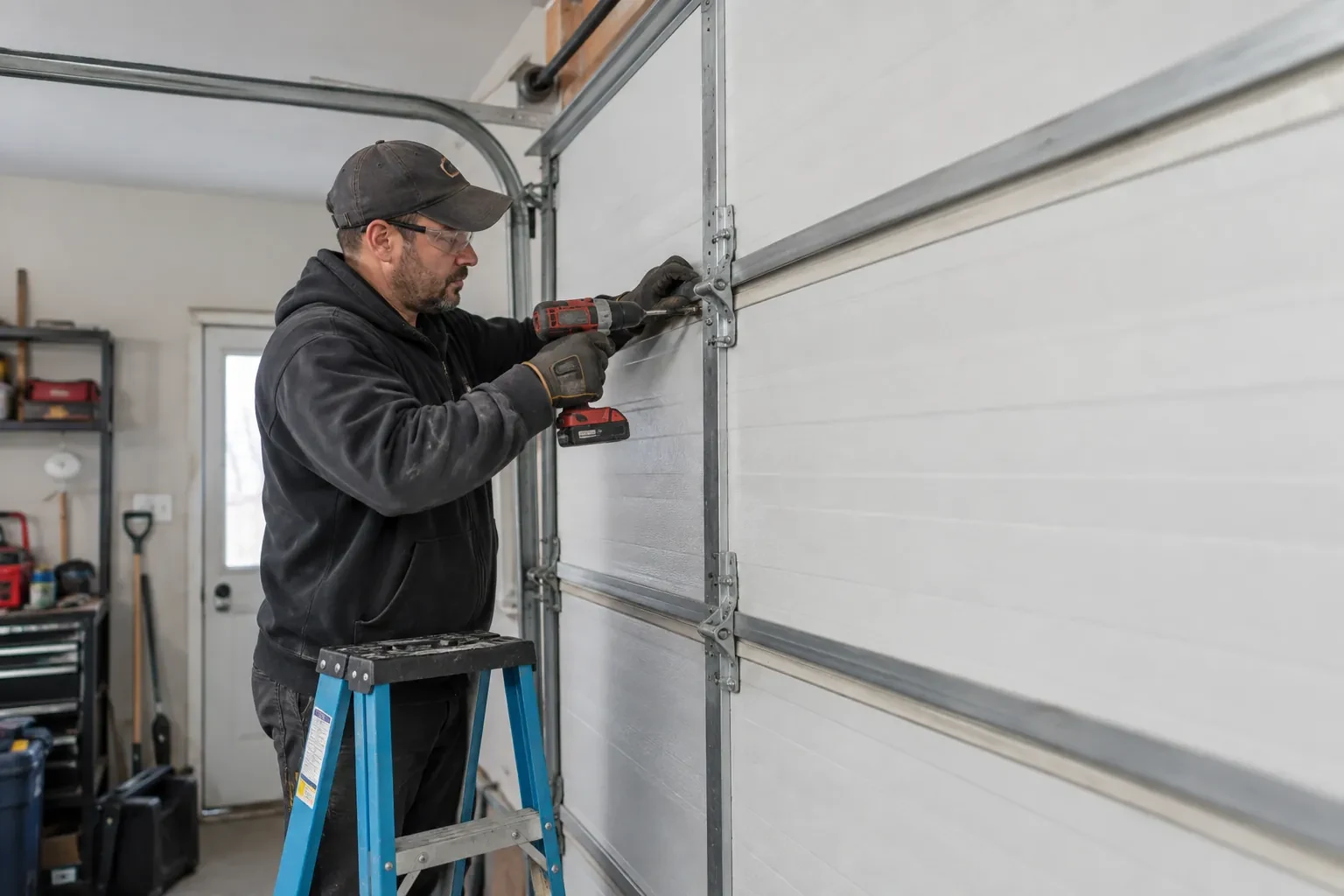
If the by-hand check shows a heavy or binding door, the balance, rollers or springs are corrected before the opener is judged, and that door-side work is quoted as its own item.
What to have ready
- Does the fault happen with the wall control, the remotes, the keypad, or all of them?
- Are the two small lights on the sensors near the floor steady, flickering or off?
- Is the door quieter or noisier than it used to be, and where is the sound coming from?
Garage Door Opener Diagnosis and Repair: questions
QuestionsWhat do the blinking lights on the opener mean?
They are a diagnostic code. On openers made in roughly the past fifteen years, the head unit flashes its lights, or a pair of up and down arrows, in a counted pattern such as one flash then five. Each pattern corresponds to a fault family on the maker's chart for that model: sensor circuit obstructed or open, motor commanded but not moving, more force than allowed. The technician reads the pattern, then confirms it by hand, since one fault can imitate another.
What does an opener diagnosis actually involve?
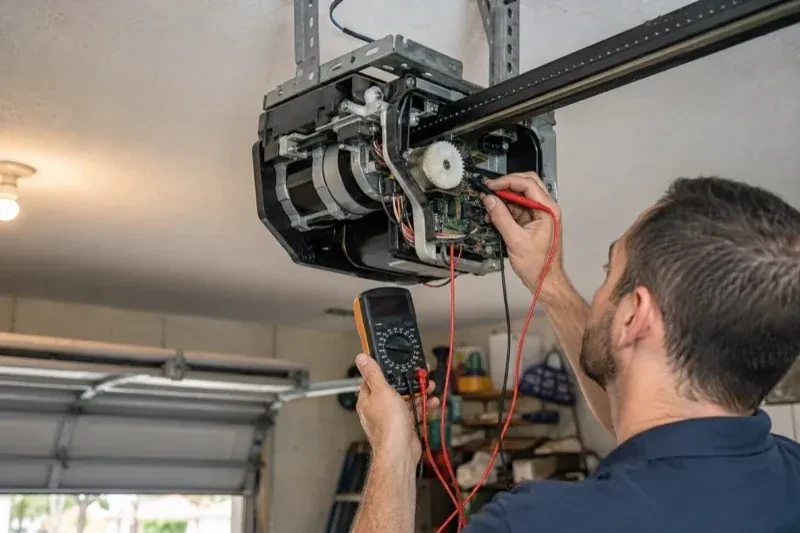
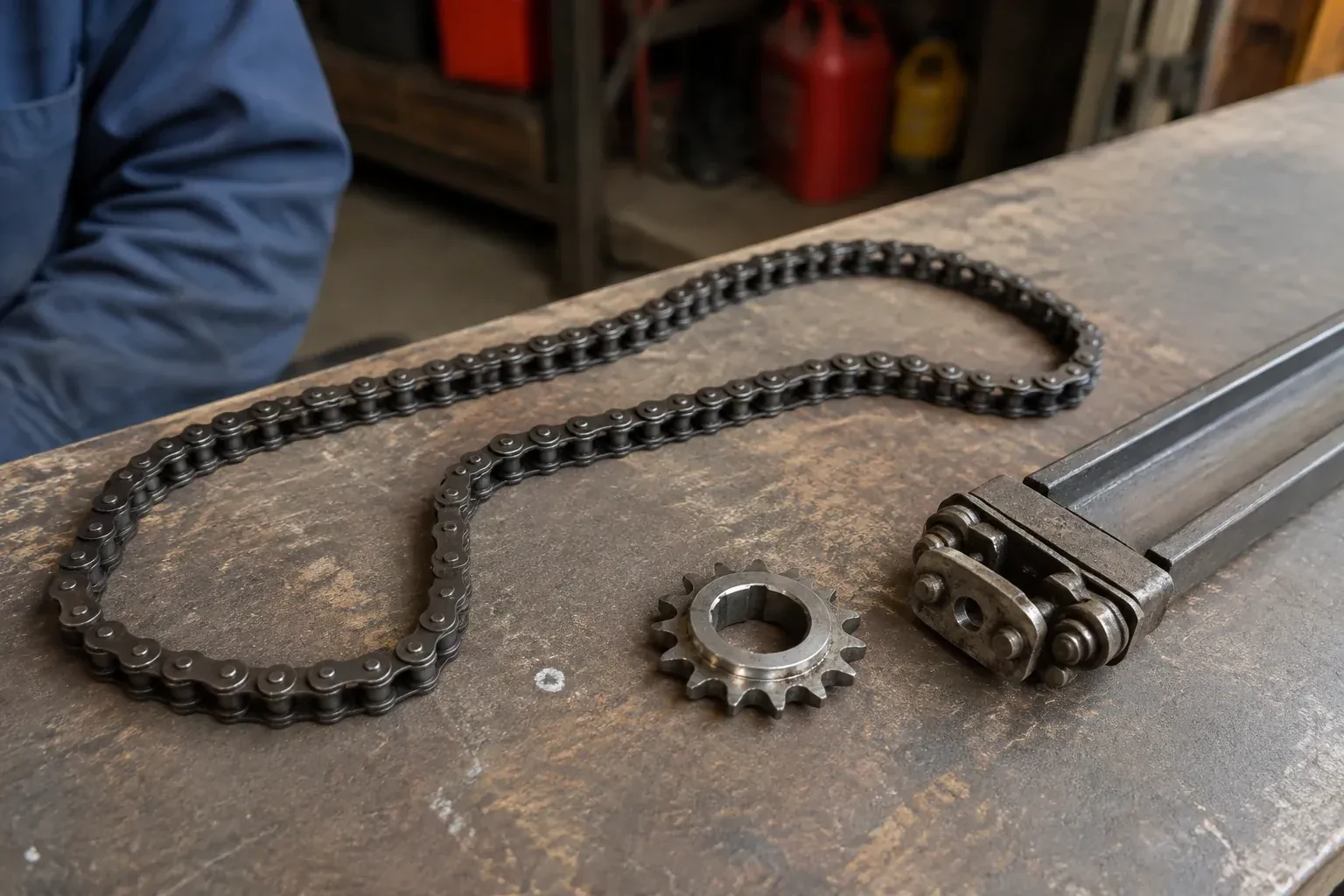
A fixed sequence of checks, done in order so nothing is assumed. Power at the receptacle. Each control tried on its own. The photo eyes and their indicator lights. The head unit's flash code, if it has one. The drive train from motor to trolley. Then the door itself, disconnected and lifted by hand to test its balance. Only after that is a part named and, where it is a small one, replaced during the same visit.
Why does my garage door open by itself?
A door that opens with nobody pressing anything is usually being told to by a fault in its wiring or a control. A pinched or stapled wire to the wall control can short intermittently and act like a button press; a stuck button on a remote left in a coat pocket does the same; and a neighbour's remote on an old fixed-code opener can occasionally trigger it. The technician isolates each control in turn until the phantom command stops.
Related services
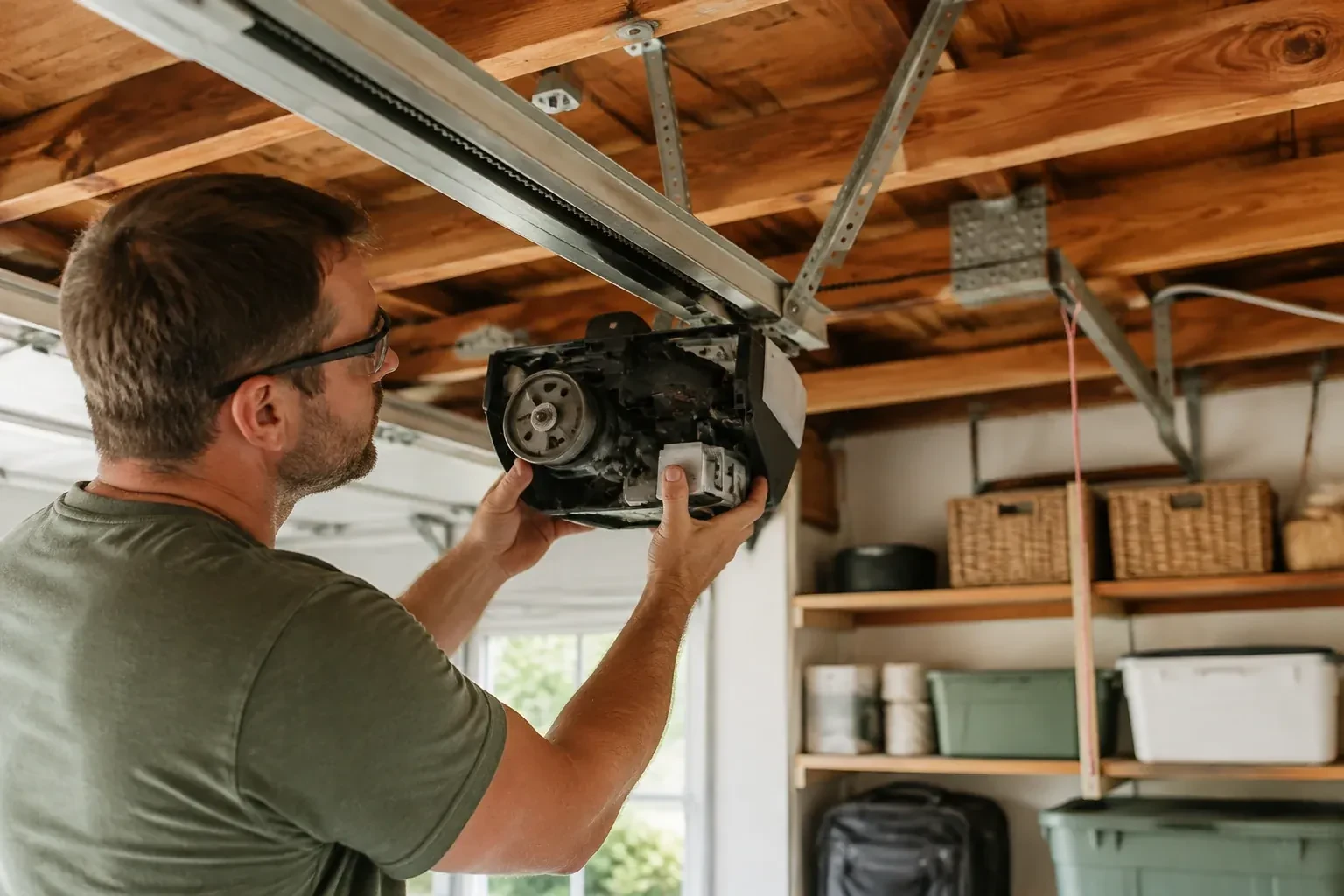
- Belt-Drive Opener RepairThe belt looks fine from a distance, but up close the rubber has cracked across the back in dozens of places and, in one spot, you can see the steel cords showing through.
- Garage Door Opener ReplacementDuring the ice storm the power was off for two days.
- Photo-Eye Sensor Alignment or ReplacementSomeone backed the car in a little too far, a bin or a bicycle brushed the track, and since then the door starts to close and comes back up.