Repairs · Toronto
Garage Door Safety Inspection
During the power outage you pulled the red cord and tried to lift the door by hand.
In plain words
A garage door safety inspection is a systematic look at everything that moves the door and everything meant to stop it. The technician identifies the door and opener from their labels, then examines the sections, hinges, rollers, tracks, springs, cables, drums, brackets and seals, watches a full cycle, tests the door's balance by hand, and runs the reversal and photo-eye tests the opener manual calls for. Nothing tensioned is adjusted during the inspection. What you receive is a dated record of the door's condition, with anything that needs attention sorted by how soon it matters.
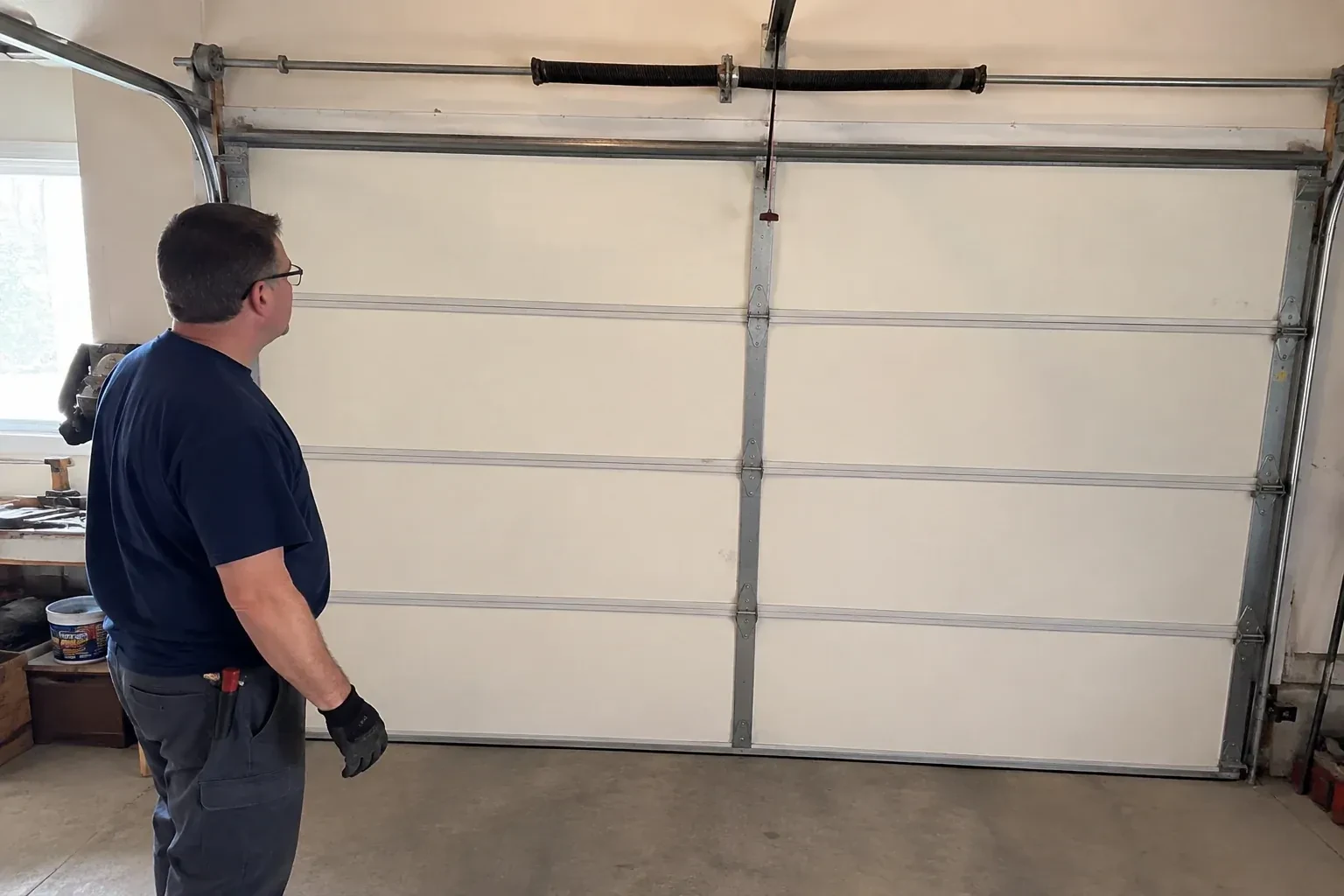
How the visit goesIt has been a hard winter. The bottom seal froze to the slab twice, the opener groaned each morning, and one afternoon you noticed a cable on the left side hanging with a little slack in it.
Garage Door Safety Inspection
How the visit goes
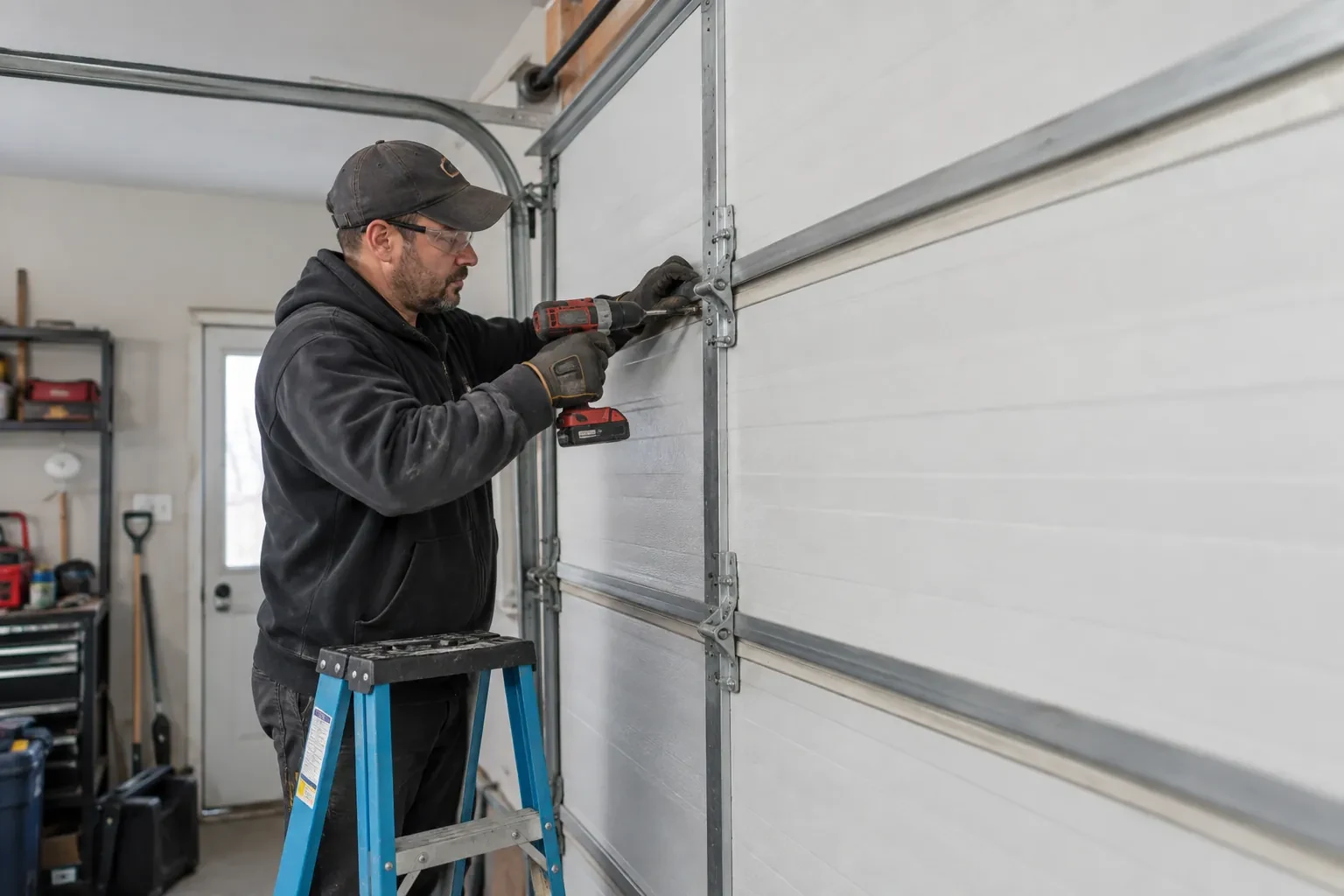
The opening itself
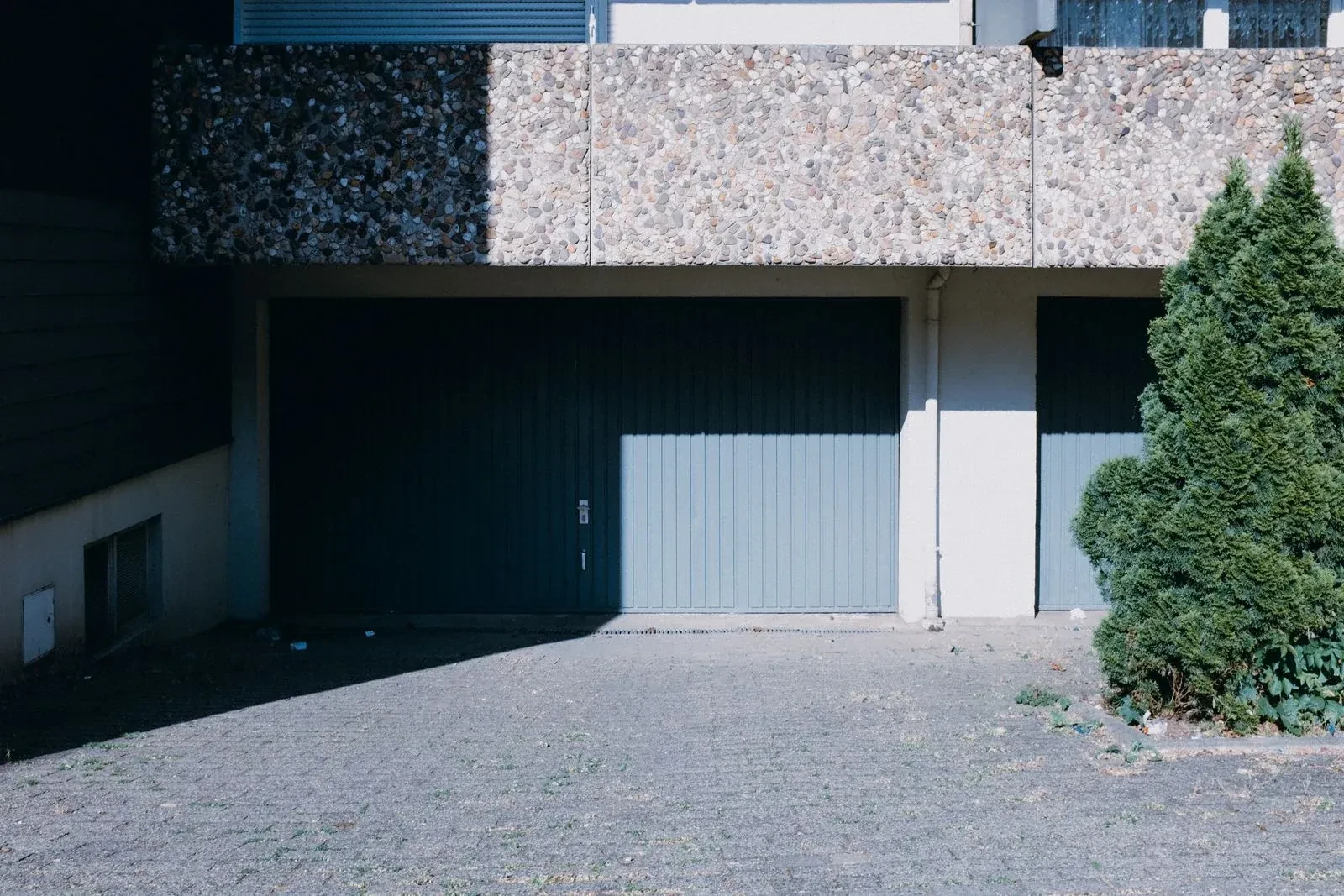
The door is only as good as what it hangs from and closes against. The technician checks the header for sagging where the spring anchor and opener bracket carry their loads, the jambs for soft or split wood where the track brackets bite, and the floor for a lip, heave or ridge that stops the bottom section early. The bottom seal and perimeter weatherstrip are examined for splits, hardening and daylight, since a seal that drags or freezes down puts strain on the counterbalance and the opener. Where a fastener has pulled loose from the framing, that is noted as a repair item rather than tightened into wood that will not hold it.
The balance test, by hand
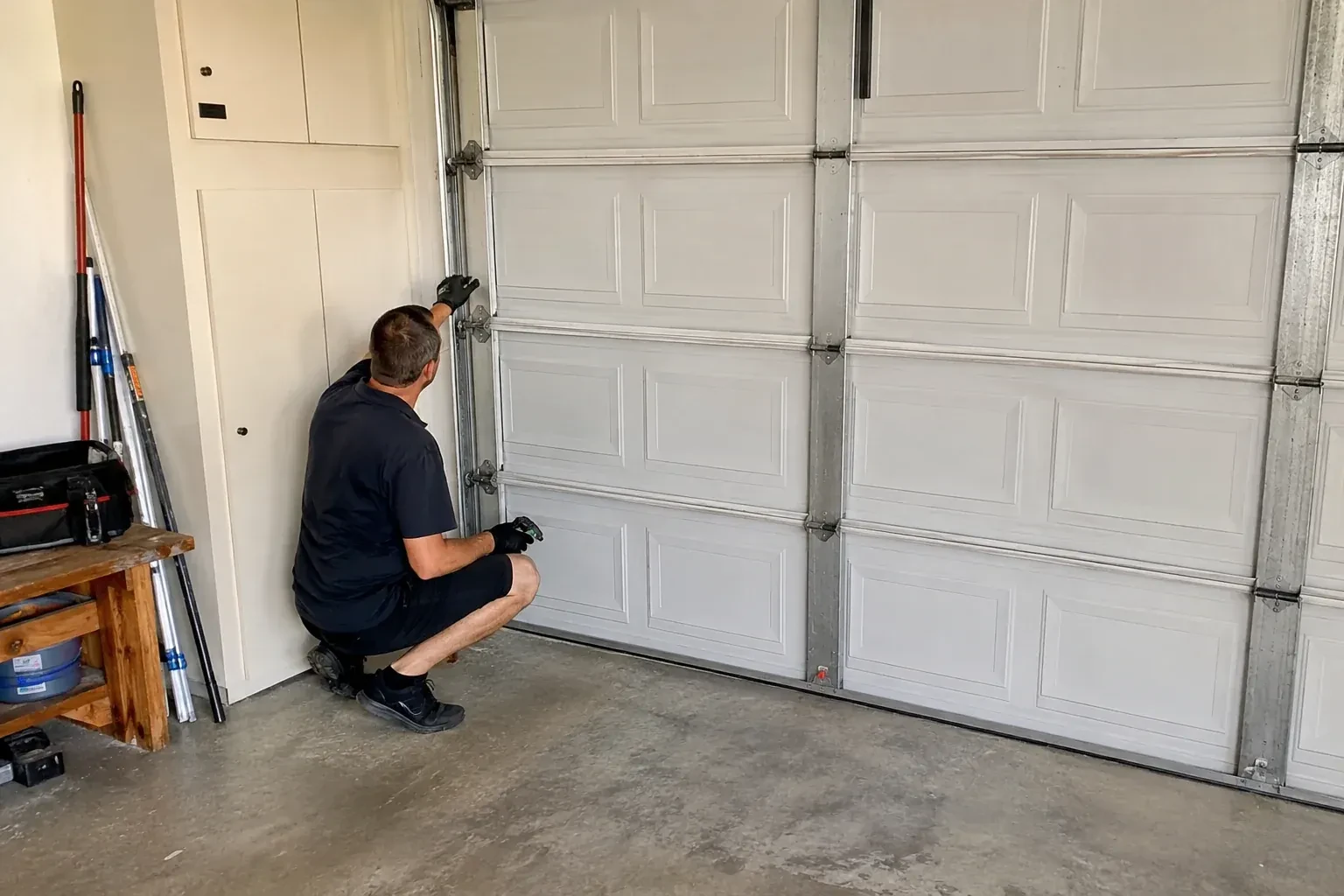
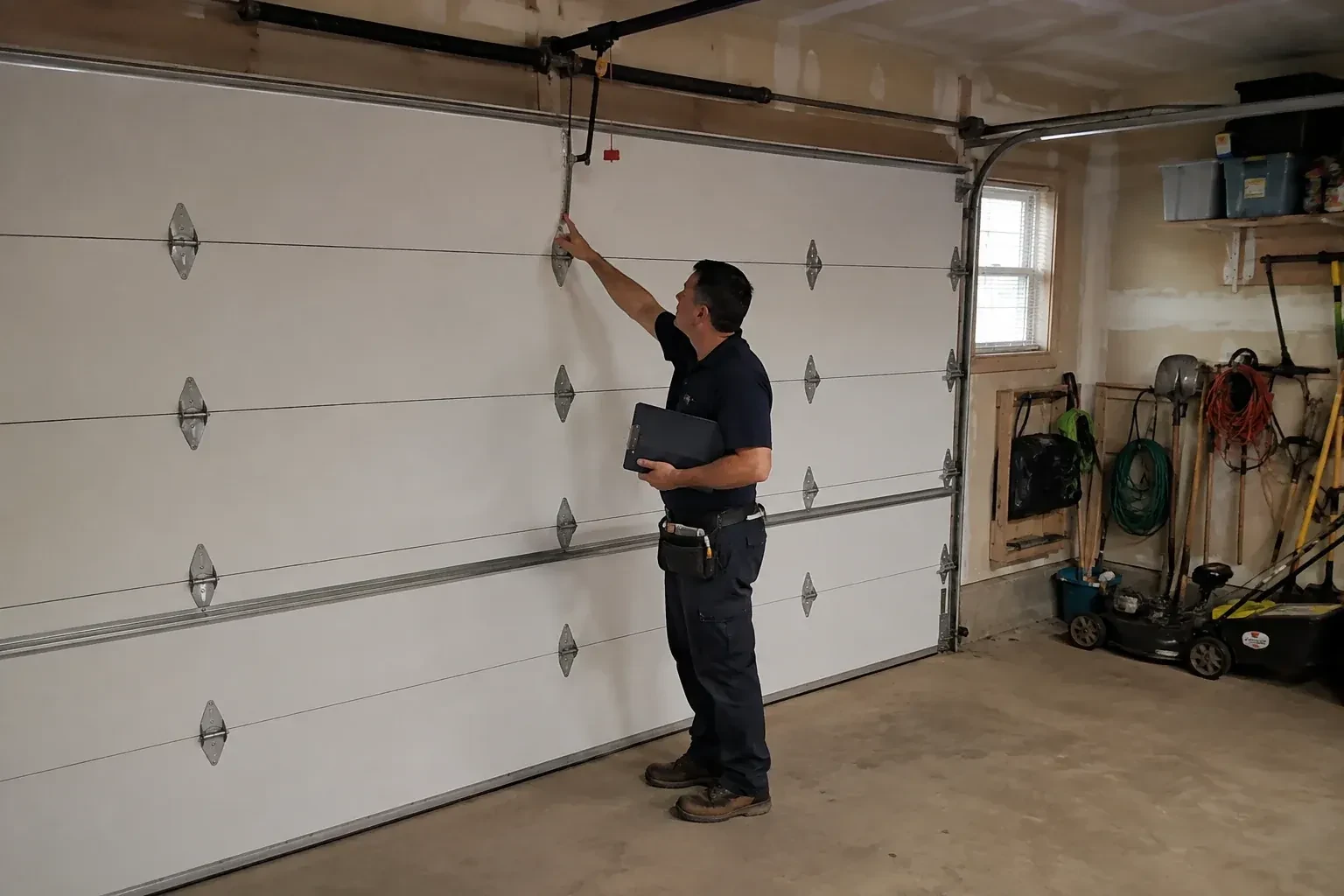
With the door fully closed, the technician pulls the release cord to disconnect the opener, then lifts the door by its handle or a safe grip on the bottom section. It should rise with light, even effort, stay put when let go around waist height, and lower to the floor without slamming. A door that drifts up is over-sprung; one that sinks or feels heavy is under-sprung or bound somewhere in its travel. Binding at a particular height points at a roller, a hinge or a track rather than the springs. The result is recorded as a finding; any change to spring tension is quoted as separate work, done under controlled torque with proper winding bars and the door secured.
Carrying the door through winter
The technician leaves you with the handful of habits that matter in a cold climate. Keep the threshold clear of packed snow so the door closes on the floor and not on a ridge of ice. On a mild day, wipe the salt off the bottom brackets, the lowest hinges and the bottom stretch of each cable, then give them a light mist of lubricant. Wipe the photo-eye lenses when the grime of a slushy week builds up. If the bottom seal freezes to the slab, free it by hand before running the opener rather than asking the motor to tear it loose. These take minutes across a season and spare the cables, the seal and the opener.
Garage Door Safety Inspection
In the van
Lens cloth and cleaner
Camera for findings
Remote and keypad batteries
Weatherstrip samples for matching
Flat 2x4 test board
Garage Door Safety Inspection
What affects the quote
The kind of report you need
A plain findings sheet suits most households. A photographed, measured report for a sale, a rental file or a property manager takes longer to prepare and is quoted as such.
A retest after repairs
When the report lists repairs, a short return visit to rerun the balance, reversal and photo-eye tests once the work is done is quoted as its own item.
Scheduling for a building or complex
A row of townhouse garages or a set of rental units is planned as one block of time with a record per door, and the quote is set by the count of doors and openers.
What to have ready
- Is anything stored near the tracks, under the spring shaft or in front of the door?
- Is there a spring on a shaft above the opening, or springs stretched along the tracks?
- Does the door sound or move differently going up than coming down?
Garage Door Safety Inspection: questions
QuestionsWill you tell me if the door should not be used?
Yes, plainly and at the door. A slack or frayed cable, a gap in a spring coil, a door hanging crooked, a bracket pulling out of the framing or an opener that fails the reversal test are the kinds of findings that put an item in the stop-use group. When that happens you see the reason yourself, the door is left resting in a safe spot with the opener unhooked, and the fix is written up and quoted so it can be booked.
Should I have the door inspected when buying a house?
It answers the questions a home inspection leaves open. A general inspector confirms the door opens and closes; a door technician records the make and age of the hardware, how much life the springs and cables appear to have, whether the safety devices pass, and what to budget for. For a seller, the same report settles a buyer's questions before they are asked and shows the door was cared for.
How long does the visit usually take?
Plan for roughly an hour for a single door in ordinary condition, and longer for a double door, a second door on the property, or a door with a history that needs following up. Maintenance done on the spot adds a few minutes. A post-impact assessment, where the technician traces the force through the hardware, takes longer than a routine check. You are told at the door if the scope is growing.