New Doors · Toronto
Commercial Rolling Door Repair in Toronto
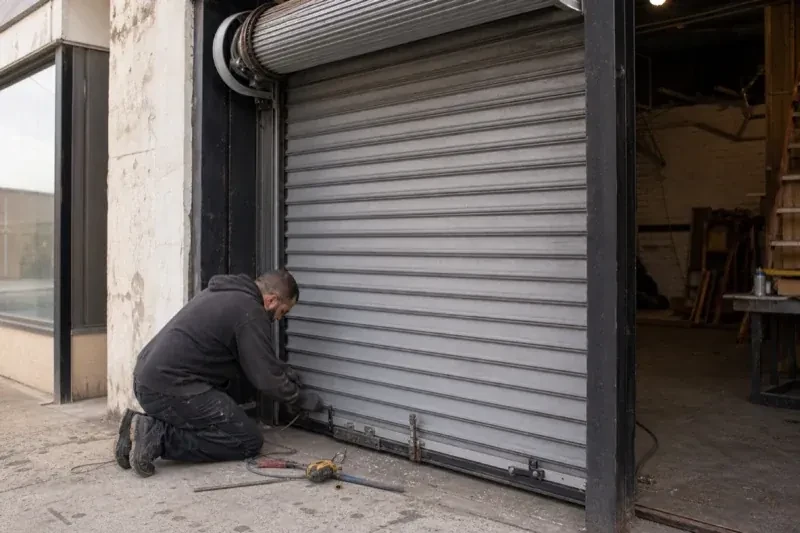
A lift truck clipped the lower curtain during unloading.
In plain words
When a door is stuck closed, the first goal is to understand what is holding it rather than adding force. A lock may still be engaged, a damaged slat may be wedged in a guide, the bottom seal may be frozen down, or the operator brake and limits may need attention. Traffic is redirected, power and stored spring energy are controlled, and the curtain is supported before parts are released. The repair follows the actual cause, after which the door is cycled under observation and the business receives a clear account of the work and operating checks.
How the visit goesThe wall control asks the door to close, but the operator hums and stops. The curtain remains overhead while the control light and the photoelectric sensors suggest that the powered system needs a connected diagnosis.
Commercial Rolling Door Repair
How the visit goes
Look for weather and impact patterns
Exterior openings collect evidence from their surroundings. Salt staining at the lower guides, packed grit near the sill, torn astragal, rust below a hood seam and polished marks at forklift height each tell a different story. Ice may hold the bottom bar down, while wind can press a broad curtain against its guides and change operating effort during a storm. The technician notes drainage, exposure and recurring traffic contact alongside the mechanical findings. That context helps shape a durable repair and can support practical additions such as guide guards, clearer floor markings or better threshold housekeeping.
Realign guides and attachments
Bent or shifted guides are corrected from measured reference points rather than by forcing the curtain through them. The technician establishes the required gap, plumb and parallel relationship, then straightens or replaces authorised guide components and restores loose wall-angle or bracket fasteners. Bellmouths are shaped to receive the curtain cleanly, and guide stops are secured. If damaged masonry, steel framing or a moved jamb prevents reliable attachment, that condition is separated for the appropriate building work. Once the supports are sound, the curtain is centred and moved gradually to confirm even clearance on both sides.
Practical protection from another impact
A repaired impact area offers useful evidence for prevention. The technician can show where the vehicle contacted the guide, bottom bar or curtain and which travel lane placed it there. Facility managers can respond with visible floor markings, adjusted staging, guide guards or a revised stopping point where those choices suit the site. Operators should report even a light strike because a guide can move before damage looks dramatic. Checking bottom-bar level, guide clearance and fasteners after contact turns a small event into a manageable inspection instead of allowing repeated cycles to spread distortion through the curtain.
Commercial Rolling Door Repair
In the van
Barrel and headplate brackets
Photoelectric sensors
Guides and bellmouths
Operator brake and limits
Curtain slats and endlocks
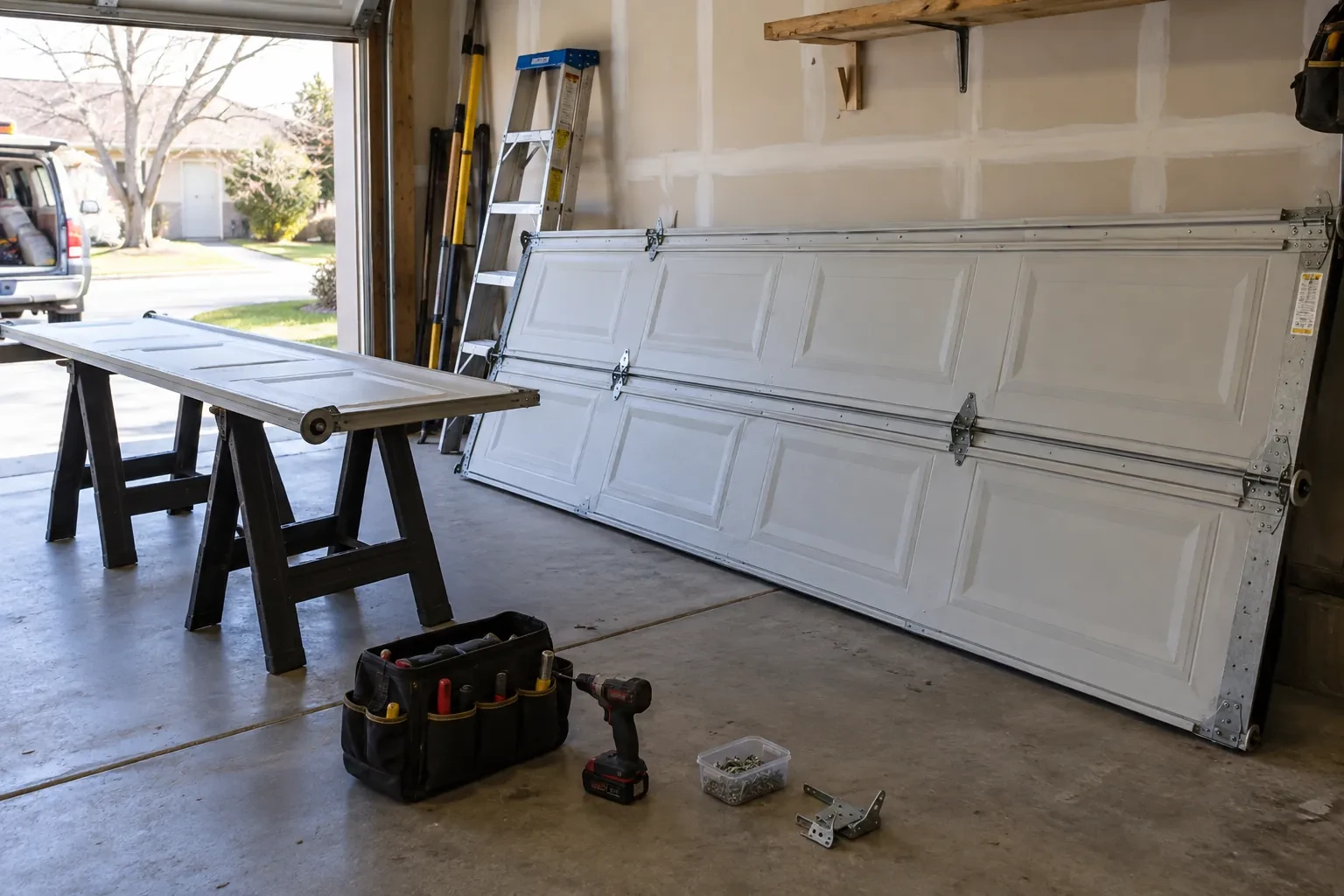
Commercial Rolling Door Repair
What affects the quote
Bottom bar and sealing needs
A twisted bottom bar, torn astragal, worn retainer, sensing edge and misaligned slide bolts are distinct items. Floor slope and threshold condition also influence the closure-line work.
Counterbalance condition
Spring adjustment, bearing service and replacement of worn barrel-related parts require different labour and controls. Door weight, spring arrangement and operating position shape the counterbalance plan.
Cause of the failure
Impact, gradual wear, corrosion, freezing, building movement and a control fault can produce similar symptoms. The verified cause determines whether cleaning, adjustment, component renewal or wider coordination belongs in scope.
What to have ready
- Is the door push-up, hand-chain or motor operated?
- Are door, operator or previous service records available?
- Is the curtain fully open, closed or stopped between limits?
Commercial Rolling Door Repair: questions
QuestionsCan the closing limit be adjusted to stop a floor gap?
Limit adjustment is appropriate when the curtain, bottom bar and guides are aligned and the seal simply stops at the wrong point. A sloped sill, twisted bar, hardened astragal or shifted curtain needs its own correction first. Setting extra downward travel against a mechanical problem can compress the seal and load the operator without producing even contact.
Can a door stuck partly open be repaired in that position?
The position becomes part of the repair plan. Traffic is controlled, the curtain is supported or secured, and its weight and stored spring energy are managed before a guide or drive component is released. Depending on the fault, the door may be brought to a safer working position under control before the component repair begins.
How are salt and winter moisture handled?
The lower guides, sill, fasteners, bottom seal and sensor faces are checked for ice, grit and corrosion. Buildup is cleared with methods suited to the material, drainage issues are noted and damaged sealing parts can be renewed within scope. The door is tested after cleaning because cold-weather resistance can exist alongside an alignment or balance problem.
Related services
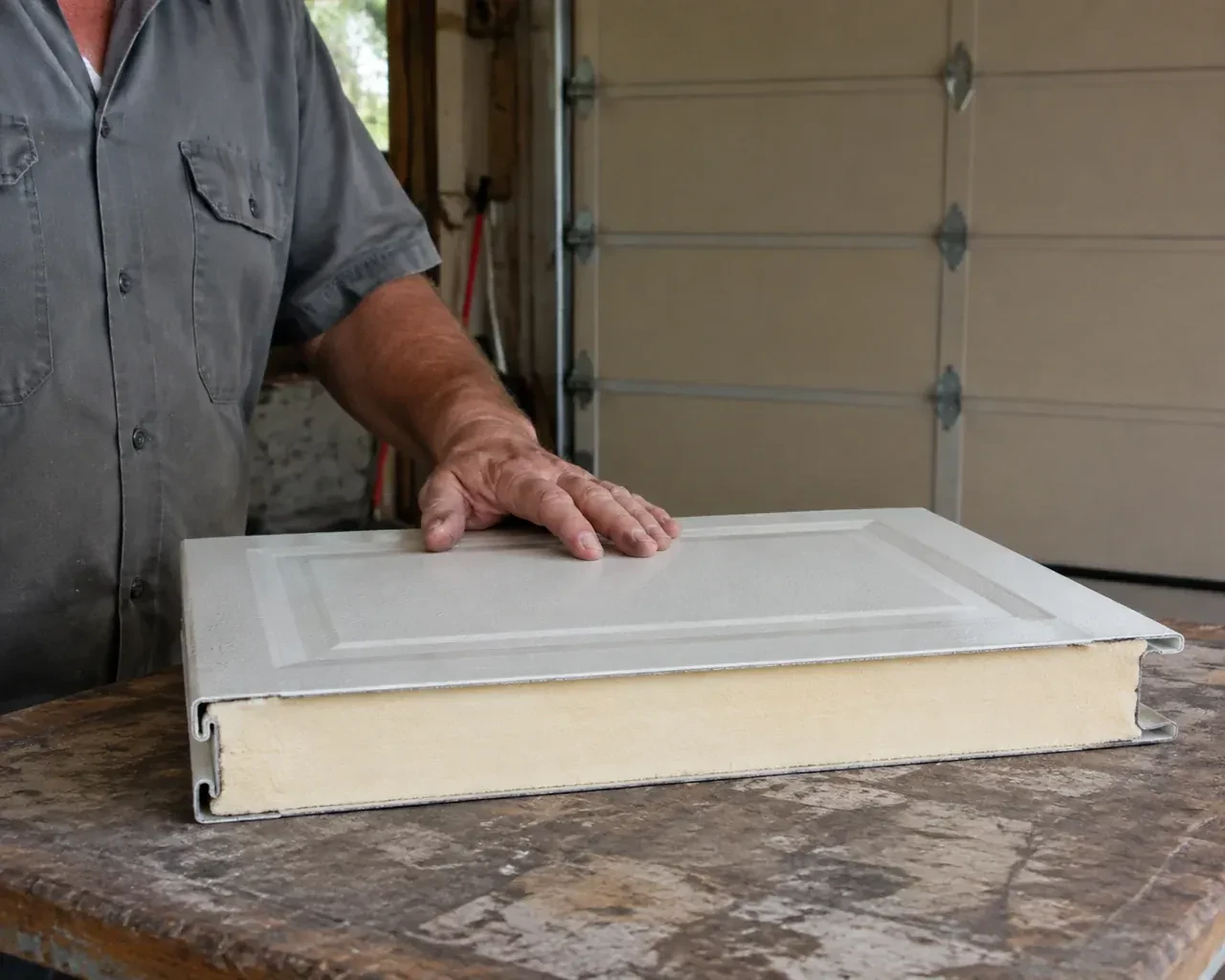
- Insulated Steel Garage Door InstallationThe opener strains as the heavy older door starts upward, and manual movement feels uneven.
- Wind-Rated Garage Door ReplacementYou are combining two narrow garage bays into one broad opening.
- Carriage-House Garage Door InstallationTraditional swing-out coach doors have the look you like, but the driveway needs to remain clear as the door opens.