Repairs · Toronto
Garage Door Panel Replacement in Toronto
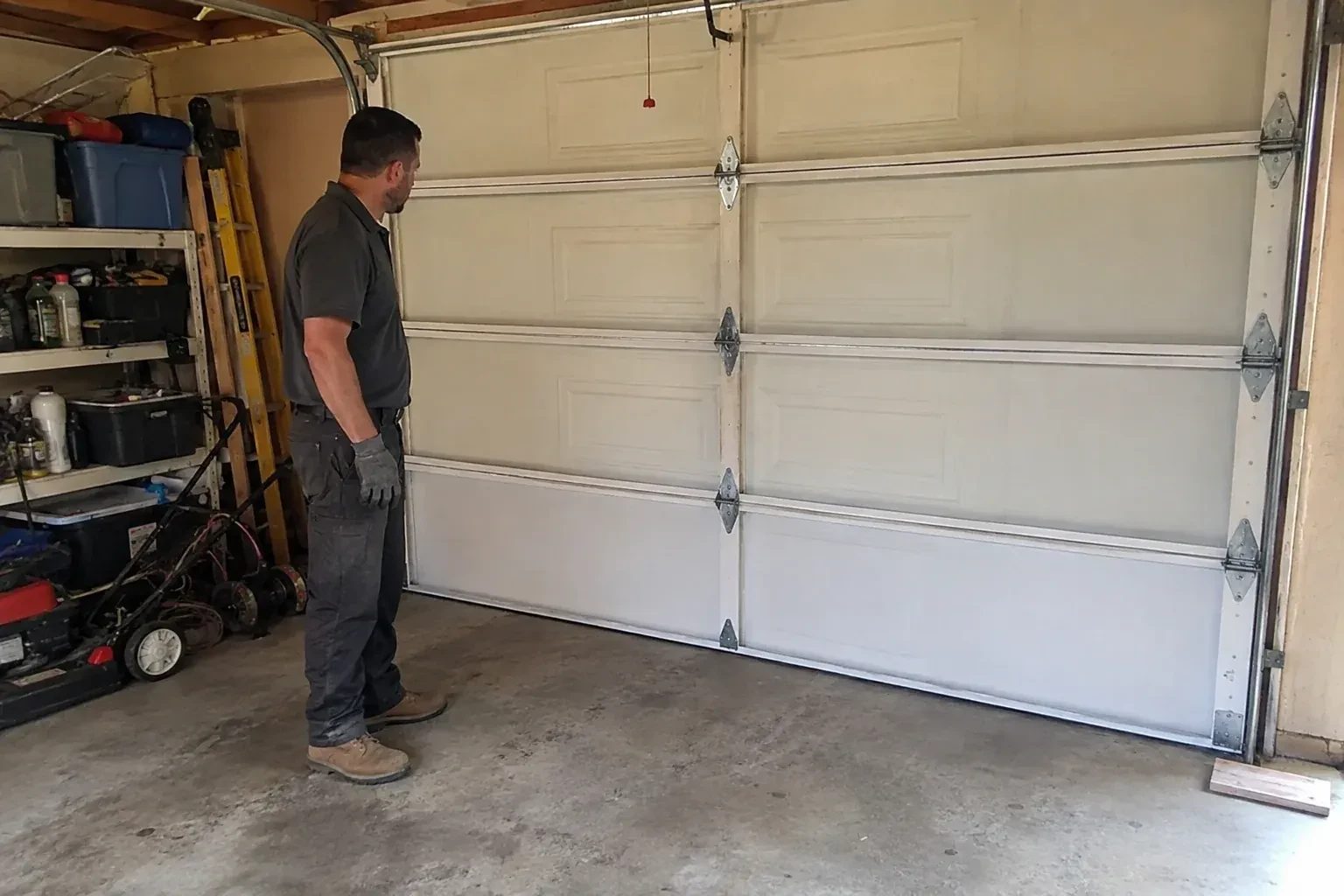
Rust has crept along the bottom edge of the lowest section.
In plain words
Winter is hard on the bottom section. Meltwater collects under the seal and freezes the door to the slab; the opener then pulls on a door that is anchored at the floor, and the bottom section bows or a hinge tears out of its stile. Road salt and slush finish the job by rusting the lower edge. Replacing that section restores a flat, sealed bottom edge and gives the door a new set of bottom brackets and seal retainer. Because the lift cables attach at the bottom, the springs are unloaded first, then reloaded and balanced once the new section is in, so the door runs as it should.
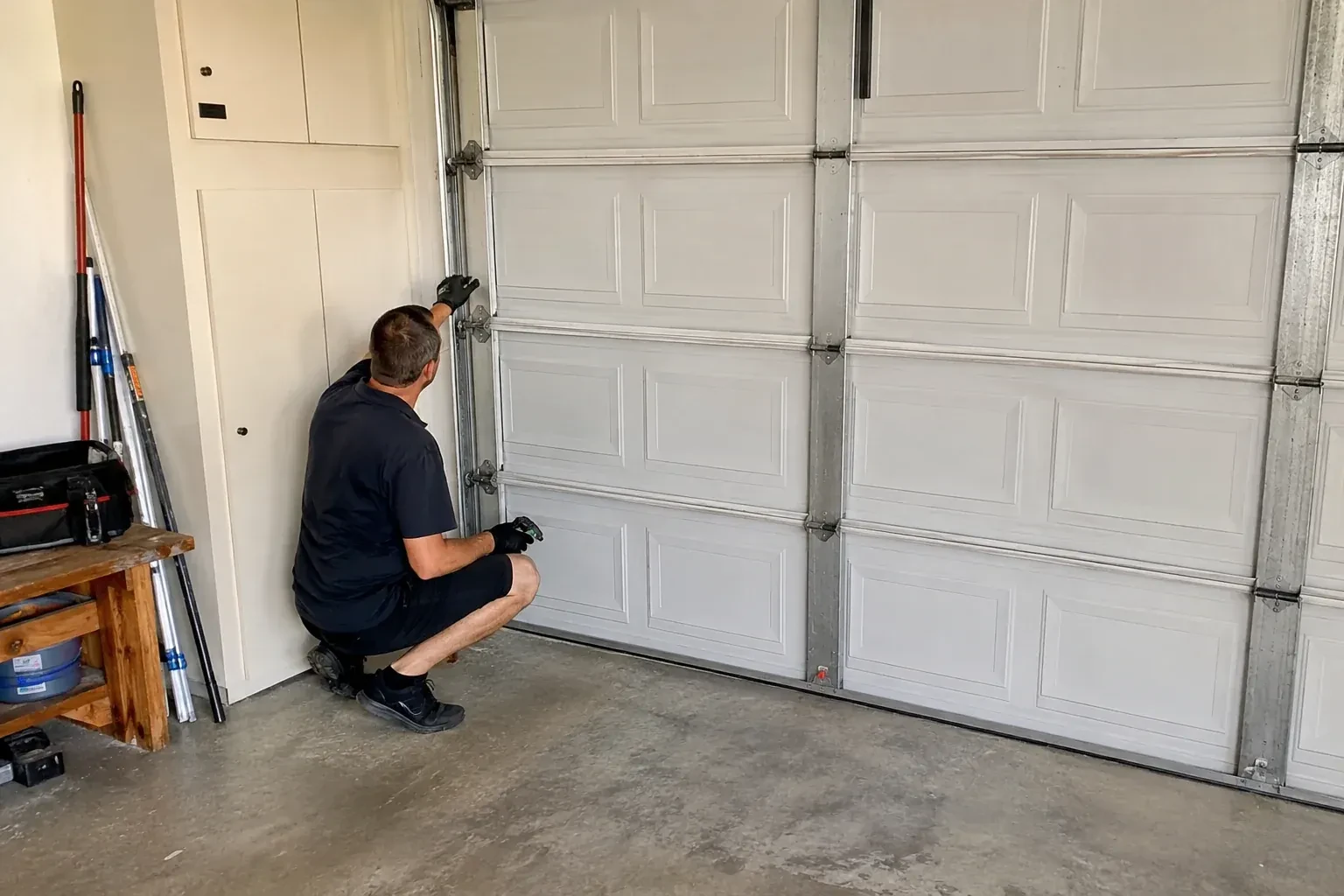
How the visit goesThe top section has developed a bend where the opener arm pulls on it. On the way up it flexes visibly, the door hesitates near the top of its travel, and daylight shows through the joint below it when the door is closed.
Garage Door Panel Replacement
How the visit goes
Finding the door's identity
Sections are made to fit one model, so the first job is to name yours. The technician looks for the manufacturer's label, usually a sticker on the end of a section, inside the top section or on a track, and reads the model or series, the date and sometimes a colour code. Then come the measurements: overall width and height, the height of each section, its thickness, and the spacing of the hinge holes on the stiles. The panel design is noted too, whether short raised panels, long panels, flush or a carriage-house look, along with the window layout and the type of joint between sections. Photographs of the label and of the whole door go into the file.
Fitting the new section into the door
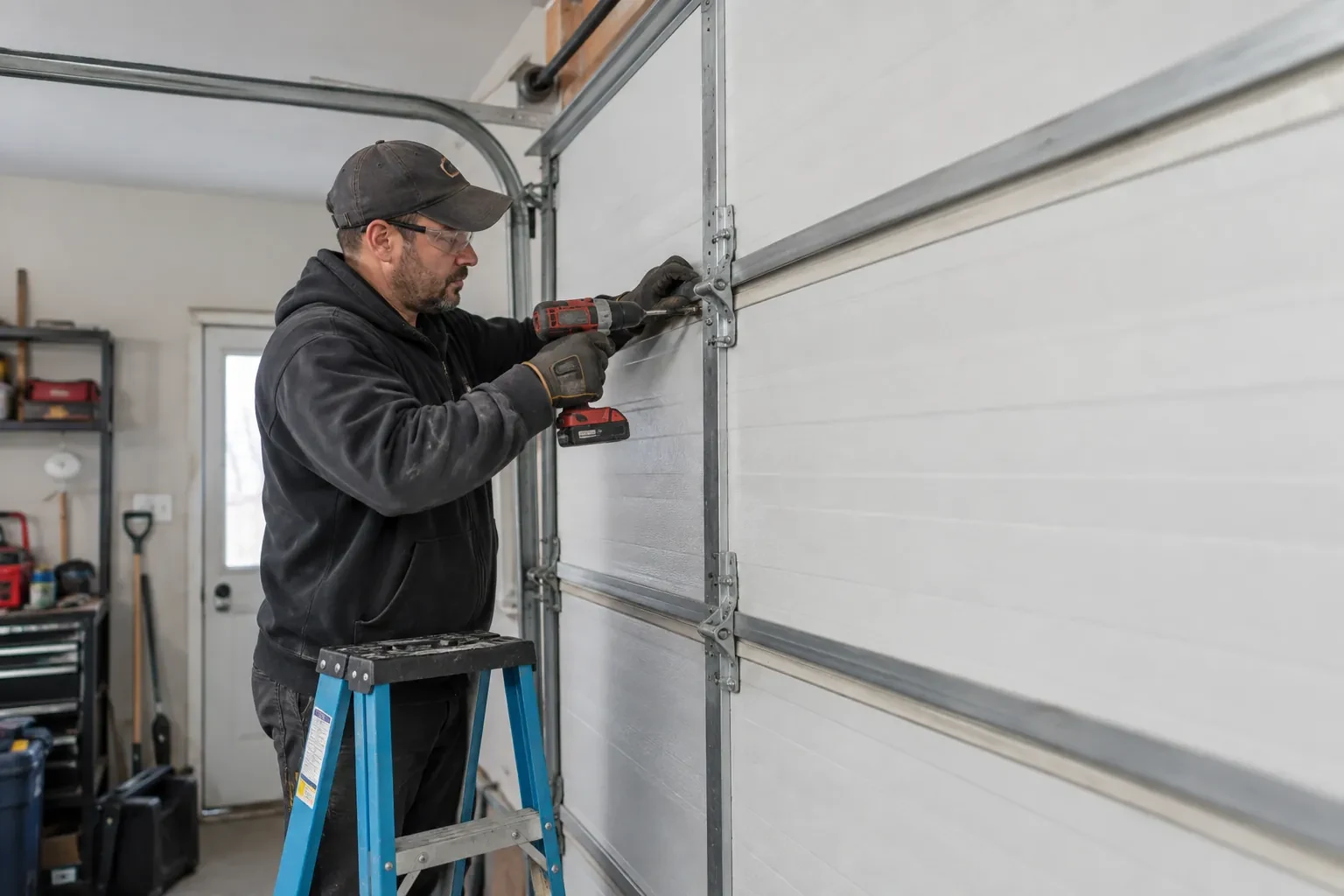
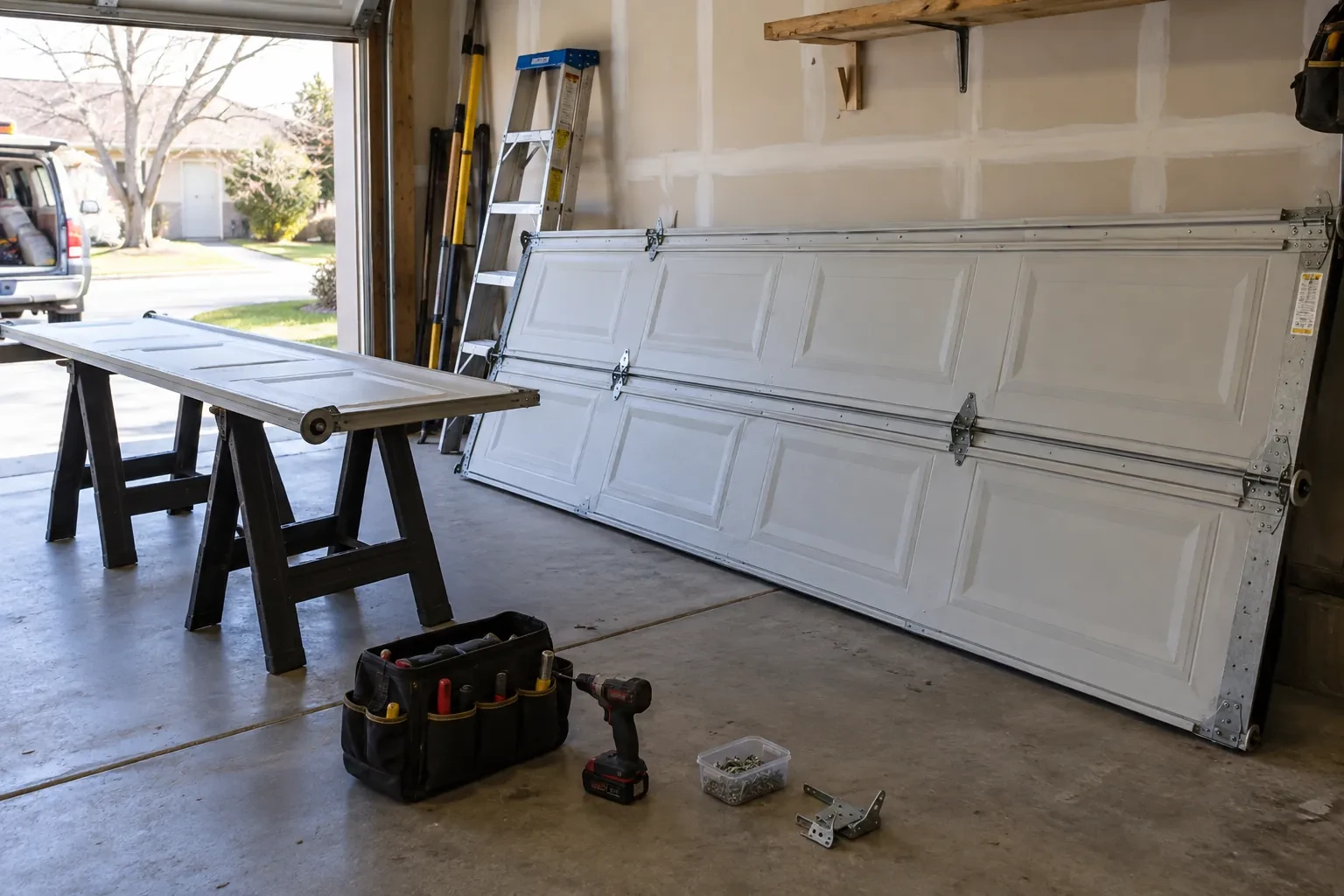
The new section is lifted into the gap, its rollers guided into the tracks and its joint mated to the section below so the two profiles nest. Hinges go on according to the number stamped on them: each position in the door uses a different hinge offset, which places the roller progressively further from the door face so the upper sections follow the curve of the track. New self-tapping screws are driven into the stiles at the factory hole positions, a strut is bolted across if the section calls for one, and the technician confirms the section sits flat and the joint above closes tight.
Holding off rust on the lower edge
Salt and slush are what turn a healthy bottom section into a flaking one, so give the lower sections a rinse when the salt season ends and again after any heavy slush. Look along the bottom edge and around the seal retainer for chipped paint and touch it up with the colour from your record before bare steel has a chance to bloom. Keep the bottom seal in good condition so water sheds off the face rather than sitting on the lip. Inside, a glance at the back of the section during the monthly check catches moisture marks early.
Garage Door Panel Replacement
In the van
Bottom seal retainer and astragal
Adjustable top roller brackets
Bottom brackets with cable tabs
Self-tapping stile screws
Nylon or steel rollers
Garage Door Panel Replacement
What affects the quote
How many sections are affected
One section is the base case. Two adjacent sections add a second unit and its hardware but share the setup; three or more usually prompts a comparison with a complete door so you can weigh both.
Condition of tracks and cables
An impact often nudges a track bracket or nicks a cable where it wraps the drum. Straightening or resetting track and replacing a cable are itemised so the section quote stays clear.
A make-safe visit while the section is on order
When the door has to be braced, disconnected or secured closed until the section arrives, that first visit is quoted as its own item, with the installation visit following once the part is in.
What to have ready
- What colour and panel design is the door?
- Roughly how wide and how tall is the door?
- Does the door still open and close, by opener or by hand?
Garage Door Panel Replacement: questions
QuestionsCan a dent be repaired instead of replacing the section?
Sometimes. A shallow dent in the middle of a steel skin, away from joints and hinge points, can often be eased out or filled, sanded and painted. Damage that creases the metal, reaches a joint or an end stile, bends a hinge point, or kinks a strut affects how the section carries load as the door moves, and a new section is the sound repair there. The technician tells you which category your dent falls into.
What is a strut, and does a new section need one?
A strut is a horizontal steel stiffener fastened across the inside of a section to keep it from bowing. Wide doors, top sections where the opener arm pulls, and bottom sections that take knocks are the usual places for them. If your damaged section had a strut, the new one gets a straight strut refitted or replaced. If a top section bowed because it never had one, adding a strut is part of putting it right.
How long does it take to get a replacement section?
Sections are made to order for a specific model, size, position and colour rather than kept in stock, so there is a lead time from the manufacturer. It varies with the maker, the colour and the season, and the technician confirms the expected timing when the order is placed. In the meantime the door is left in a safe state, either in normal use or braced and closed, depending on the damage.
Related services
- Garage Door Tune-UpYou moved in a few months ago and have no idea when the garage door was last looked at.
- Off-Track Garage Door ResetThe rollers on the door have been squealing for months.
- Garage Door Bottom Seal ReplacementAfter a spring rain there is a puddle inside the door that reaches the tires.