Bayview Village Door & Opener Co. · Toronto
Garage Door Opener Diagnosis and Repair: what the visit covers
Garage Doors · Toronto, Ontario
Winter changes what an opener is asked to do. Grease in the gear case and on the rail thickens in the cold, rollers turn stiffly, and the bottom seal can freeze to the concrete overnight so the door is briefly glued shut. A force setting that was right in July now reads every one of those as an obstruction and stops. A cold-weather diagnosis sorts the seasonal from the structural: freeing the seal, lubricating the moving parts with a product made for low temperatures, checking that the balance is still right, and then confirming the force is low enough to stay safe while high enough to work.
The door by itself
With the door fully closed, the technician pulls the emergency release and lifts the door by hand. A healthy door rises smoothly with modest effort, holds still about a metre off the floor, and stays up when fully open. If it is heavy, drifts down, or stays put only at the top, the springs are tired or broken and the opener has been doing work it was never sized for. Tracks, rollers, hinges, cables and drums are looked over at the same time. This check comes before any powered testing, because a door in this state is corrected on the door side first, by someone with the tools for tensioned hardware.
Door first, opener second
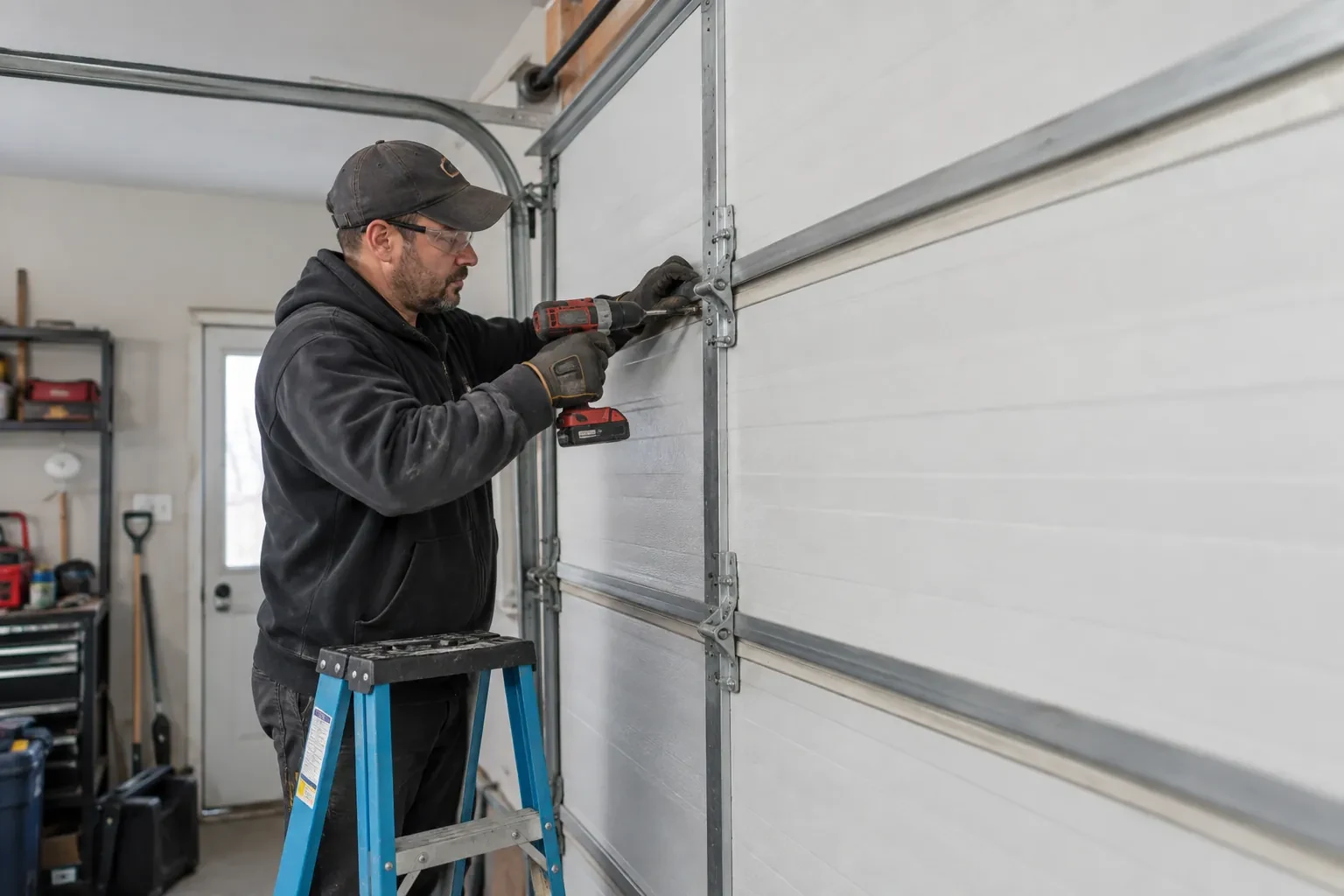
When the by-hand check shows the door is heavy, drifting or binding, the work order changes. The opener is left disconnected and the door side is corrected first: worn rollers replaced, dry hinges and rollers lubricated, loose track brackets tightened, a dropped header bracket re-secured, and spring or cable faults handed to the tensioned-hardware work they require. Only when the door lifts and holds by hand is the trolley re-engaged and the opener tested again. Very often the opener that seemed faulty runs perfectly once it is moving a balanced door, and the repair becomes lighter and longer-lived than any change made at the motor.
A clear path if the unit is near its end
When the diagnosis finds an opener that is safe today but not for long, you leave with a plan rather than a surprise. You know which part is wearing, what the warning signs will be, and how the decision to replace is likely to present itself. If the unit is one the industry recommends replacing, such as a head unit with no photo eyes, that is set out plainly along with what a modern belt or direct-drive unit changes: quieter running, battery backup, soft start and stop, and sensors that meet the current standard. The door is left working and safe while you decide.