Springs · Bayview Village
Garage Door Roller Replacement in Bayview Village
The door is the one the builder installed and has never had a part changed.
In plain words
A garage door opener is designed to guide a balanced door, not to haul a rough one. Rollers that bind, wobble or grind add resistance across the whole travel, and the opener answers by working harder, running hotter and tripping its force limit or reversing partway. Replacing worn rollers with a smooth-running set takes that load away, which is why the opener often sounds calmer after the same visit. The technician confirms the door holds its own weight with the opener released, then checks the opener's force and reversal settings once the new rollers are in.
How the visit goesSince the cold snap the door has been stiff and noisy first thing, and after the last thaw the bottom corner began to judder. There is slush in the foot of the track and a bloom of rust on the lowest wheel.
Garage Door Roller Replacement
How the visit goes
Listening to a full cycle
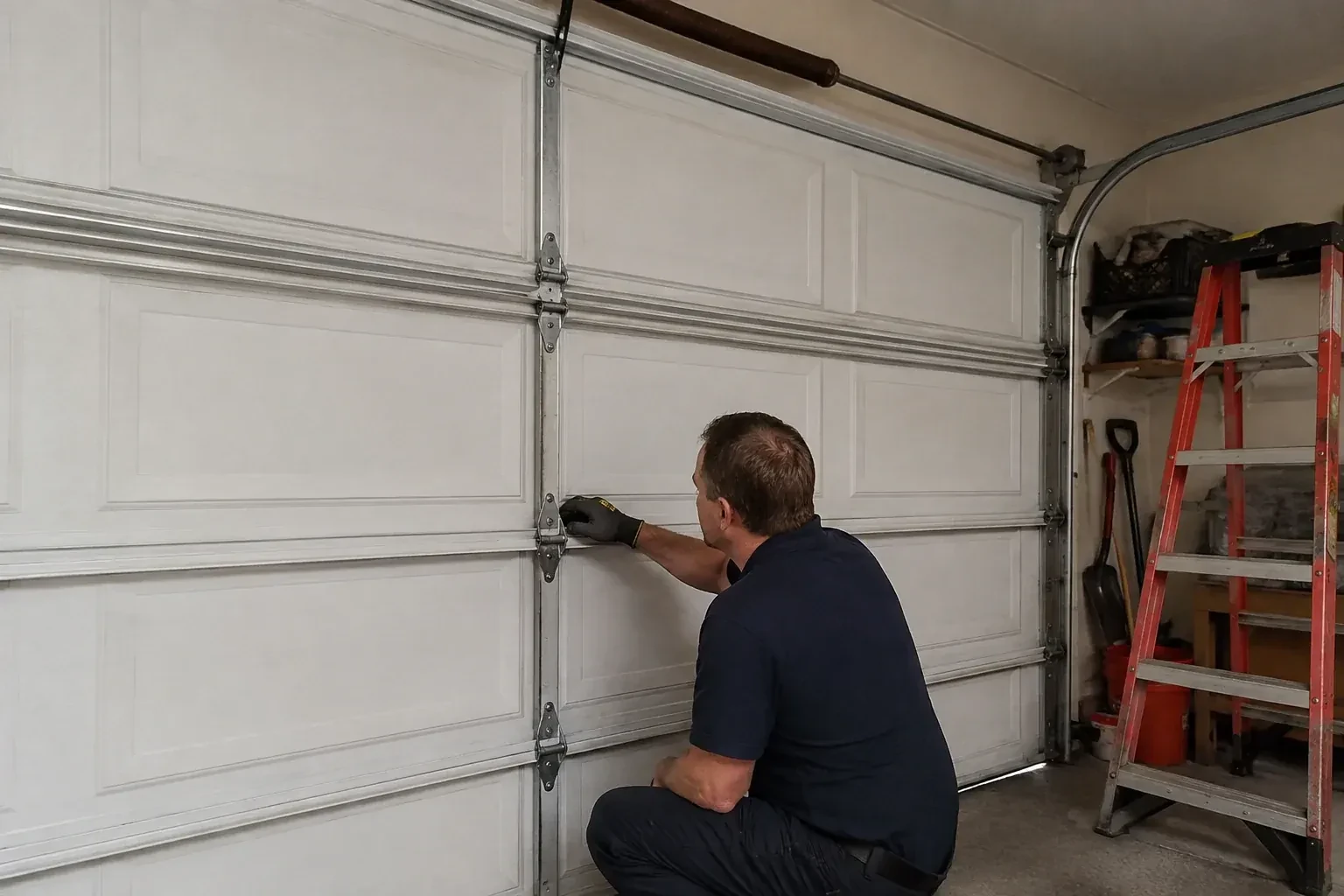
The assessment begins with the door in motion. The technician runs it up and down on the opener, then releases the opener and moves it by hand, because a hand on the door feels what an ear alone misses: a catch at one height, a wheel that drags rather than turns, a section that rocks as it rounds the curve into the horizontal track. Where the sound or shake happens narrows the search. Trouble at the curve usually points to worn or oval wheels, a rhythmic click travelling with the door points to a failed bearing, and a shudder near the floor often traces to the lowest rollers and whatever the winter left in that end of the track.
Fitting a matched set
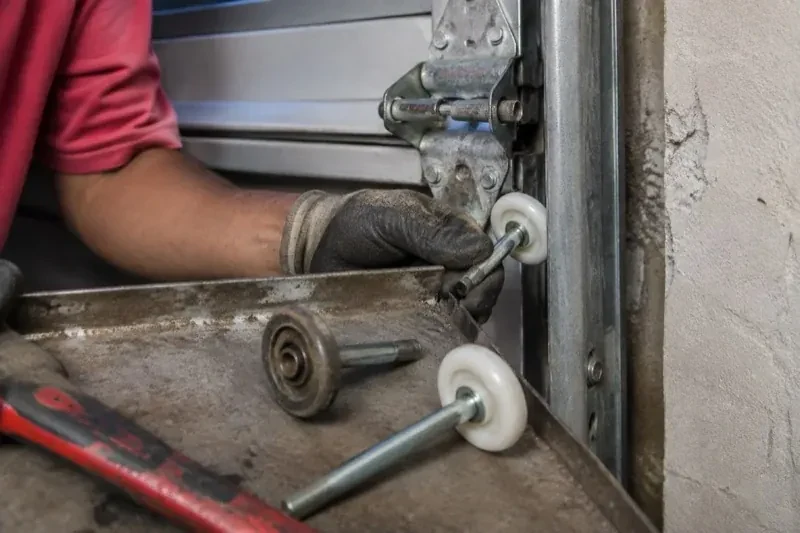
The new rollers go in as one set of one type, with the same wheel material, stem length, bearing count and load rating at every position where the hinges allow it. Mixing a couple of new nylon wheels among old steel ones leaves the door running unevenly and sounding different from side to side, so even when only two wheels looked worn, the whole set is normally changed. Where a heavier door needs seven- or ten-inch stems at the double hinges, those positions get long-stem rollers and the single-hinge positions get standard ones, all from the same range so the wheels ride at the same height in the track.
Signs to watch for next time
Rollers wear slowly, so it helps to know the early signals. A rhythmic clicking that travels with the door, like a train over rail joints, points to a bearing beginning to fail. A wheel that leans to one side in its hinge, or a door that starts to rock as it rounds the curve, suggests a stem or wheel wearing oval. Grinding that returns a day or two after lubrication means the wear is in the wheel, not the grease. Catching these while the door still runs makes the next roller change a planned visit rather than a door stuck halfway.
Garage Door Roller Replacement
In the van
1-1/2 inch reversal test block
Garage door lubricant
Three-inch rollers for commercial track
Adjustable top fixtures
Jamb bracket fasteners
Garage Door Roller Replacement
What affects the quote
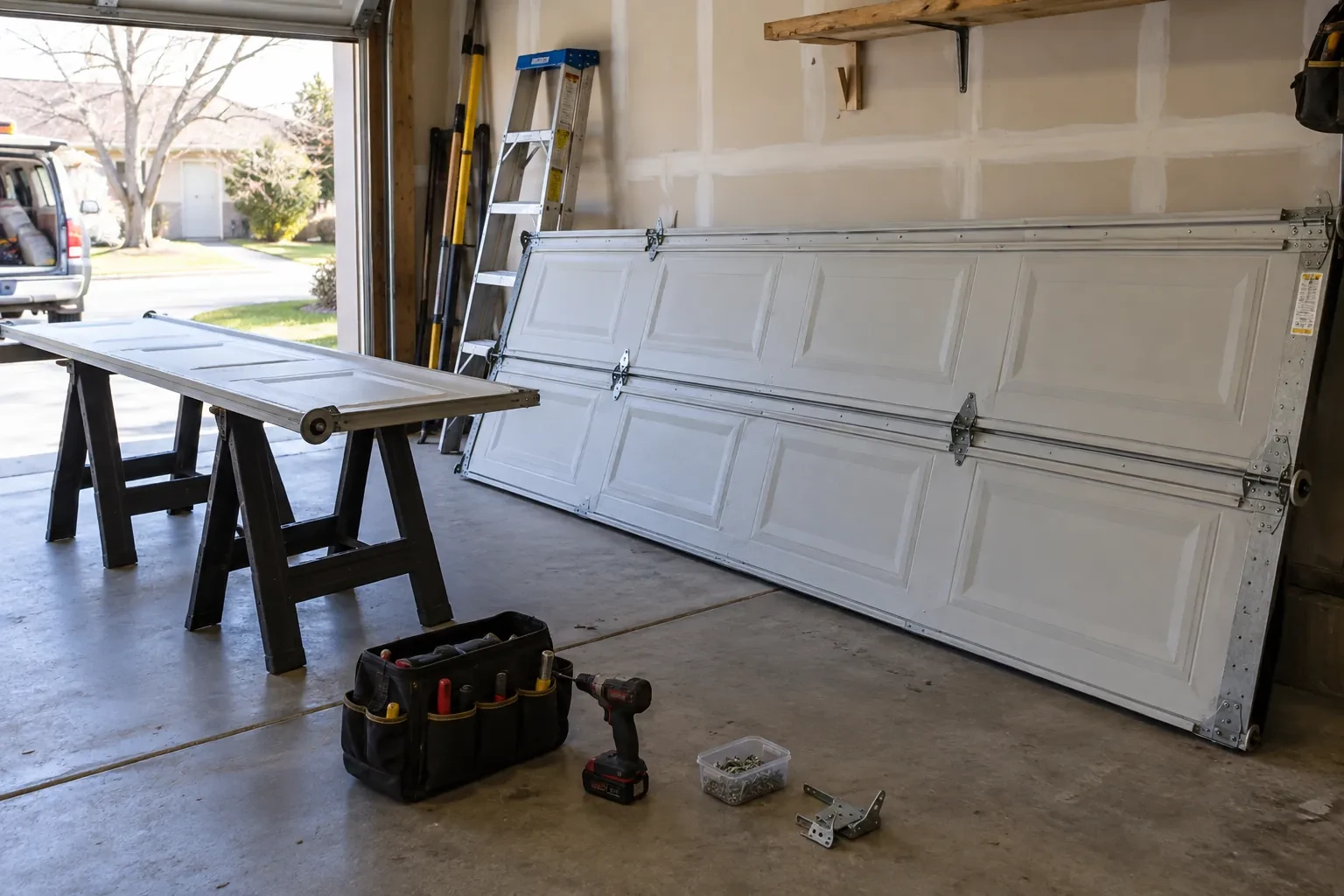
Relieving spring tension for the bottom rollers
When the bottom brackets have to be unbolted, the technician takes the spring load off first with winding bars, skilled extra work that is included in the figure for that position.
Hinges that need replacing
Cracked, elongated or rusted hinges found during the inspection are replaced with the correct numbered hinge, each priced as its own item alongside the rollers.
Door height and high-lift track
Tall doors, and high-lift or follow-the-roof track, put the horizontal run high overhead, so ladder work and the extra sections lengthen the visit.
What to have ready
- Has the door ever come off its track or been hit by a vehicle?
- When were the springs last replaced, if you know?
- How many sections does the door have, and is it wood, insulated steel or single-skin?
Garage Door Roller Replacement: questions
QuestionsWill new rollers make my door quieter?
Usually, and often dramatically. Rollers are the only part of the door that touches the track, so most of a door's clatter starts there. Moving from worn steel or bare plastic wheels to nylon ball-bearing rollers changes the sound more than any other single part. The rest of the quiet comes from the same visit: hinges lubricated, loose bolts tightened, the track squared so nothing rubs. Springs can still squeak on their own, and the technician can treat those separately.
Should the track be lubricated too?
No. The track is meant to be clean and dry so the wheels roll rather than slide. Grease or spray in the raceway collects dust, sand and, in winter, salt and slush, forming a paste that grinds the wheels and can let a roller skid instead of turn. The technician cleans the track and leaves it dry; at home, a wipe with a cloth and an occasional sweep of the bottom few inches is all the track wants.
What happens during the visit, and do I need to move the car?
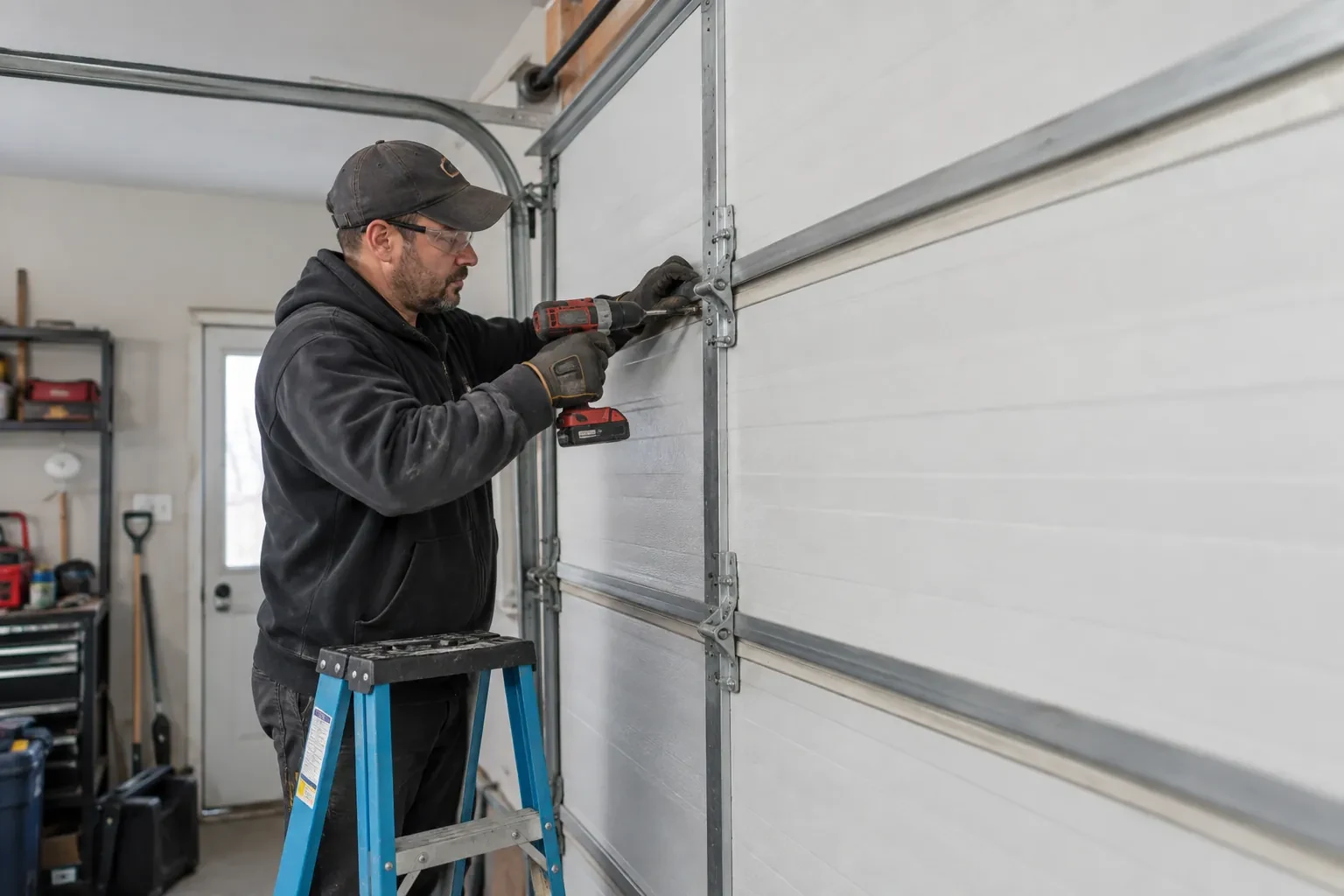
The technician needs clear access to both tracks from floor to ceiling, so moving vehicles out and shifting anything stored against the walls near the tracks helps. The visit itself runs in order: the door is watched in motion, every roller and its hardware is inspected, the door's balance is tested, the door is secured and the rollers are changed one position at a time, the track is cleaned and squared, moving parts are lubricated, and the door and opener are tested.
Related services
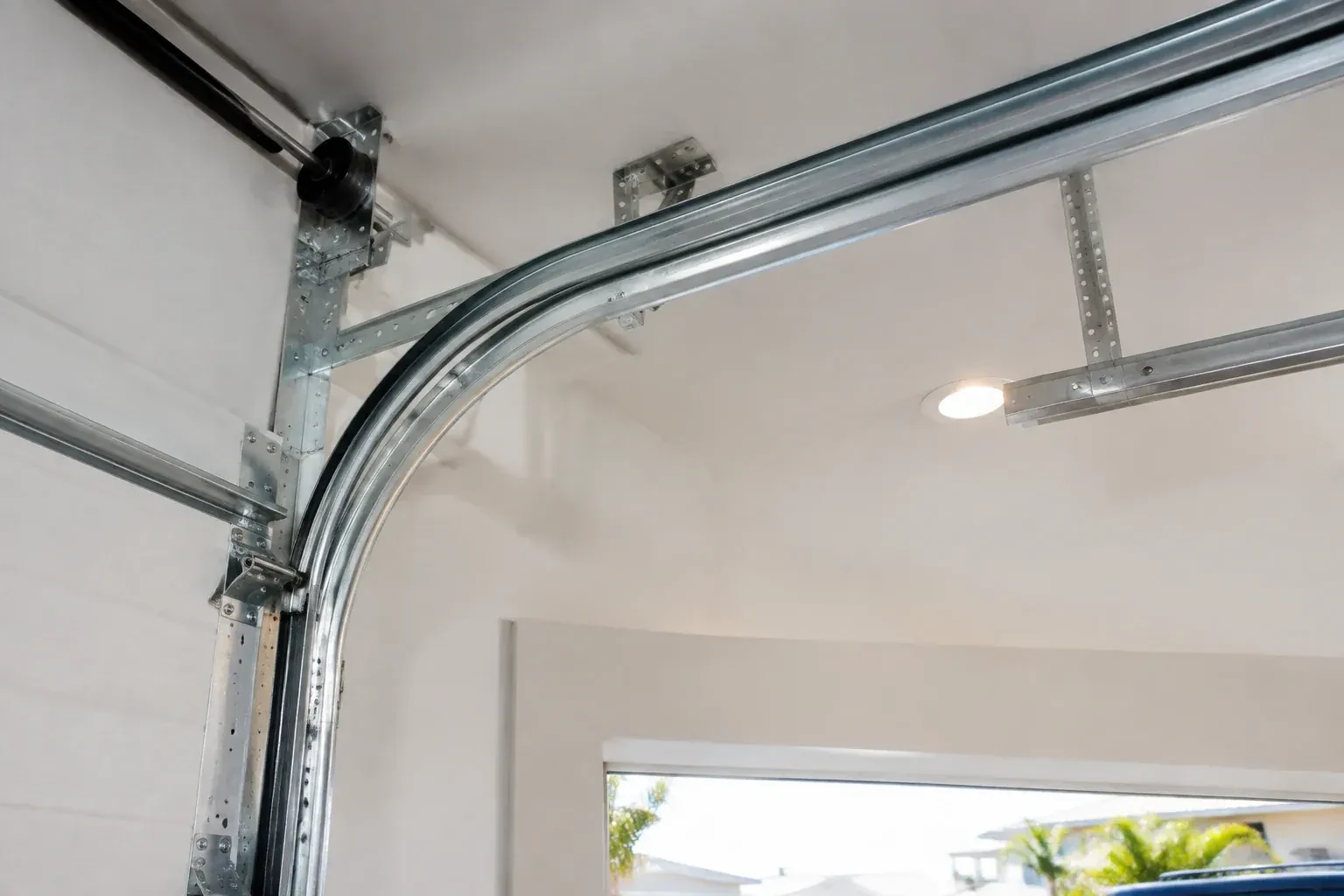
- Garage Door Track Repair or ReplacementHalfway up, the door lurches and one roller rides onto the lip of the channel.
- Garage Door Cable ReplacementSomeone left the snow shovel leaning in the opening and the door came down on it.
- Torsion Spring ReplacementThe door starts to rise, gets about the height of your knee, then shudders and reverses.