Repairs · Bayview Village
Garage Door Safety Inspection in Bayview Village
During the power outage you pulled the red cord and tried to lift the door by hand.
In plain words
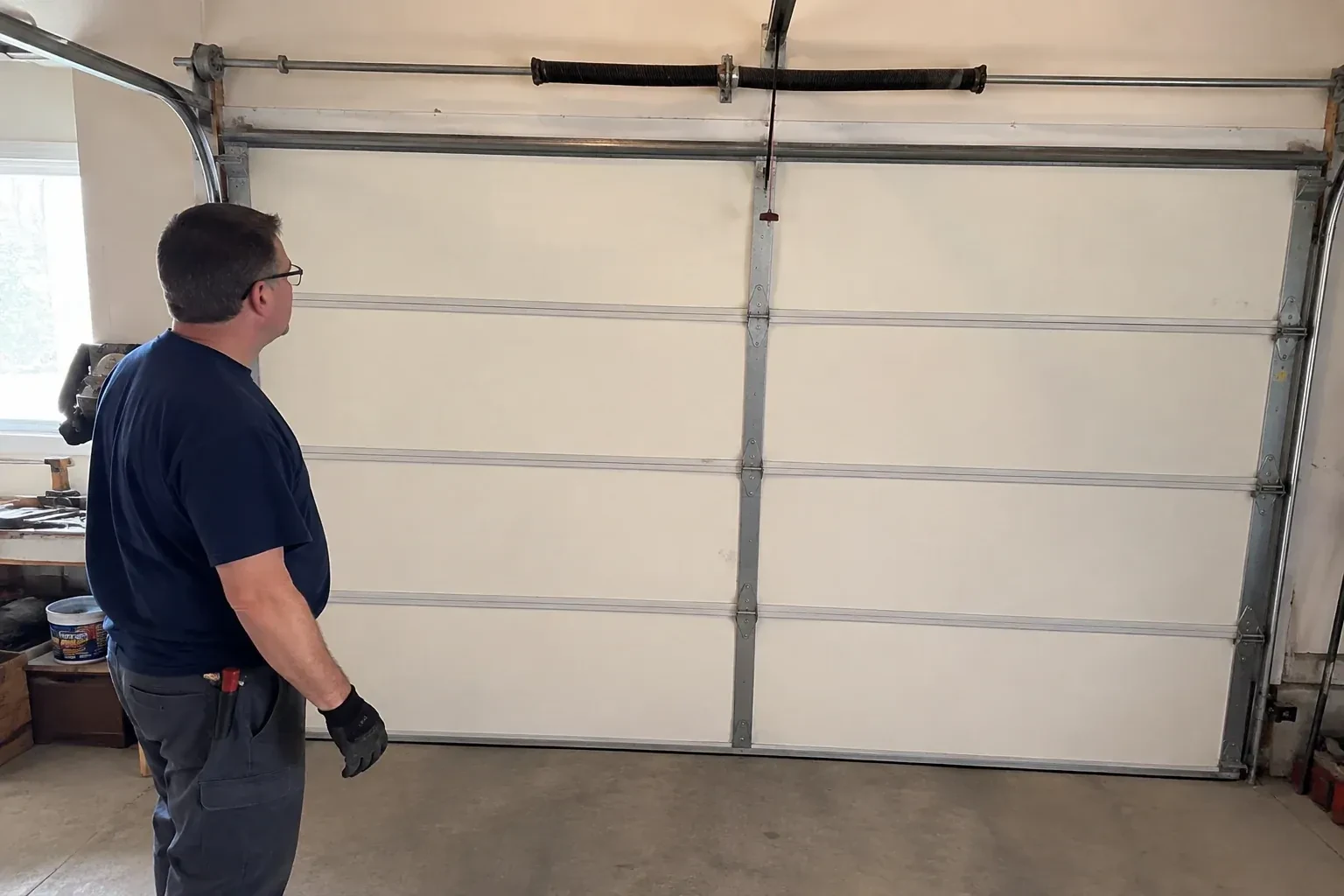
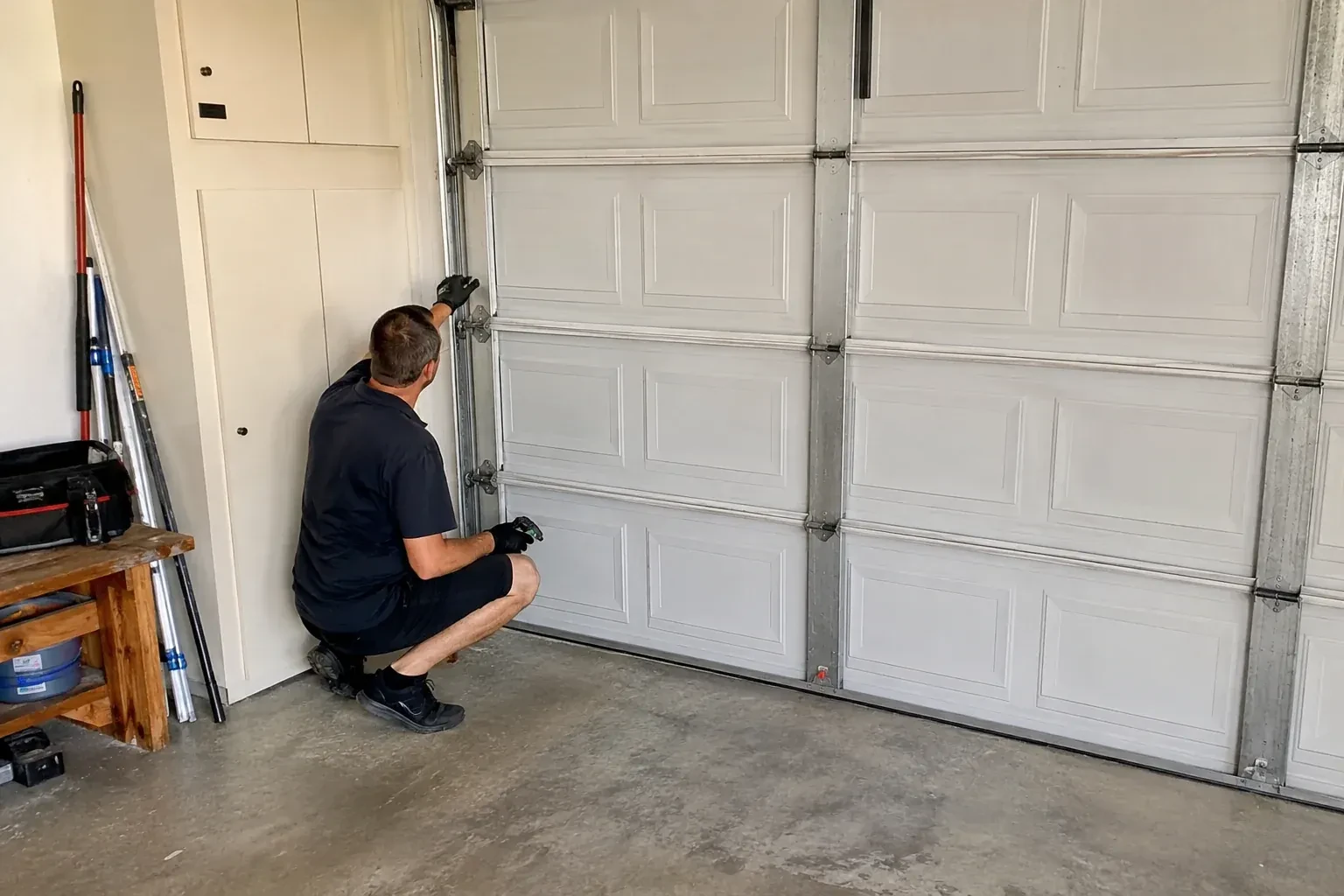
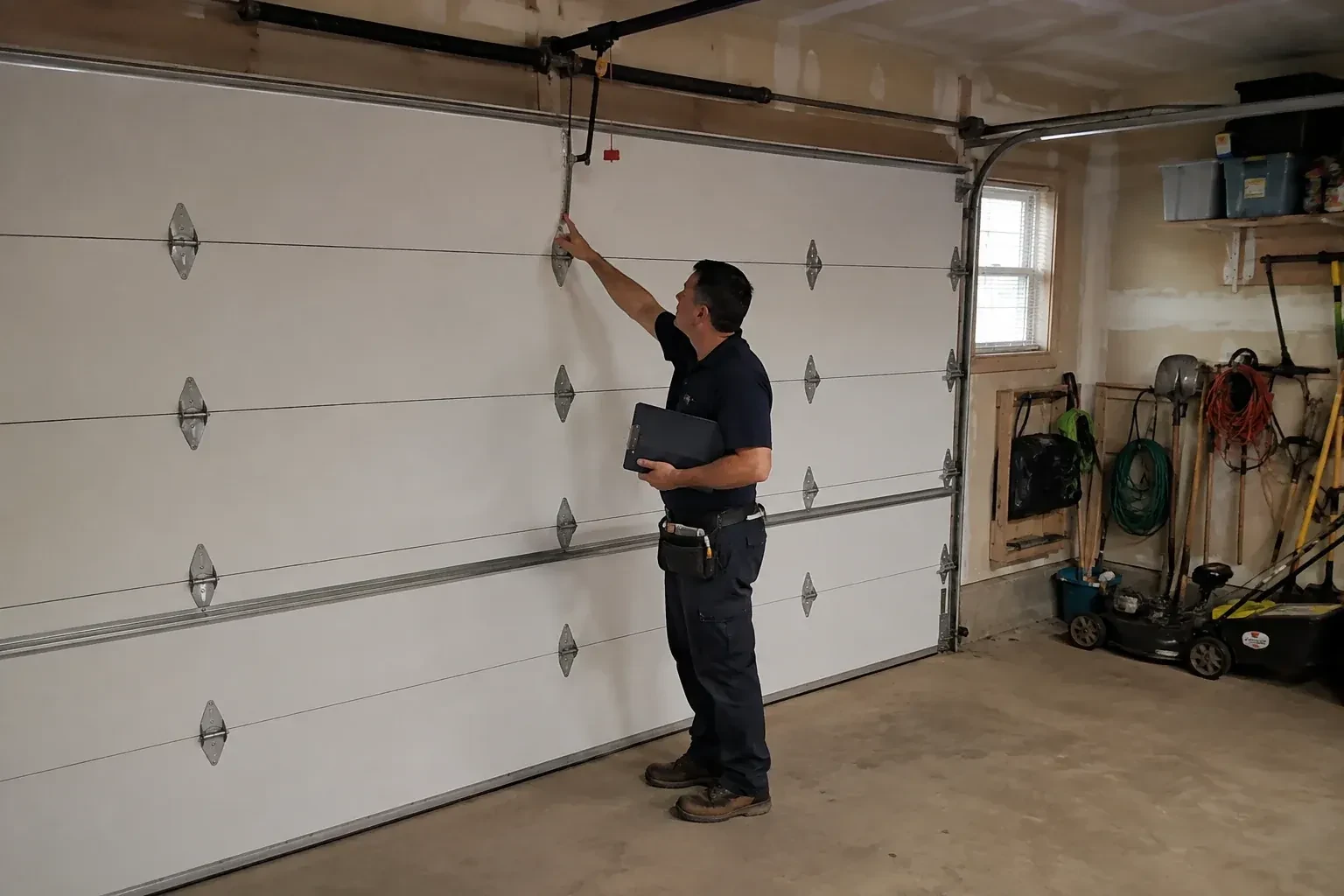
A garage door safety inspection is a systematic look at everything that moves the door and everything meant to stop it. The technician identifies the door and opener from their labels, then examines the sections, hinges, rollers, tracks, springs, cables, drums, brackets and seals, watches a full cycle, tests the door's balance by hand, and runs the reversal and photo-eye tests the opener manual calls for. Nothing tensioned is adjusted during the inspection. What you receive is a dated record of the door's condition, with anything that needs attention sorted by how soon it matters.
How the visit goesA tenant mentioned the door is louder than it used to be. From the driveway it looks fine, but on closer inspection the hinges near the floor are streaked orange and one roller wobbles as it turns.
Garage Door Safety Inspection
How the visit goes
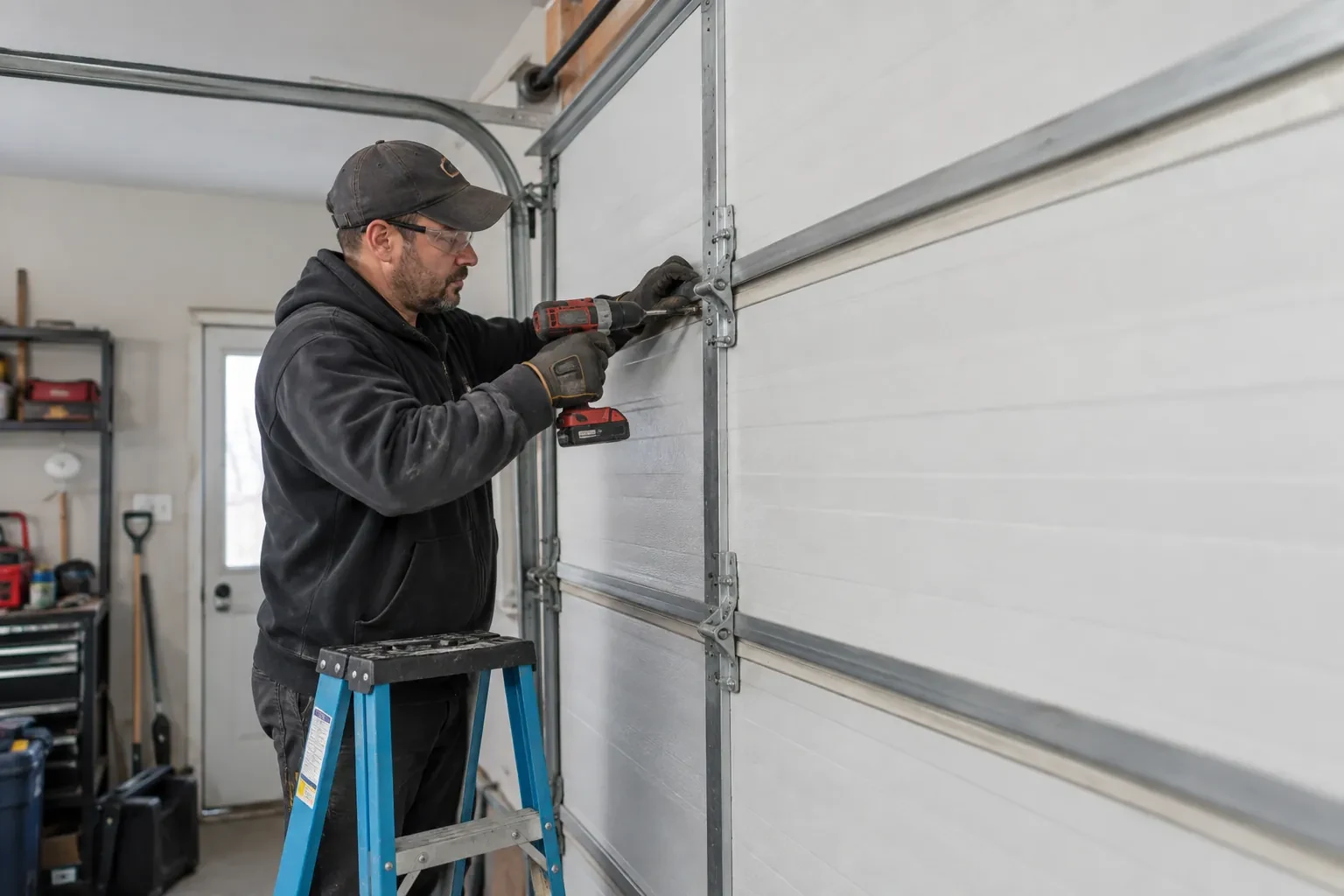
Following the force after an impact
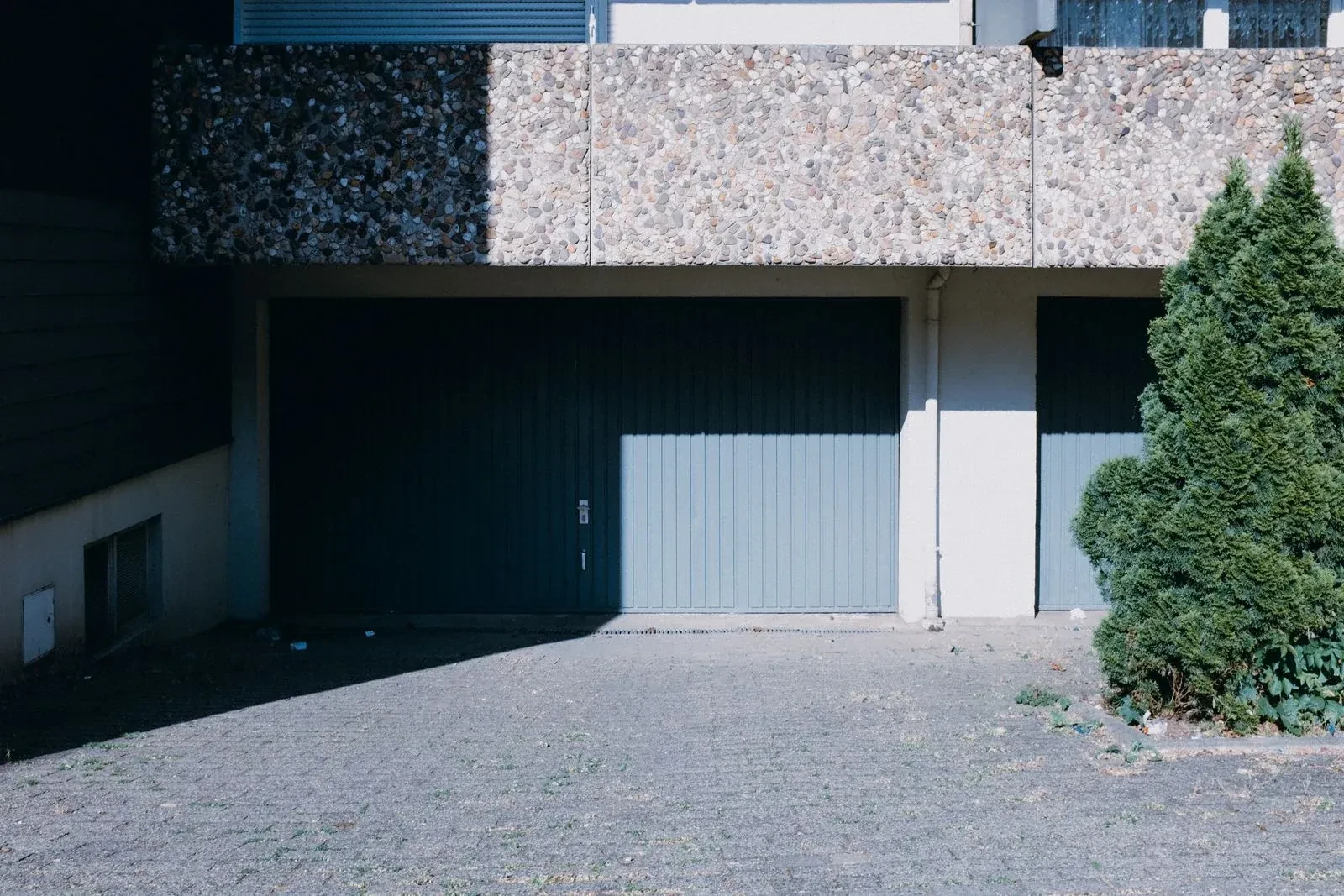
When a vehicle or something heavy has struck the door, the technician starts at the mark and works outward along the force's path. A dented bottom section can push a roller sideways in its track, bend the track itself where the roller was, shift a bottom bracket and change how that cable sits on its drum. The hinges beside the impact are checked for splits and the strut for a kink. The door is then observed through a cycle to see whether it now twists or hesitates at the point of damage. The finding is written up as cosmetic, hardware repair, section replacement or a counterbalance that needs resetting, so you can decide with the whole picture in view.
Checking the photo eyes
The photo eyes are the pair of small sensors low on each track that watch the opening with an invisible beam. The technician confirms they are mounted at the height the opener maker specifies, aligned so the indicator lights hold steady, clean of grime and frost, and wired securely. Then, with the door closing, the beam is broken with an object; the door should reverse before it reaches anything. A sensor that has been knocked out of line, wired loosely or blinded by low sun explains a great many doors that refuse to close on some afternoons, and the fix is often alignment and a wipe of the lens, done on the spot.
Keeping the opening clear and the controls sensible
A few placement decisions carry on after the visit. Bins, bikes and the snow shovel live away from the opening so the door never comes down on them and the cables never go slack. The wall control stays mounted high enough that a small child cannot reach it and where whoever presses it can see the door. Remotes are kept out of toys and glove compartments that children play in. If the household includes anyone unsteady on their feet, the manual release handle is confirmed to be reachable without a stepladder. None of this is hardware; it is simply the layout that lets the safety devices do their job.
Garage Door Safety Inspection
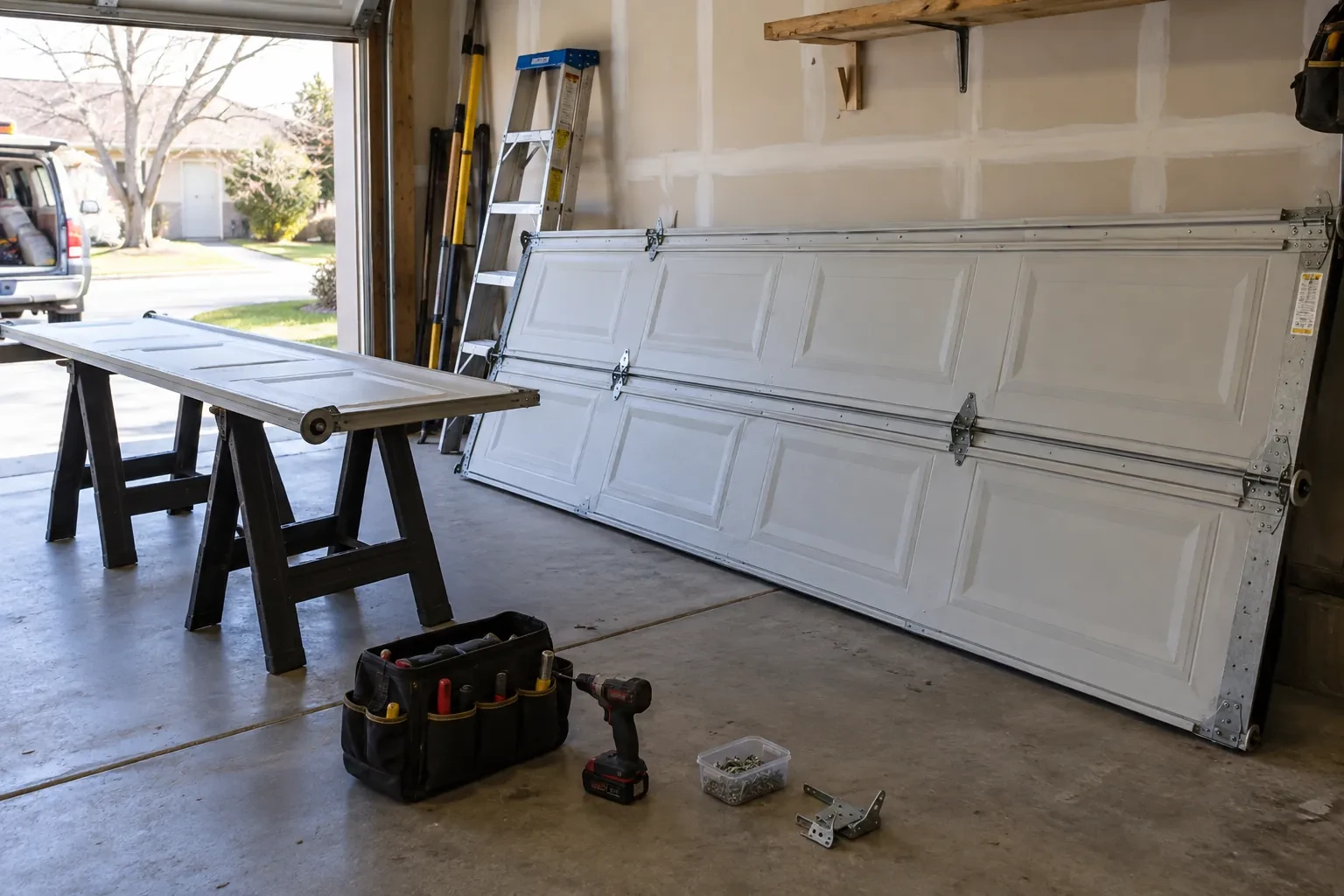
In the van
Lens cloth and cleaner
Camera for findings
Remote and keypad batteries
Weatherstrip samples for matching
Flat 2x4 test board
Garage Door Safety Inspection
What affects the quote
Access to overhead track or a locked mechanical room
Some tracks run behind storage or into a locked mechanical room, and reaching every bracket and fixture takes longer when a ladder or a key has to be found first. Clearing a path to the track ahead of the visit lets the inspection move through the whole door without interruption.
An impact to trace
After a vehicle or object has hit the door, the technician follows the force through the hardware and photographs each point, which is a deeper assessment than a routine check.
High-lift, oversized or custom doors
Doors taller or wider than a standard residential opening, or with high-lift tracks and drums, have more to measure and take longer to observe through a cycle.
What to have ready
- Is the door a single or a double, and roughly how tall is it?
- Does the door sound or move differently going up than coming down?
- What prompted the call, and when did you first notice it?
Garage Door Safety Inspection: questions
QuestionsWill you tell me if the door should not be used?
Yes, plainly and at the door. A slack or frayed cable, a gap in a spring coil, a door hanging crooked, a bracket pulling out of the framing or an opener that fails the reversal test are the kinds of findings that put an item in the stop-use group. When that happens you see the reason yourself, the door is left resting in a safe spot with the opener unhooked, and the fix is written up and quoted so it can be booked.
Should I have the door inspected when buying a house?
It answers the questions a home inspection leaves open. A general inspector confirms the door opens and closes; a door technician records the make and age of the hardware, how much life the springs and cables appear to have, whether the safety devices pass, and what to budget for. For a seller, the same report settles a buyer's questions before they are asked and shows the door was cared for.
How long does the visit usually take?
Plan for roughly an hour for a single door in ordinary condition, and longer for a double door, a second door on the property, or a door with a history that needs following up. Maintenance done on the spot adds a few minutes. A post-impact assessment, where the technician traces the force through the hardware, takes longer than a routine check. You are told at the door if the scope is growing.